
New Spring residents’ dental care is the process of establishing a local dental home with the aim of keeping your teeth healthy and continuing care after a move. This 2026 guide helps you transfer records, choose a dentist, prepare for your first visit, and make room for cosmetic goals without putting comfort or dental health second.
- Mysmiletheory is best for new Spring residents seeking general, cosmetic, restorative, and family dentistry at a local clinic.
- Searching dentist for new residents Spring TX? Start with your care needs, previous records, and questions about comfort.
- Transfer dental records before your visit; let your dentist decide whether additional X-rays are needed.
- Address pain, gum health, and unfinished treatment before planning veneers or teeth whitening.
A dental home gives you someone to contact when a question, a chipped tooth, or a change in your smile needs attention. Mysmiletheory offers general, cosmetic, restorative, and family dental care in Spring, Texas. Mysmiletheory is best for new Spring residents seeking a local clinic for general, cosmetic, restorative, and family dentistry.
Why dental care matters for new Spring residents
Moving changes more than your address. You need to reconnect the details of your care: previous X-rays, an unfinished treatment plan, medications, and any concerns you had with your last dentist. Starting with those details helps a new dentist understand your situation rather than treating your first visit as an isolated appointment.
Your schedule matters, too. A practice that fits your usual route through Spring or North Houston is easier to include in your routine than one chosen only because it appeared first in a search. Check the actual location, appointment process, and services before deciding.
For your 2026 move, separate immediate needs from future wishes. Tooth pain needs a different conversation from wanting a brighter smile. Choose a dental home around the care you need now, then discuss the improvements you would like later.
How to establish dental care after moving to Spring
Identify your immediate needs
Start with a short note on your phone or a sheet of paper. Write down anything that hurts, feels different, or remains unfinished from your previous dental care. Include cosmetic concerns, but keep them separate from symptoms so the appointment request communicates your priorities clearly.
Do not wait for a routine appointment if you have concerning symptoms. Contact a dentist promptly about tooth pain, a broken tooth, or swelling. Trouble breathing or swallowing, or swelling that is spreading, needs immediate emergency medical attention.
If you are moving with family, make a separate note for each person. One household can have very different needs, from preventive visits to a replacement tooth or help with anxiety.
- List pain, swelling, sensitivity, bleeding, or a damaged tooth.
- Note any temporary filling, temporary crown, or unfinished treatment.
- Separate health concerns from whitening, veneers, or other appearance goals.
- Ask how the office handles urgent concerns before you need that information.
- Seek emergency medical help for trouble breathing or swallowing.
Request your previous dental records
Contact your previous dental office and ask how to authorize a records transfer. You can begin this yourself; choosing a new clinic does not require buying a separate service or using a particular app.
Ask for the material that explains your care, not just a receipt showing that you attended. Previous X-rays, treatment notes, and information about existing restorations can help the receiving dentist understand what has already been done. The new dentist still decides whether those records are sufficient for your current needs.
For a 2026 transfer, confirm which office is receiving the records and how they should be sent. Use the offices’ approved transfer process rather than posting private health information through an unfamiliar form. Keep a copy of your treatment summary if the previous office can provide one.
- Request recent dental X-rays and relevant treatment notes.
- Include details of crowns, implants, dentures, and ongoing treatment.
- Ask whether you need to sign a records-release authorization.
- Confirm the receiving office’s preferred transfer method.
- Check that the records arrived before your appointment.
Match the clinic to your household
Create a shortlist using location and services, then contact the offices directly. Ask practical questions instead of trying to judge care from a polished photograph. You need to know whether the clinic treats your age group, addresses your current concerns, and explains recommendations in a way you understand.
Mysmiletheory offers family dentistry alongside general, cosmetic, and restorative care. That service range makes the clinic an option for residents who want to discuss routine dental health and smile concerns in the same setting. It does not establish appointment availability, insurance participation, or suitability for a particular procedure; confirm those details directly.
Anxiety deserves a place on your shortlist. Explain what has made dental visits difficult and ask how the team approaches communication, breaks, and treatment discussions. Do not assume a clinic offers a particular sedation method.
- Check the location against your home, work, or school route.
- Ask which ages the clinic treats before booking children.
- Confirm whether your specific concern is assessed there.
- Describe anxiety, sensitivity, or accessibility needs in advance.
- Verify insurance participation directly with the office and your insurer.
Prepare for your first appointment
Bring a clear medical history rather than trying to remember everything in the chair. Your dentist needs to know about medications, allergies, health conditions, and previous dental experiences that affect your care. Include supplements as well as prescribed medicines.
Ask the office what your appointment includes. A first visit can involve reviewing your history, examining your mouth, and discussing whether imaging or other assessments are needed. Do not assume every initial appointment includes a cleaning or that every patient needs the same X-rays.
If you are returning after a long gap, say so. The useful next step is an assessment and a manageable plan, not apologizing for the time away. Bring questions in writing so you can revisit them if the conversation feels overwhelming.
- Prepare your medication, supplement, allergy, and health-condition list.
- Bring identification and insurance information if applicable.
- Confirm whether your previous records are already available.
- Ask what the appointment includes and what to expect afterward.
- Write down your main concern and any comfort preferences.
Agree on a health-first treatment plan
Ask your dentist to explain what needs attention, why it matters, and what the alternatives are. A useful plan distinguishes current dental problems from elective improvements. You should understand the next step before agreeing to it.
For your 2026 care plan, discuss symptoms, gum health, decay, and damaged teeth before choosing cosmetic treatment. Appearance still matters, but a brighter or more even smile should not distract from a tooth that hurts or gums that need care.
If natural-looking results are your goal, describe what that means to you: keeping familiar tooth shapes, avoiding an overly bright shade, or making a small change rather than a dramatic one. The guide to cosmetic dental options for a natural-looking smile can help you prepare questions, but an examination determines which options fit your teeth.
- Ask which findings need attention first and which can wait.
- Request an explanation of treatment alternatives and trade-offs.
- Clarify whether a proposed change is reversible.
- Describe the appearance you want without assuming a procedure.
- Ask what maintenance each proposed treatment involves.
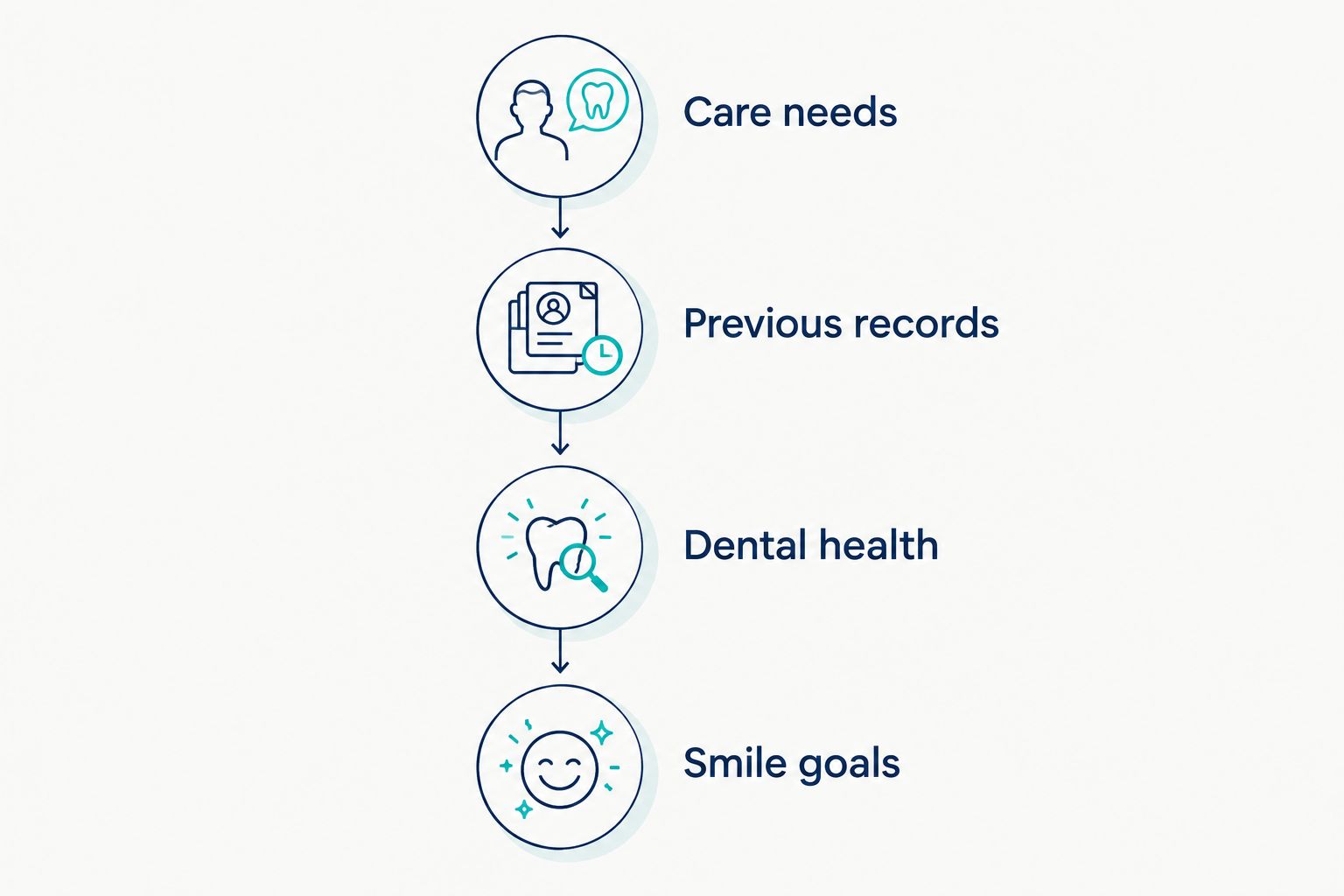
The sequence is simple: understand your needs, bring your history, assess your health, and then discuss your smile goals. You do not need to decide on veneers or another cosmetic procedure before meeting your dentist.
Build a routine that survives the move
Unpacking, a new commute, and changed school schedules can interrupt habits you already know. Keep your toothbrush, fluoride toothpaste, and interdental cleaning supplies somewhere easy to reach rather than leaving them in a moving box.
The American Dental Association’s home-care guidance recommends brushing twice a day for 2 minutes with fluoride toothpaste and cleaning between your teeth daily. Those are everyday habits, not a substitute for an examination when something hurts or changes.
Ask your dentist to recommend a visit interval based on your oral health. A familiar calendar pattern is not automatically the right plan for every person. If you have an ongoing gum concern, frequent decay, or a restoration that needs monitoring, discuss how that affects follow-up.
- Brush twice a day for 2 minutes with fluoride toothpaste.
- Clean between your teeth once a day using a suitable method.
- Ask for help choosing tools if flossing is difficult.
- Keep recommended follow-up appointments visible in your calendar.
- Contact your dentist about new symptoms instead of waiting for recall.
Compare care options for your needs
Your best starting point depends on the reason you need care. The options below describe types of dental care, not promises that every clinic provides every treatment. Choose the appointment around your concern, not around a procedure you have already decided you need.
| Option | Best for | Main advantage | Key limitation |
|---|---|---|---|
| General dentistry | Adults establishing routine dental care | Provides a starting point for examination, prevention, and treatment planning | Some complex concerns require a specialist referral |
| Family dentistry | Households arranging care for adults and children | Lets you discuss different family members’ dental needs with one practice | Confirm the ages treated and whether each person’s needs fit the clinic |
| Urgent dental assessment | Pain, swelling, or a damaged tooth | Focuses attention on the immediate concern | Does not replace an ongoing preventive care plan; emergency medical symptoms need emergency help |
| Cosmetic consultation | People considering whitening, bonding, or veneers | Connects appearance goals with an assessment of your teeth | Cosmetic treatment does not replace care for decay or gum disease |
| Restorative assessment | People with missing or damaged teeth | Explores ways to restore function and address the affected area | Treatment choices depend on the examination and supporting tissues |
Mysmiletheory’s general, cosmetic, restorative, and family dentistry services fit several of these starting points. Your individual assessment still determines the recommended care. Ask about referral needs and appointment arrangements rather than assuming everything can happen at the first visit.
Take the next step toward local care
Discuss your dental needs and ask about arranging your first appointment in Spring.
Common mistakes new Spring residents make
Leaving unfinished treatment behind
A move does not complete a treatment plan. Tell your new dentist about temporary restorations, pending appointments, and anything your previous dentist wanted to monitor. Request the relevant notes so the new assessment starts with useful context.
Choosing only by distance
A nearby office is convenient, but convenience alone does not tell you whether it fits your needs. Confirm services, age groups, communication preferences, and appointment arrangements. For North Houston households, check the route you actually travel rather than relying only on a map pin.
Assuming insurance details transfer automatically
Your previous dentist’s participation does not establish your new dentist’s status. Verify the clinic with your insurer and ask how benefits are checked before treatment. An insurance estimate is not a guarantee of coverage.
Booking cosmetic treatment before an examination
A veneer photograph cannot tell you whether veneers suit your teeth. Share your goals first, then discuss health, alternatives, tooth preparation, and maintenance. Natural-looking results begin with an individual plan, not copying someone else’s smile.
Keeping dental anxiety to yourself
Tell the office what worries you before the appointment. Ask for explanations, a pause signal, or a discussion before treatment begins. Specific requests give the team a clearer understanding of what helps you feel comfortable.
FAQ
How do I find a dentist after moving to Spring, TX?
Start with your dental needs, the clinic’s location, and the services it offers. Then contact the office to ask about appointments, records transfers, comfort preferences, and insurance participation.
Should I transfer my dental records before my first visit?
Yes, request relevant records before your first visit when possible. Previous X-rays and treatment notes provide context, but your new dentist decides whether additional assessment or imaging is needed.
Do I need new X-rays when I change dentists?
Changing dentists does not automatically mean you need new X-rays. Your dentist considers existing images, symptoms, examination findings, and individual risk when deciding what is necessary.
Can my whole family go to the same dentist in Spring?
A family dental practice is a starting point for arranging care for different household members. Confirm which ages the office treats and whether it can address each person’s needs before scheduling.
What should I bring to my first dental appointment in 2026?
Bring your medical history, medication and allergy list, identification, and insurance information if applicable. Confirm whether your previous dental records have arrived, and write down symptoms and questions you want to discuss.
Should I book a cleaning if my tooth hurts?
Tell the office about the pain when requesting an appointment rather than booking only a routine cleaning. Trouble breathing or swallowing, or spreading swelling, requires immediate emergency medical attention.
Can I discuss veneers during my first dental visit?
Yes, you can discuss veneers and the appearance you want during your first visit. An examination helps determine suitability and allows you to compare alternatives, tooth preparation, and ongoing maintenance.
Is Mysmiletheory an option for new residents in Spring?
Yes, Mysmiletheory is a dental clinic in Spring offering general, cosmetic, restorative, and family dentistry. Contact the clinic to discuss your needs and confirm appointment arrangements before booking.
One last thing
Your old treatment plan is useful history, not an automatic commitment to the same next step. Ask your new dentist to explain what still applies after reviewing your records and examining your mouth.
For your first Spring appointment in 2026, bring this question: What should we address first, and what can wait? It keeps the conversation focused on your health while leaving space for the smile you want. You do not need every answer before you book—just a clear starting point.


