

Nurses’ dental care is prevention and treatment organized around shift work, with the aim of keeping teeth healthy and addressing problems before they interrupt work or rest. This 2026 guide to dental care for nurses explains how to build a manageable routine, recognize warning signs, and choose care without rushing into cosmetic treatment.
- Dental care for nurses starts with fluoride brushing, daily interdental cleaning, and appointments planned around your actual sleep schedule.
- Mysmiletheory dental care is best for Spring-area patients seeking general, cosmetic, restorative, and family dentistry.
- Treat tooth pain, gum problems, and damage before considering teeth whitening or veneers.
- Facial swelling with trouble breathing or swallowing needs emergency medical attention, not a routine dental appointment.
Why dental care matters for nurses and healthcare workers
If your shifts change, a routine tied to breakfast and bedtime can become difficult to follow. Anchor dental care to waking up and preparing for your main sleep instead. The goal is consistency, not a schedule that assumes everyone works during the day.
For your 2026 routine, start with the basics described in the American Dental Association’s patient guidance: brush twice a day for 2 minutes with fluoride toothpaste and clean between your teeth daily. These daily habits for a healthy, lasting smile provide the foundation; whitening does not replace them.
You do not need to treat every shift as a dental risk. Focus on what actually affects you: missed brushing, frequent sipping, a dry mouth, discomfort, or appointments that conflict with sleep. A useful dental plan addresses those specific obstacles rather than adding another demanding checklist.
Build a dental routine around your shifts
Anchor brushing to waking and sleeping
Start with a soft-bristled toothbrush and fluoride toothpaste. Keep them where you already prepare for sleep so brushing remains part of the routine even when your bedtime moves.
The American Dental Association recommends 2 brushing sessions per day, lasting 2 minutes each. For a night-shift worker, those sessions need not happen at conventional morning and evening times. Protect the routine around your main sleep period, rather than trying to follow someone else’s clock.
Brush gently along the gumline and across the tooth surfaces. More pressure is not a substitute for thorough cleaning, particularly if your gums feel tender or your teeth are sensitive.
- Brush after waking and before your main sleep period.
- Use fluoride toothpaste and a soft-bristled toothbrush.
- Set a timer if you tend to finish quickly.
- Keep a separate toothbrush in your work bag if it helps you maintain the routine.
- Avoid aggressive scrubbing when you feel rushed.
Make cleaning between teeth manageable
Start with dental floss or an interdental cleaning aid you can use comfortably. Brushing alone does not clean every space between teeth. The American Dental Association recommends cleaning between your teeth daily.
Choose a repeatable moment rather than waiting for an ideal break during a busy shift. If floss is difficult to handle, ask your dentist which alternative suits your teeth, restorations, and hand comfort. An aid that fits your mouth matters more than choosing the most complicated device.
If you struggle with technique, ask for a demonstration at your appointment. Persistent bleeding deserves assessment rather than harder cleaning or abandoning the routine altogether.
- Keep your cleaning aid beside your toothbrush.
- Choose a daily cue, such as preparing for sleep.
- Ask how to clean around crowns, bridges, or other dental work.
- Use gentle movements rather than snapping floss into the gums.
- Tell your dentist about bleeding that continues or recurs.
Plan appointments around recovery time
Start by checking your rota and identifying appointment windows that do not compete with essential sleep. Tell the dental office whether you work nights or rotating shifts, and ask about the expected appointment length before choosing a time.
Mysmiletheory offers general, cosmetic, restorative, and family dental care in Spring, Texas. Its range of services makes it a local option for patients who want to discuss both dental health and smile concerns. Visit Mysmiletheory to explore the clinic and take the next step toward an appointment.
For your 2026 appointment planning, confirm the schedule rather than assuming evening, weekend, or same-day access. Visit frequency should reflect your dental needs; a fixed interval is not the right answer for every patient.
- Share your shift pattern when arranging care.
- Ask about appointment length and preparation instructions.
- Bring your current medication list and relevant health history.
- Ask whether treatment will affect driving, eating, or returning to work.
- Discuss any follow-up visits before committing to a treatment plan.
Reduce repeated drink exposure during shifts
Start with water as your usual drink when practical. If you drink sweetened coffee, energy drinks, or acidic beverages, avoid turning one drink into repeated exposure throughout the shift. Frequent sugar exposure gives mouth bacteria repeated opportunities to produce acids that contribute to tooth decay.
Unsweetened coffee and sweetened coffee are not the same dental choice, and staining is different from decay. Tell your dentist what you actually drink, including additions, rather than simply saying you drink coffee.
If a beverage habit is hard to change, begin with its timing and frequency. A realistic change you can maintain is more useful than a strict rule you abandon during a difficult shift.
- Choose water between other drinks.
- Avoid repeatedly sipping sugary beverages over an extended period.
- Notice sugar added through syrups, creamers, or sweeteners.
- Drink water after coffee rather than brushing harder to remove stains.
- Describe any sensitivity before starting a whitening product.
Address dry mouth and jaw discomfort
Start by noticing when symptoms occur: during work, after sleep, or throughout the day. Dry mouth can have several causes, including medications, and deserves attention when it persists. Do not stop a prescribed medicine because your mouth feels dry; discuss the symptom with your dentist and prescriber.
For dry mouth, water and sugar-free gum can help some people, but they do not replace an assessment of the cause. Use gum only if chewing is comfortable. Jaw pain, locking, and ongoing tooth tenderness need a different conversation from ordinary thirst.
If you suspect clenching, ask for an examination before buying a guard. A dentist can assess your teeth and jaw and explain whether a protective appliance fits your situation.
- Record when dryness or jaw discomfort appears.
- Bring a complete medication list to your appointment.
- Avoid sugary sweets as a dry-mouth remedy.
- Ask whether sugar-free gum is suitable for you.
- Report jaw locking, broken teeth, or pain when chewing.
Separate urgent symptoms from routine concerns
Start by describing the symptom clearly when you contact a dental office. Include where it hurts, whether there is swelling, and whether you can eat or open your mouth normally. A precise description helps the office advise you about the appropriate next step.
Facial or neck swelling with difficulty breathing or swallowing requires emergency medical attention. Do not wait for a routine dental visit. Dental trauma, worsening swelling, or severe tooth pain also warrants prompt professional advice.
Sensitivity, a chipped edge, and bleeding gums do not all require the same response. Avoid diagnosing yourself from the appearance alone, even if your clinical background makes the terminology familiar.
- Seek emergency medical help for breathing or swallowing difficulty with swelling.
- Contact a dentist promptly about severe pain or increasing swelling.
- Report a broken tooth, loose tooth, or dental injury.
- Explain whether symptoms are worsening or interrupting sleep.
- Avoid placing aspirin directly against a painful tooth or gum.
Choose cosmetic care after checking dental health
Start by identifying what you want to change: color, a chipped edge, a gap, or tooth shape. An examination should come before choosing a treatment. Whitening will not repair a crack, and veneers are not a substitute for treating decay or gum disease.
For a 2026 cosmetic consultation, bring your preferences in plain language. You might want a subtle color change, to keep the character of your smile, or to discuss one tooth rather than treating several. Natural-looking results begin with that conversation, not with choosing the whitest shade.
Ask about both the benefit and the trade-off. Some cosmetic choices require maintenance, and conventional porcelain veneers usually involve irreversible removal of some enamel.
- Describe the change you want without naming a treatment first.
- Ask whether teeth and gums need treatment before cosmetic work.
- Discuss sensitivity before whitening.
- Ask whether bonding or another approach suits a small defect.
- Review maintenance and future replacement needs before choosing veneers.
Compare dental care options for your needs
The best option depends on the problem, not your job title. Nurses and other healthcare workers benefit from understanding what each approach can accomplish, what it cannot do, and how follow-up care fits their schedules.
| Option | Best for | Main benefit | Key limitation |
|---|---|---|---|
| Daily prevention | Maintaining oral health between appointments | Supports plaque control through brushing and interdental cleaning | Cannot repair existing decay, cracks, or missing teeth |
| General dental care | Assessment, prevention, and investigating symptoms | Helps identify problems and plan appropriate care | Requires an appointment; further treatment can be necessary |
| Restorative care | Teeth damaged by decay or injury, or missing teeth | Repairs or replaces tooth structure according to the diagnosis | The suitable approach depends on the tooth and surrounding tissues |
| Whitening | Changing the color of natural teeth | Can lighten suitable discoloration | Does not change the color of crowns or veneers and can cause sensitivity |
| Bonding | Selected small chips or shape changes | Adds tooth-colored material to reshape an area | Can stain, wear, or chip and is not suitable for every defect |
| Veneers | Selected changes to visible tooth shape and color | Changes the appearance of the tooth’s front surface | Usually involves irreversible enamel removal and future maintenance |
Daily prevention supports dental health; cosmetic treatment changes appearance. The two can work together, but neither replaces treatment for active disease. Keep that distinction central when reviewing your 2026 options.
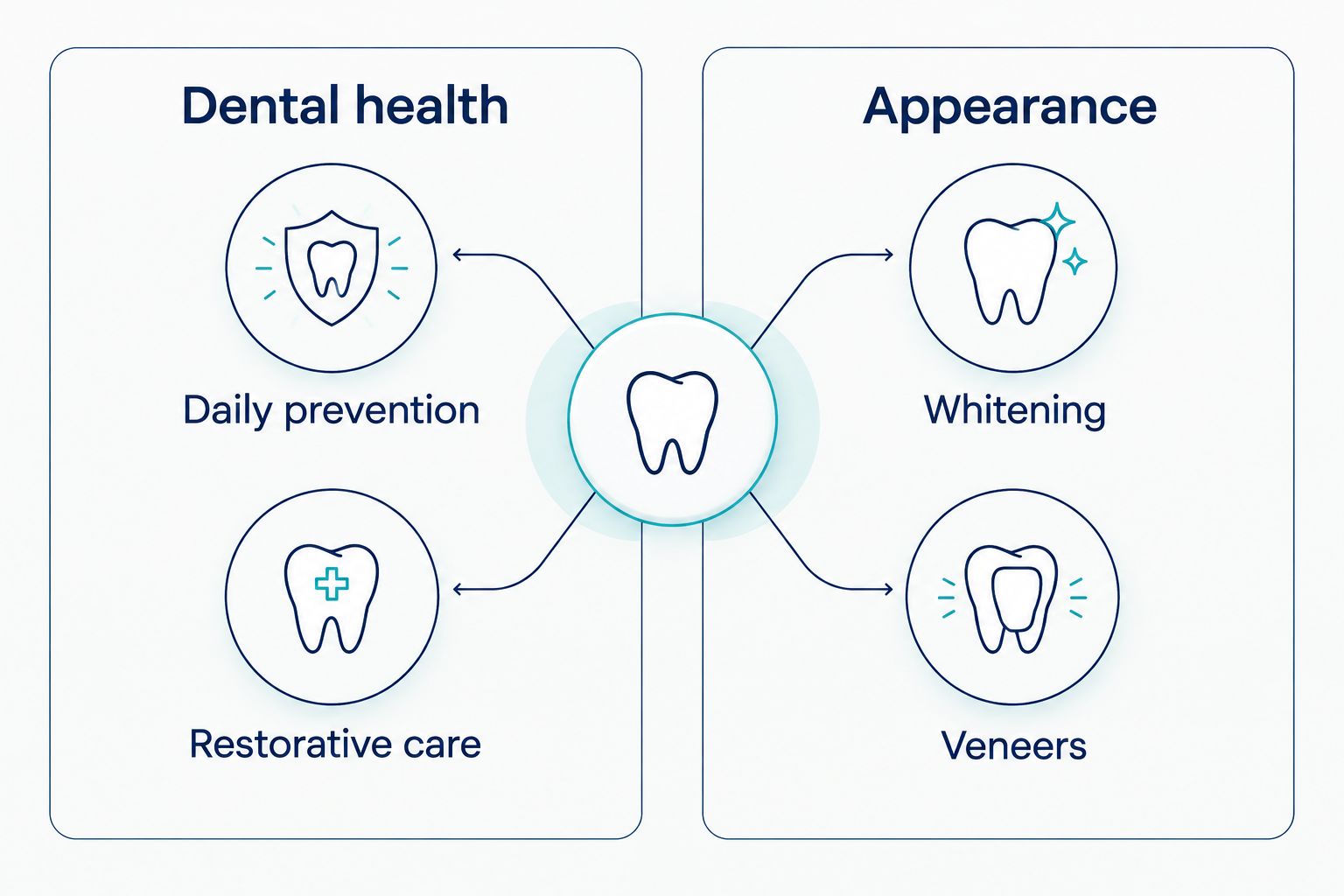
When considering Mysmiletheory dental care, discuss which of its general, cosmetic, restorative, or family services addresses your concern. The right treatment still depends on an examination. Confirm appointment logistics and treatment details directly rather than assuming that every option fits your rota.
Common mistakes nurses and healthcare workers make
These are planning problems to watch for, not assumptions about how you care for yourself. Choose the one that matches your situation and change that first.
- Booking immediately after a night shift without considering fatigue. Pick a time that protects sleep and allows you to follow preparation and aftercare instructions.
- Relying on brushing during work breaks. Breaks can be unpredictable. Make your home routine the foundation and treat workplace brushing as support.
- Using clinical familiarity to dismiss personal symptoms. Knowing healthcare does not replace a dental examination. Persistent bleeding, pain, or swelling deserves attention.
- Choosing whitening to solve every visible concern. Stains, decay, exposed root surfaces, and existing restorations need different assessments.
- Considering only the first treatment visit. Ask about follow-up, maintenance, and any restrictions that affect eating, driving, or work.
FAQ
What is the best dental care routine for nurses working nights?
The best starting routine is fluoride brushing twice daily and cleaning between teeth daily, anchored to waking and your main sleep period. Keep the timing consistent with your shifts rather than conventional breakfast and bedtime hours.
How often should a nurse book a dental checkup?
Your dentist should recommend a checkup interval based on your oral health and individual needs. Tell the office about rotating shifts so you can plan visits around sleep and any treatment requirements.
Does drinking coffee during a shift mean I need whitening?
Coffee stains do not automatically mean you need whitening. A dental examination can distinguish surface staining from other causes of discoloration and identify whether cleaning or whitening suits your teeth.
What should I do if my mouth feels dry throughout a shift?
Persistent dry mouth should be discussed with your dentist and, when relevant, your prescriber. Water and suitable sugar-free gum can help with comfort, but do not stop prescribed medication on your own.
Is bonding better than veneers for a small chip?
Bonding can suit some small chips, but it is not automatically better than veneers for every tooth. The size and location of the damage, your bite, and the tooth’s health determine which approach is appropriate.
Can I return to a healthcare shift after dental treatment?
Returning to work depends on the treatment, anesthesia or sedation used, and your dentist’s instructions. Ask before scheduling, especially if your duties involve driving, patient care, or safety-sensitive tasks.
Which dental symptoms need emergency attention?
Facial or neck swelling with difficulty breathing or swallowing needs emergency medical attention. Severe tooth pain, increasing swelling, or dental trauma also needs prompt professional advice rather than waiting for a routine appointment.
One last thing
Before your 2026 appointment, write down your shift pattern, your main concern, and what you want to keep about your smile. That last detail matters: cosmetic care should start with your preferences, not an assumption that every tooth needs changing.
You do not need a perfect routine before seeking care. A conversation with Mysmiletheory can start with the concern you have today and the schedule you actually live with.
Start with your dental concern
Explore general, cosmetic, restorative, and family dental care in Spring, Texas.


