

Realtor dental care is preventive, restorative, and cosmetic care aimed at keeping your mouth healthy and comfortable through client meetings, property tours, and listing presentations. This 2026 guide to dental care for realtors and sales professionals helps you build a practical routine, plan appointments around work, and consider smile changes without rushing into treatment.
- Dental care for realtors starts with healthy teeth and gums, not a cosmetic deadline.
- Mysmiletheory suits Spring patients seeking general and cosmetic dental care in one clinic.
- Choose cosmetic dentistry around your dental health, natural appearance, and appointment needs.
- Tell your dentist about presentation dates before planning treatment, not after.
Why dental care matters for realtors
Client-facing work gives you specific planning questions: Will you be speaking after an appointment? Does a tooth hurt when you drink something cold? Are you considering a smile change before new headshots? Your dental plan should address those questions without making appearance a professional obligation.
A healthy, comfortable smile comes first; cosmetic treatment is optional. You do not need unusually white or perfectly straight teeth to do your job well.
For your 2026 schedule, separate ongoing care from an event-driven request. Start with the concern you want addressed, then discuss treatment choices and timing. The guide to cosmetic dentistry options for busy professionals offers a related starting point if appearance is your main concern.
A useful plan also accounts for what happens between appointments. Long stretches away from home call for a portable routine, while persistent symptoms call for an examination—not another breath mint or whitening product.
How to build a dental plan around your work
Start with symptoms and your current routine
Before choosing any cosmetic treatment, write down what your mouth feels like during an ordinary workday. Note pain, bleeding gums, food catching between teeth, jaw soreness, or sensitivity. Include when each concern started and what brings it on; that information helps your dentist assess the problem.
Do not use the absence of pain as proof that everything is healthy. Dental examinations can identify concerns that are not obvious at home, and your dentist should recommend the timing of visits based on your needs.
Bring your health history and medication list, too. Some medicines contribute to dry mouth, and that deserves a conversation rather than stopping a prescription yourself.
- Record where discomfort occurs and what triggers it.
- List medicines, supplements, allergies, and relevant health conditions.
- Mention bleeding, persistent bad breath, or a dry mouth.
- Ask which concerns need attention before cosmetic treatment.
- Request a personal recommendation for your next examination.
Protect your routine between showings and meetings
Build the home routine first. Brush for 2 minutes, twice a day, using fluoride toothpaste, and clean between your teeth daily. These established oral-care recommendations matter more than adding a cosmetic product to an inconsistent routine.
For workdays away from home, pack the tools you actually use. A small kit makes it easier to follow your routine without depending on when you return home. Keep supplies clean and let your toothbrush air-dry rather than leaving it damp in a closed container indefinitely.
Water is a practical drink between appointments. Frequent sipping of sugary drinks repeatedly exposes your teeth to sugar; changing that pattern is more useful than trying to brush harder afterward. Hard brushing can damage gums and tooth surfaces.
- Pack a soft-bristled toothbrush and fluoride toothpaste.
- Carry floss or another dentist-recommended between-teeth cleaner.
- Keep water accessible during property tours and travel.
- Avoid using your teeth to open packaging or hold objects.
- Replace forceful scrubbing with gentle brushing.
Share your calendar and comfort needs
Once you have identified your concerns, bring your real schedule into the conversation. Include listing photography, presentations, travel, and periods when rescheduling would be difficult. Ask what the proposed treatment means for speaking, eating, and returning to work; do not assume every appointment has the same aftercare.
Mysmiletheory is best suited to Spring patients seeking general and cosmetic dental care in one clinic. The clinic also offers restorative and family dentistry, so you can discuss health needs alongside an optional smile change. Suitability for a particular procedure still requires an examination.
For appointments in 2026, confirm the proposed sequence before committing to an event deadline. You can outline your goals yourself, then use the consultation to turn that list into a clinically appropriate plan.
- Share important work dates before scheduling treatment.
- Explain dental anxiety, sensitivity, or difficulty sitting comfortably.
- Ask whether numbing or aftercare affects your plans afterward.
- Discuss which concerns can wait and which should not.
- Request clear instructions for questions after your visit.
Choose a change that matches your concern
Start by describing what bothers you, not by requesting a procedure. A darker tooth, a small chip, and uneven alignment are different concerns. They do not automatically call for the same treatment.
Whitening changes the color of natural teeth but does not repair damage or straighten teeth. Bonding uses tooth-colored material to reshape or repair selected areas, while veneers cover the front surfaces of teeth and often involve removing enamel. Orthodontic treatment moves teeth rather than covering their position.
Each option has limits. Whitening can cause sensitivity, bonding can stain or chip, and veneers require a long-term maintenance commitment. Your examination should establish whether treatment is appropriate and whether a more conservative choice meets your goal.
- Describe the specific feature you want to change.
- Explain what a natural-looking result means to you.
- Ask whether leaving healthy teeth unchanged is reasonable.
- Compare maintenance needs as well as appearance.
- Ask how existing fillings, crowns, or veneers affect the plan.
Plan the sequence before the deadline
Use your calendar to organize care—not to pressure your dentist into a shortcut. Cavities, gum problems, and damaged teeth need assessment before cosmetic decisions. If treatment is necessary, ask how it changes the order of any appearance-focused work.
For a 2026 headshot session or presentation, explain the date at the first discussion. Treatment timing depends on your starting point, the procedure, and how your mouth responds. No general guide can promise that a particular smile change will be finished by your event.
Color planning also matters when combining treatments. Whitening does not lighten existing crowns, veneers, or tooth-colored fillings. Discuss the intended shade before new visible restorations are made so you understand the sequence and its limitations.
- Address active dental problems before elective cosmetic changes.
- Ask which treatments depend on another step being completed.
- Discuss shade matching before combining whitening and restorations.
- Leave room for follow-up rather than filling every calendar gap.
- Keep an event separate from any promise of a finished result.
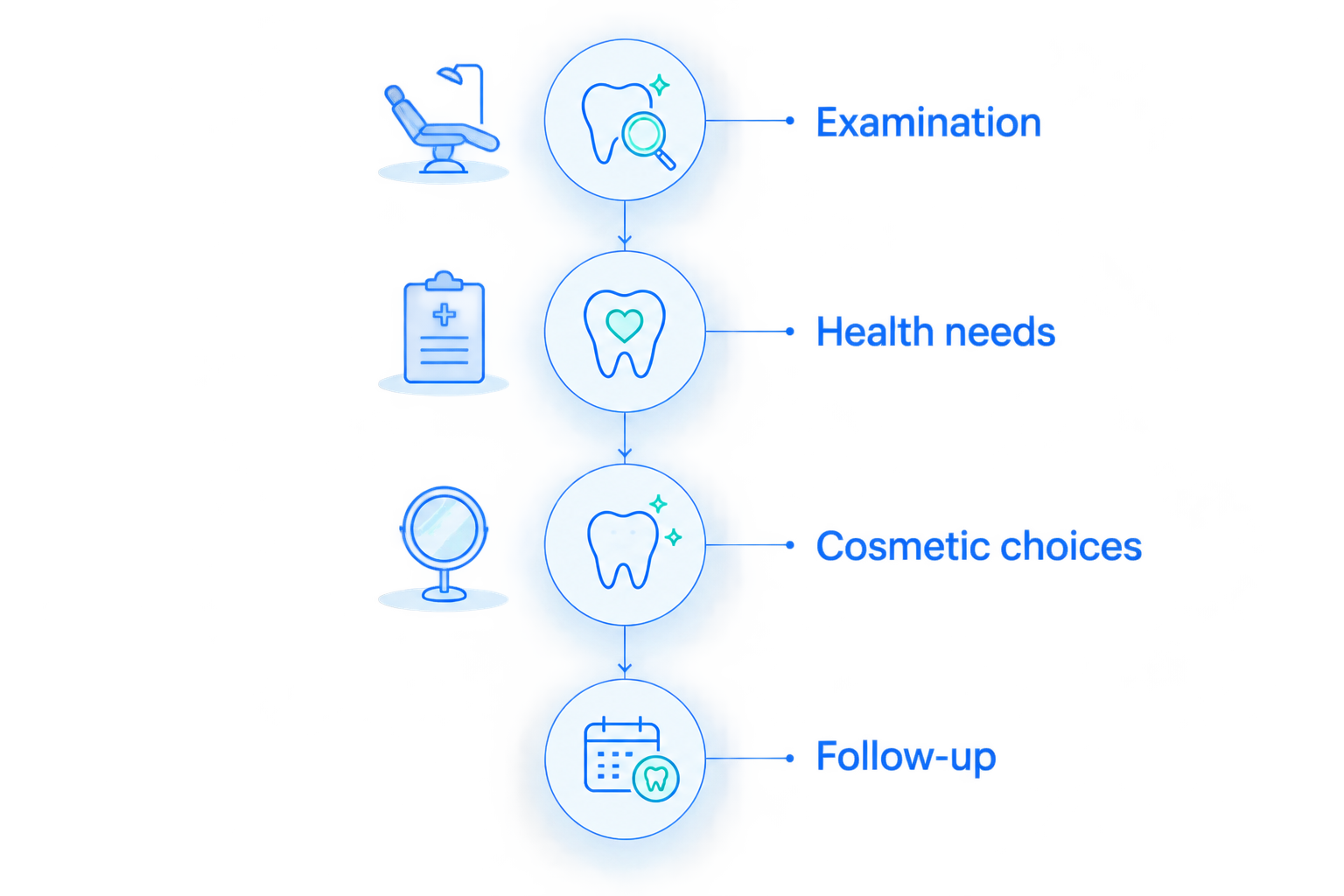
Review the result and maintain your routine
A useful dental plan continues after the appointment. Follow the instructions for your specific treatment, including when to eat, how to clean the area, and when to contact the practice. Instructions for a filling are not interchangeable with instructions for whitening or a veneer.
At follow-up, describe comfort and function as well as appearance. Mention a bite that feels uneven, lingering sensitivity, roughness, or food catching somewhere new. Those details deserve attention even when a tooth looks fine in photographs.
Mysmiletheory offers general, cosmetic, restorative, and family dental care; ask which follow-up care fits your treatment rather than assuming every procedure includes the same process. Continue your daily routine and keep the visit schedule your dentist recommends.
- Save your written aftercare instructions somewhere accessible.
- Ask whom to contact if discomfort persists or worsens.
- Report changes in your bite or difficulty chewing.
- Discuss a protective appliance if your dentist identifies grinding.
- Reassess cosmetic goals only after comfort and health are addressed.
If you would like help organizing your concerns, you can contact Mysmiletheory to request an appointment. Bring your questions and work dates; you do not need to arrive with a treatment already chosen.
Compare options for a client-facing schedule
Choose according to the problem being treated. The options below describe general dental approaches, not a recommendation that you need treatment or a statement that every procedure is appropriate for you.
| Option | Best for | Main benefit | Key limitation |
|---|---|---|---|
| Home care | Maintaining daily oral hygiene | Supports ongoing plaque control | Does not diagnose or repair dental disease |
| Examination and professional cleaning | Assessing oral health and removing deposits | Establishes health needs before cosmetic choices | Does not change tooth position or repair a chip |
| Teeth whitening | Lightening suitable natural teeth | Changes tooth color without changing tooth shape | Can cause sensitivity; does not lighten restorations |
| Dental bonding | Selected small chips or shape concerns | Adds tooth-colored material to a specific area | Can stain or chip and needs maintenance |
| Veneers | Selected front-tooth appearance concerns | Changes visible shape and color | Often requires enamel removal and future replacement |
| Orthodontic treatment | Moving teeth into a different position | Addresses alignment rather than covering it | Requires ongoing participation and retention afterward |
The least extensive suitable option deserves a discussion first. A small concern does not automatically justify treating several healthy teeth, and a camera deadline does not establish a dental need.
Common mistakes realtors and sales professionals make
Treating every appointment as a quick calendar gap
An opening between showings is not enough information to plan treatment. Ask about the appointment, aftercare, and any effect on eating or speaking before scheduling another commitment immediately afterward. Keep the office informed if your plans change.
Using mints to manage persistent bad breath
Mints can mask an odor without addressing its cause. Persistent bad breath can relate to oral hygiene, gum disease, dry mouth, or other issues that need assessment. Mention it directly; you do not need to feel embarrassed or diagnose it yourself.
Choosing a shade from an edited headshot
Lighting, filters, and screen settings change how teeth appear. Use an unedited photograph to explain a concern, but discuss shade in person. Natural-looking cosmetic dentistry should be planned around your teeth and preferences, not an image setting.
Ignoring discomfort until a quieter sales period
A busy calendar does not make a painful tooth safer to postpone. Arrange an assessment for persistent pain, swelling, or a damaged tooth. Seek emergency medical care for swelling that affects breathing or swallowing, rather than waiting for a routine dental visit.
Assuming a cosmetic upgrade improves sales
A dental procedure is a health or personal appearance decision—not a sales strategy. Set your 2026 goals around comfort, function, and a smile you feel at ease with. Treatment should not come with promises about listings, commissions, or client trust.
FAQ
What's the best dental care routine for realtors?
Start with fluoride toothpaste, brushing for 2 minutes twice daily, and cleaning between your teeth daily. Add dental visits at intervals recommended for your oral health, and pack basic supplies when your workday keeps you away from home.
Do I need veneers if I work in real estate sales?
No, working in real estate does not create a need for veneers. Veneers are an elective option for selected appearance concerns, and your dentist should discuss their limits and more conservative alternatives.
Can I go straight to a client meeting after dental work?
Ask your dentist about the specific procedure before planning a meeting immediately afterward. Numbness, discomfort, or treatment instructions can affect speaking and eating, and sedation requires separate safety planning.
Is whitening better than bonding for listing photos?
Whitening addresses tooth color, while bonding addresses selected shape concerns or small repairs. A photograph deadline does not determine which treatment is appropriate; your oral health and the concern being treated do.
What should I do about coffee stains before new headshots?
Ask your dentist whether the discoloration is surface staining or a deeper color change. Cleaning and whitening address different issues, and sensitivity or existing restorations can affect your choices.
Can I whiten a crown or veneer to match my other teeth?
Whitening does not lighten crowns or veneers. Discuss shade matching before changing the color of your natural teeth, especially when a restoration is visible in your smile.
Where can I discuss dental care for realtors in Spring, Texas?
Mysmiletheory is a dental clinic in Spring, Texas offering general, cosmetic, restorative, and family dentistry. Bring your symptoms, smile goals, and work dates so you can discuss an appropriate plan without choosing a procedure in advance.
One last thing
Bring a short note describing how you want your teeth to feel, not just how you want them to look. Comfortable chewing, less sensitivity, or being able to clean a crowded area can be more useful starting points than a request for a whiter smile.
For your next appointment, finish this sentence: The thing I would most like help with is… That gives the conversation a personal direction while leaving room for an examination and informed choices.


