
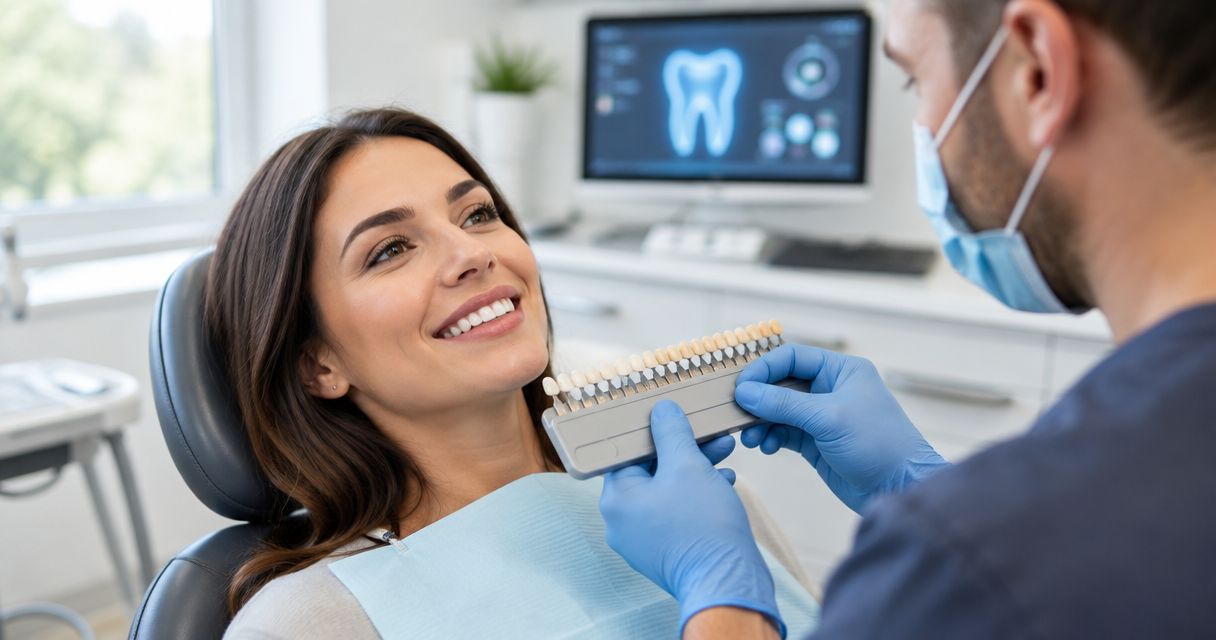
A smile makeover has no single completion time: a focused cosmetic change takes a different treatment path than a plan involving tooth movement, repairs, or healing. Your timeline includes more than treatment appointments—it also includes any care needed before cosmetic work and the checks that confirm your teeth feel comfortable afterward.
- How long does a smile makeover take? The answer depends on treatment choices, oral health, and healing.
- Whitening, bonding, and veneers follow different schedules; appointment time is not the same as total treatment time.
- Ask for a written sequence that separates preparation, cosmetic treatment, healing, and follow-up.
- Smile Theory offers cosmetic and restorative dentistry in Spring, Texas, for local patients seeking a personal dentist.
How long does a smile makeover take?
The treatment with the longest necessary preparation or healing stage usually sets the pace for your smile makeover. A small appearance change does not follow the same schedule as replacing missing teeth or moving teeth into position. Counting procedures alone will not tell you when you will finish.
For a smile makeover planned in 2026, ask your dentist to separate active treatment from the waiting periods between appointments. That distinction gives you a more useful answer than an estimate of time spent in the dental chair.
Smile Theory provides general, cosmetic, restorative, and family dentistry in Spring, Texas. Smile Theory is a fit for local patients seeking a personal dentist for cosmetic and general dental care. The right treatment schedule still begins with an examination, not a deadline chosen before your teeth are assessed.
| Treatment path | Best for | What shapes the schedule | Benefit | Limitation |
|---|---|---|---|---|
| Teeth whitening | Changing the shade of natural teeth | Whitening method, sensitivity, and the planned endpoint | Changes color without reshaping teeth | Does not change tooth position or whiten existing restorations |
| Dental bonding | Selected small chips, shape changes, or gaps | Number of teeth and complexity of shaping | Allows targeted changes to tooth contours | Does not correct every bite or alignment concern |
| Dental veneers | Selected changes to visible tooth shape and color | Planning, preparation, fabrication, and fitting | Addresses several appearance concerns together | Enamel removal is generally irreversible |
| Orthodontic treatment | Moving teeth into better alignment | Tooth movement and bite correction | Changes tooth position rather than disguising it | Requires ongoing treatment and retention afterward |
| Implant restoration | Replacing missing teeth when appropriate | Surgical planning, healing, and restoration stages | Replaces a missing tooth without covering adjacent teeth | Involves surgery and a healing-dependent schedule |
These are general treatment pathways, not a statement that every option belongs in your plan. Your dentist should explain which options suit your teeth and which add treatment without addressing your main concern.
Why this matters
A rushed schedule can put the cosmetic finish ahead of the foundation it needs. Decay, gum inflammation, an unstable bite, or a damaged tooth deserve attention before a final cosmetic result is planned around them.
If you are organizing treatment around a wedding, graduation, or another 2026 event, share the date at your first visit. Ask what can be completed safely before it and what belongs afterward. A smaller, appropriate change is better than an ambitious plan squeezed into an unsuitable schedule.
The same principle applies when you simply want to feel more comfortable smiling. You do not have to choose the most extensive treatment to have a useful conversation about your options.
Teeth whitening: the method sets the schedule
Best for: natural teeth whose main concern is shade rather than shape or position. Professional whitening and dentist-guided home whitening follow different schedules, so the method needs to be part of any timing discussion.
Sensitivity also matters. Tell your dentist about existing sensitivity before starting, and follow the instructions for the particular treatment rather than extending its use to meet a deadline.
Whitening does not lighten crowns, veneers, or tooth-colored fillings the way it lightens natural teeth. If your plan includes whitening and new visible restorations, ask how the dentist will coordinate the final shade. Completing those steps in the wrong order can leave a color mismatch.
For your 2026 planning, distinguish between finishing whitening and being ready to select a restoration shade. Your dentist should identify when the color is suitable for that next decision.
Dental bonding: the amount of shaping matters
Best for: selected minor chips, small gaps, or tooth-shape changes. Bonding uses tooth-colored material shaped directly on the tooth, which avoids the laboratory fabrication stage used for many veneers.
That does not make every bonding case a quick finishing appointment. Changing the edge of a tooth is different from reshaping several teeth while keeping their proportions and bite comfortable.
Bonding also has limits. It can chip or stain, and adding material is not a substitute for moving teeth when alignment is the underlying problem. Ask whether bonding addresses your concern directly or simply covers part of it.
Your planning question should be specific: does the estimate include shaping, polishing, checking your bite, and any later adjustments? A shorter procedure is only helpful if the finished tooth works comfortably.
Dental veneers: planning comes before fitting
Best for: selected changes to the shape, proportions, and color of visible teeth. Veneer treatment includes decisions about your desired appearance as well as assessment of enamel, gums, and bite.
For laboratory-made veneers, preparation and fitting are separate stages. Temporary coverings are sometimes part of that process, depending on the treatment plan. Ask what your teeth will look and feel like between appointments rather than assuming every visit leaves you with the final result.
Veneers also require a careful discussion of trade-offs. Enamel removal is generally irreversible, and veneers do not remove the need for daily cleaning or future dental care.
Before agreeing to a veneer schedule, understand whether other care comes first. The guide to getting veneers when you have cavities explains why the health of the underlying tooth matters.
Tooth alignment: movement sets the pace
Best for: concerns caused by tooth position or the way teeth meet. Orthodontic treatment moves teeth rather than changing only their visible surfaces, so its schedule follows a different process from whitening or bonding.
Treatment depends on the movements required, the bite, and following the prescribed instructions. Finishing active movement is also different from finishing all care: retainers help maintain the new tooth positions.
If alignment is part of your makeover, ask which cosmetic decisions should wait until the teeth are in their planned positions. Tooth movement can change the size and location of gaps, the appearance of tooth edges, and the space available for restorations.
A 2026 event date is useful information for planning. It is not a reason to promise that tooth movement will finish before your dentist has assessed the case.
Missing teeth: healing is part of treatment
Best for: patients whose smile goals include replacing a missing tooth. When implants are appropriate, the plan includes assessment, surgery, healing, and the final restoration; some patients need additional preparation.
A temporary tooth is not necessarily the finished tooth. Ask your dentist to distinguish the appearance you can expect during treatment from the point when the final restoration is ready.
Implants involve surgical risks and are not suitable for every patient. Other replacement options have their own advantages and limitations, so the choice should reflect your oral health and preferences rather than speed alone.
The most useful schedule identifies what must heal before the next stage. That makes the waiting period understandable instead of leaving you unsure whether treatment has stalled.
Why smile makeover timelines vary
Your timeline reflects the condition of your mouth and the order in which treatment needs to happen. These factors explain why someone else's finishing date is not a reliable guide for yours:
- Starting oral health. Decay and gum problems can require treatment before cosmetic work begins.
- Your main goal. Changing tooth color is a different task from changing tooth position or replacing a missing tooth.
- Treatment sequence. Whitening, alignment, and restorations need coordination when they are part of the same plan.
- Healing. Surgical treatment and some gum procedures require assessment of healing before the next step.
- Fabrication and fitting. Laboratory-made restorations require coordination beyond the appointment when teeth are prepared.
- Comfort and adjustments. Your bite, sensitivity, and response to treatment help determine whether more checks are needed.
Ask what must happen before each next step, not just how many appointments you need. That question reveals the parts of the schedule that cannot simply be combined.
How do I get a useful treatment timeline?
Bring your priorities and calendar to the consultation, then ask your dentist to turn the proposed treatment into a clear sequence. A practical plan explains both the next appointment and the reason for any gap afterward.
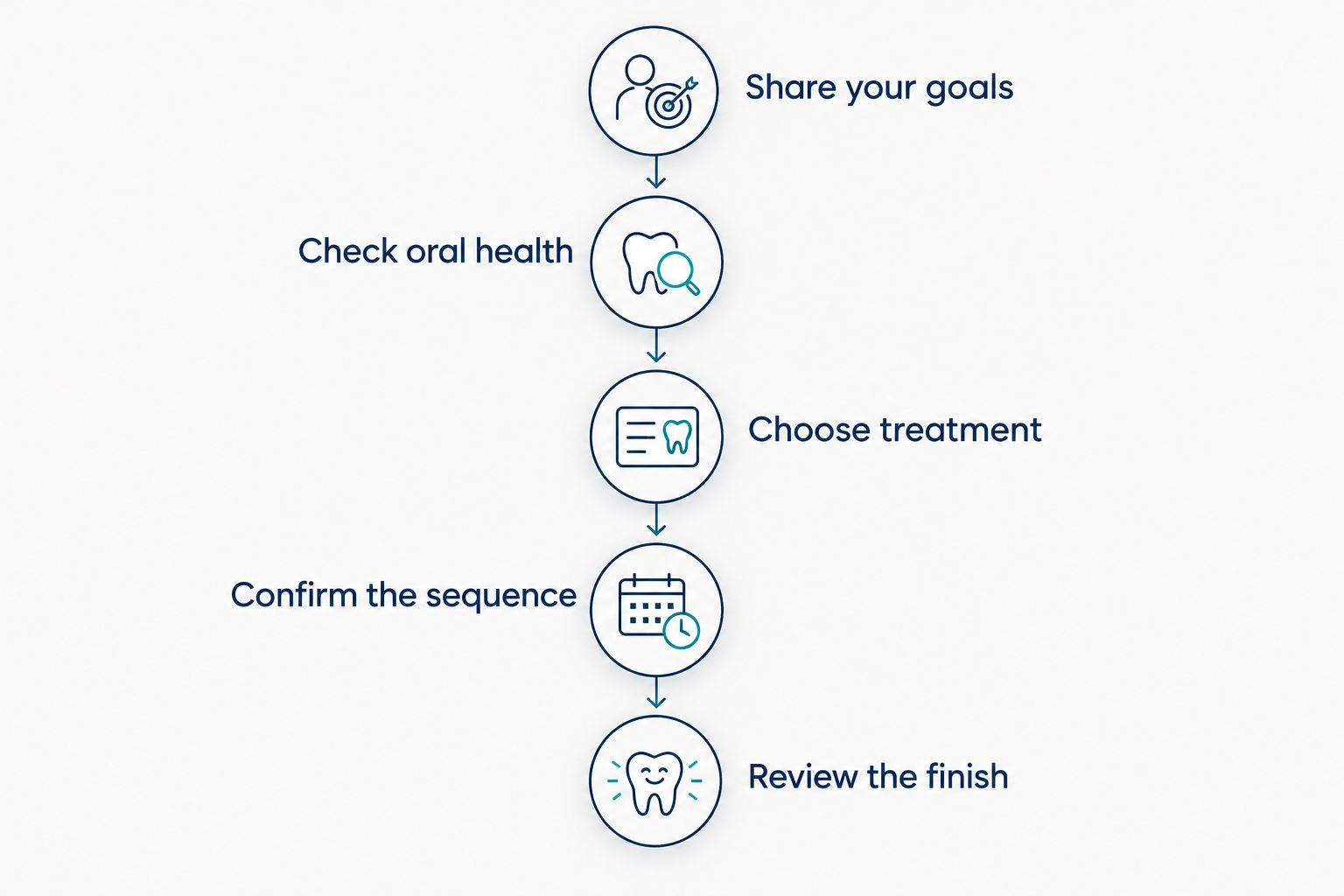
- Share your goals. Describe what bothers you about your smile and what you want to keep. Mention any 2026 event or travel date.
- Check oral health. Ask which findings need attention before cosmetic treatment and why.
- Choose treatment. Compare the appropriate options, including their limitations and effects on your teeth.
- Confirm the sequence. Identify preparation, treatment, waiting periods, temporary restorations, and follow-up.
- Review the finish. Ask how the dentist will check appearance, bite comfort, and your home-care routine.
Keep a copy of the sequence so you can arrange work, transportation, or family commitments around the right appointments. If the plan changes, ask which later stages change with it.
Can I finish a smile makeover before a big event?
You need an examination before anyone can give you a dependable answer. Share the event date and ask your dentist to separate realistic pre-event treatment from longer-term goals.
Avoid starting a procedure solely because its advertised appointment time fits your calendar. Preparation, sensitivity, temporary restorations, and follow-up can matter just as much as the treatment visit itself.
Does a natural-looking smile take longer?
A natural-looking result does not have its own fixed treatment duration. The schedule depends on the changes needed, not whether you prefer a subtle appearance.
Explain what natural-looking means to you: preserving familiar tooth shapes, avoiding an overly bright shade, or keeping a characteristic you like. Clear preferences help your dentist plan toward your goal without adding changes you did not request.
When should I book a consultation?
Book before committing to a cosmetic deadline. An early discussion gives you room to understand your options and decide without pressure.
Smile Theory offers cosmetic and restorative dentistry for patients in Spring, Texas. You can begin by discussing your priorities and asking what a comfortable, appropriate sequence would involve.
Start with your smile goals
Explore dental care in Spring, Texas, and take the next step toward a personal treatment discussion.
FAQ
Can a smile makeover be finished in a single appointment?
Some focused cosmetic changes can be completed during a treatment appointment, but that does not mean the entire assessment and care process fits into that visit. Plans involving laboratory work, tooth movement, or healing follow a different schedule.
Does every smile makeover include veneers?
No, a smile makeover does not have to include veneers. Your dentist should recommend treatment based on your goals, oral health, and the changes your teeth actually need.
Do I need healthy gums before cosmetic dentistry?
Gum health needs assessment before cosmetic dentistry. Inflammation or other gum problems can affect treatment planning and should be addressed as your dentist recommends.
Should I whiten my teeth before getting veneers?
Discuss whitening before the final veneer shade is selected. Whitening changes natural teeth but does not lighten existing veneers in the same way, so the sequence matters.
Will temporary teeth count as my finished smile makeover?
Temporary teeth are not necessarily the finished result. Ask which stage provides your final restoration and what restrictions apply while you have a temporary one.
Can I speed up my smile makeover by combining appointments?
Some appointments can be coordinated, but necessary healing and treatment checks cannot simply be removed. Ask your dentist which visits can be combined without compromising care.
What should I bring to a smile makeover consultation?
Bring your main concerns, relevant dental and medical information, and any event dates. Describe both the changes you want and the features of your smile you want to keep.
Does the final appointment mean no more dental care is needed?
No, finishing cosmetic treatment does not end routine dental care. Follow-up, daily cleaning, and any prescribed retainers or protective appliances remain part of caring for the result.
One last thing
Ask for two milestones: when your smile will look finished and when treatment will be complete. Temporary restorations can make those different dates, especially when healing is involved. Knowing the distinction helps you plan without mistaking an encouraging early change for the end of care.


