
Remote and hybrid workers’ dental care is everyday prevention and dentist-led care with the aim of keeping your mouth healthy around a flexible work schedule. This 2026 guide shows you how to build consistent habits, plan appointments around meetings, and address discomfort without letting work take over your care.
- Dental care for remote workers starts with consistent brushing, daily between-teeth cleaning, and dental visits based on individual needs.
- Mysmiletheory offers general, cosmetic, restorative, and family dentistry for patients in Spring, Texas.
- Keep the same oral hygiene routine on home days, office days, and business trips.
- Persistent tooth pain, jaw discomfort, or dry mouth needs attention—not another calendar reminder.
Why dental care matters for remote and hybrid workers
Working from home does not change what your teeth need. It changes the structure around those needs: your commute disappears, meetings cross lunchtime, and a drink beside your keyboard can become an all-day habit.
Your routine needs reliable cues, not a perfectly predictable calendar. Start with these daily habits for a healthy, lasting smile, then connect them to things you already do, such as getting dressed or finishing dinner.
Hybrid work adds another practical challenge: keeping those habits intact across locations. A toothbrush at home does little good when an overnight work trip interrupts your usual evening routine.
The goal is consistency across work settings—not a special dental routine for people who use a laptop.
Build a dental routine around your workday
1. Anchor brushing to the start and end of your day
Begin with a simple routine you can follow without buying anything new beyond your usual dental supplies. Brush with fluoride toothpaste for 2 minutes per session, with 2 brushing sessions a day, and clean between your teeth daily.
Use a phone timer if you tend to rush. A powered toothbrush is another option, but it is not a prerequisite for good home care; careful technique and regular use matter.
For your 2026 routine, choose cues that survive a changed meeting schedule. Getting ready for the day and preparing for bed are more dependable than waiting for a gap between calls.
Brushing harder does not make up for missed sessions. Use a soft-bristled toothbrush and gentle pressure, especially around the gumline.
- Brush before settling into your workday and again before bed.
- Use fluoride toothpaste and a soft-bristled toothbrush.
- Complete 1 between-teeth cleaning each day using floss or a suitable alternative.
- Keep a travel kit ready for office days and overnight trips.
- Replace a worn toothbrush rather than pressing harder with frayed bristles.
2. Give meals and drinks a place in your schedule
Start by noticing what stays beside your keyboard. Repeated exposure to sugary foods and drinks gives cavity-causing bacteria repeated opportunities to produce acids; frequent acidic drinks also expose enamel directly to acid.
That does not mean you need to give up every favorite drink. It means separating a coffee break from continuous sipping throughout the workday, and choosing water as your regular desk drink.
Water supports a comfortable mouth, but persistent dryness deserves more than a larger bottle. Medicines, mouth breathing, and health conditions can contribute, so mention ongoing dryness to your dentist rather than assuming coffee is the only cause.
An ordinary calendar reminder is enough to help you pause for lunch. You do not need a tracking app or a strict food schedule.
- Keep plain water within reach during calls.
- Have sugary foods and drinks with meals rather than repeatedly throughout the day.
- Finish a drink during a defined break instead of sipping indefinitely.
- Notice dryness, sticky saliva, or trouble eating dry foods.
- Ask about persistent dry mouth without stopping prescribed medicines yourself.
3. Plan dental visits as protected appointments
Open your calendar first and identify a window you can genuinely protect. Include travel and check-in time, then ask the dental office what the appointment involves before scheduling another commitment immediately afterward.
Mysmiletheory is best for Spring-area remote workers seeking a local dentist for general, cosmetic, and restorative care. Its dental services also include family dentistry, which is relevant when you are coordinating your own care alongside a household schedule.
Professional care adds examination and treatment that home care cannot provide. The practical limitation is that an in-person visit needs protected time; working remotely does not make you available for meetings while receiving care.
For your 2026 appointment plan, ask your dentist to recommend a return interval based on your oral health rather than assuming everyone needs the same schedule.
- Ask what the planned visit includes before reserving time.
- Include travel and check-in in your calendar block.
- Tell the office about symptoms when arranging the visit.
- Ask which previous records or medication details to bring.
- Confirm any aftercare restrictions before booking meetings afterward.
4. Notice jaw tension without diagnosing yourself
Start with a brief check during a natural break: are your teeth pressed together when you are not eating? If so, let your jaw relax rather than repeatedly testing your bite or forcing your mouth open.
Jaw soreness, morning headaches, and tooth wear deserve a conversation with a dentist. These symptoms have different possible causes, and a workday habit check cannot establish a diagnosis.
A reminder can help you notice daytime clenching. A dentist can assess tooth wear, discuss symptoms, and determine whether an appliance or another approach fits your situation; a generic guard is not a substitute for that assessment.
Do not use temporary relief as proof that the underlying issue is resolved. Keep track of when discomfort happens and whether it changes with chewing or waking.
- Notice whether your teeth touch during focused screen work.
- Relax your jaw without stretching through pain.
- Record whether symptoms appear on waking, during work, or while chewing.
- Mention chipped teeth, sensitivity, or changes in your bite.
- Ask for an assessment before choosing a night guard yourself.
5. Prepare a symptom plan before a busy week
Create a short note with your dental office’s contact details, your medications, and any symptoms you want to discuss. That is more useful than trying to remember everything while handling a toothache between calls.
New or worsening dental pain belongs on your care schedule, not indefinitely on your task list. Tell the office about swelling, fever, a broken tooth, or pain that interrupts sleep so staff can guide the next step.
Seek emergency medical care for trouble breathing or swallowing, or rapidly spreading facial or neck swelling. Do not wait for a convenient work break with those symptoms.
For less urgent concerns, describe the location, timing, and triggers without trying to name the diagnosis. A clear description helps the dental team understand why you are calling.
- Save your dental office’s contact information somewhere easy to find.
- Note when pain started and what brings it on.
- Mention swelling, fever, injury, or difficulty opening your mouth.
- Ask for instructions while waiting for your appointment.
- Follow emergency guidance rather than trying to finish your workday first.
6. Separate smile goals from webcam pressure
Start by naming what you actually want to change: tooth color, a chipped edge, spacing, or something else. A video-call image is not a diagnosis, and lighting or camera placement is not a sound basis for choosing dental treatment.
If cosmetic care is part of your 2026 plans, bring those specific goals to a consultation. Mysmiletheory offers cosmetic dentistry alongside general and restorative care, allowing the conversation to include both appearance and dental health.
Ask for a healthy, natural-looking result rather than choosing treatment solely for the camera. Whitening, bonding, and veneers address different concerns, and each has limitations; veneers generally involve an irreversible change to the teeth.
Make room for an examination before deciding. Active cavities, gum concerns, or a damaged tooth can change which cosmetic approach is appropriate.
- Describe the feature you want to change in your own words.
- Explain what a natural-looking result means to you.
- Ask whether treatment changes healthy tooth structure.
- Discuss sensitivity, maintenance, and possible future replacement.
- Confirm the treatment sequence before planning around an event.
Plan care around your workday
Discuss your dental needs and appointment questions with Mysmiletheory in Spring, Texas.
Compare dental care options for your work routine
The right option depends on whether you need daily prevention, a routine assessment, help with symptoms, or a conversation about appearance. These choices complement one another; they are not interchangeable shortcuts.
| Option | Best for | Main benefit | Key limitation |
|---|---|---|---|
| Consistent home care | Daily prevention across home and office days | Keeps brushing and between-teeth cleaning part of your routine | Cannot diagnose problems, remove hardened tartar, or repair damaged teeth |
| Scheduled preventive visits | Ongoing checks based on individual needs | Adds professional assessment and appropriate preventive care | Requires protected appointment time and continued home care |
| Symptom-focused dental visit | New pain, swelling, sensitivity, or damage | Gives a specific concern professional attention | Does not replace an ongoing prevention plan |
| Cosmetic consultation | Discussing color, shape, spacing, or a chipped edge | Connects appearance goals with an assessment of dental health | Treatment suitability and maintenance needs vary |
A symptom-focused visit takes priority over an appearance-only goal when you have pain or signs of infection. Your dentist can explain whether another concern needs attention before cosmetic treatment begins.
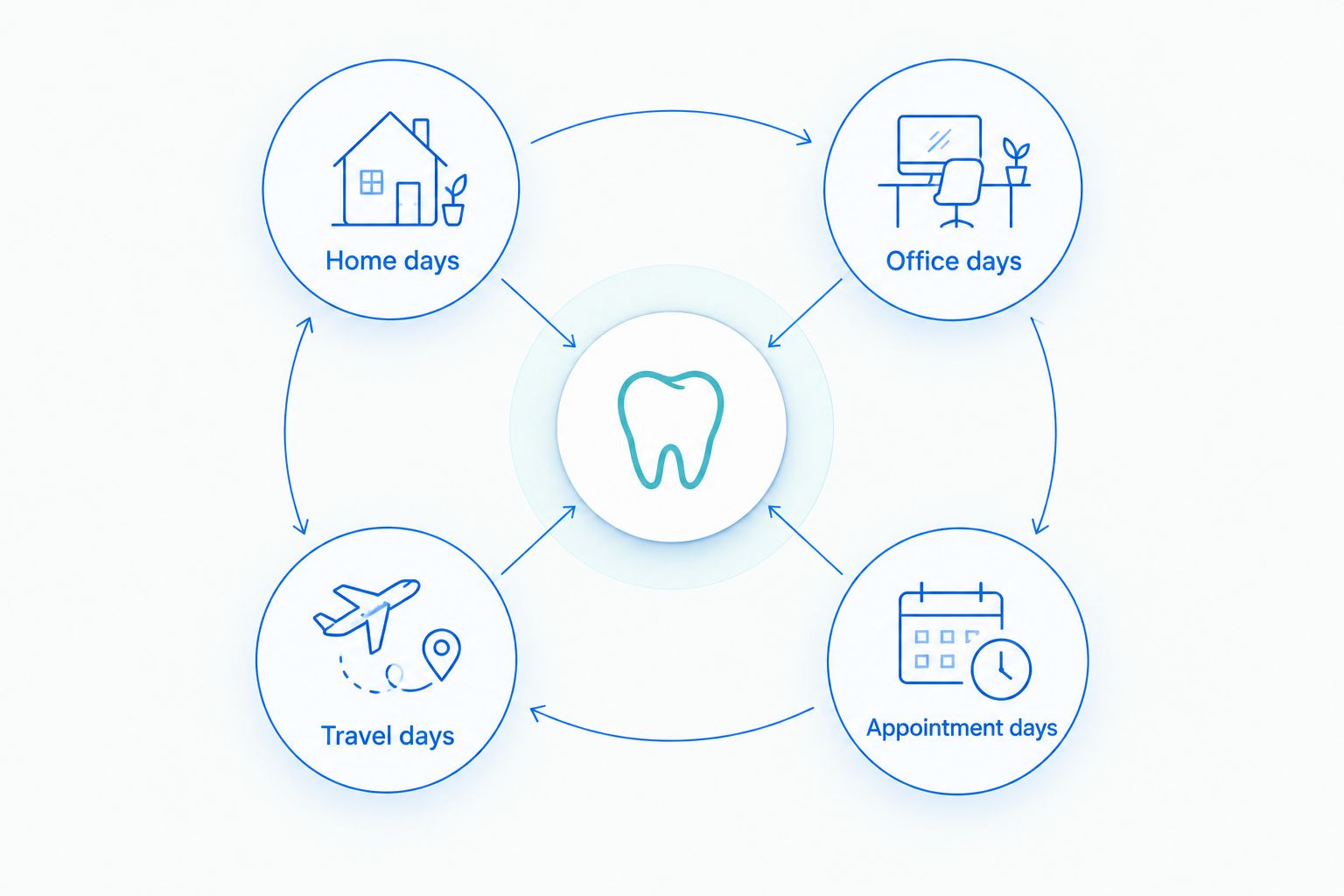
Keep the routine consistent across locations
Use the same basic care plan wherever you work. Your supplies can change location without changing the habits they support.
- Home days: Connect brushing to getting ready, not to your first meeting.
- Office days: Pack your usual supplies when you expect to stay away overnight.
- Travel days: Carry dental essentials where you can access them if plans change.
- Appointment days: Follow the dental team’s instructions instead of assuming every visit has the same aftercare.
Common mistakes remote and hybrid workers make
Waiting for a meeting-free day
An empty calendar is not a dependable appointment strategy. Reserve a realistic block, communicate that you are unavailable, and ask about aftercare before promising to return immediately to a presentation.
Treating continuous sipping as a harmless desk habit
The pattern of exposure matters, not just whether a drink feels like a treat. Keep water as your desk drink and give other drinks a defined place in the day.
Assuming working from home means instant recovery
Your desk being nearby does not cancel treatment instructions. Numbness, discomfort, or sedation-related restrictions can affect what is appropriate afterward; ask about your specific procedure.
Shopping for a brighter smile before checking discomfort
A whitening product does not explain a painful tooth or bleeding gums. Discuss those concerns first, then choose cosmetic care around a healthy foundation and your personal goals.
FAQ
What is the best dental care routine for remote workers?
The best starting routine is brushing twice daily with fluoride toothpaste, cleaning between teeth daily, and attending dental visits at an interval your dentist recommends. Attach home care to waking and bedtime rather than unpredictable breaks between meetings.
Do I need more dental visits because I work from home?
Working from home alone does not determine how often you need dental visits. Your dentist recommends an interval based on factors such as cavities, gum health, dry mouth, and treatment needs.
Is sipping coffee all day bad for my teeth?
Continuous coffee sipping can contribute to staining, and added sugar increases concern about repeated sugar exposure. Have coffee during a defined break and keep plain water beside your desk afterward.
What should I do if I clench my jaw during video calls?
Notice the habit, let your jaw relax, and discuss persistent soreness or tooth symptoms with a dentist. An examination helps determine whether clenching, grinding, or another issue needs treatment.
Can I go straight back to work after a dental appointment?
Returning to work depends on the treatment and the dental team’s instructions. Ask about numbness, discomfort, sedation, and any restrictions before scheduling a demanding meeting afterward.
Should I get veneers because I dislike my smile on camera?
Camera appearance alone is not a reason to choose veneers. Discuss the specific change you want, your dental health, less invasive alternatives, and the irreversible tooth changes veneers generally involve.
Where can remote workers in Spring find general and cosmetic dental care?
Mysmiletheory offers general, cosmetic, restorative, and family dentistry in Spring, Texas. Contact the office to discuss your concerns and ask which type of appointment fits your needs.
One last thing
For the rest of 2026, protect your bedtime brushing even when work runs late. An evening deadline can move; your dental routine does not need to move with it. Keep the supplies ready, finish your care, and let that small boundary mark the end of the workday.