

Dental insurance can cover parts of All-on-4 treatment, but coverage depends on your policy, and implant benefits do not mean the entire treatment is covered. Extractions, implant placement, and replacement teeth can receive different coverage decisions. For treatment planned in 2026, ask for a written, procedure-by-procedure benefits estimate before you commit.
- Does insurance cover all on 4 implants? Sometimes partially; your policy determines benefits for each treatment component.
- All-on-4 uses four implants to support replacement teeth for one arch; coverage is not automatically full-mouth coverage.
- Request a written benefits estimate, including exclusions, waiting periods, annual limits, and network rules.
- Mysmiletheory suits Spring patients seeking personal general and restorative dental care, not a promise of insurance approval.
Why this matters
A covered dental procedure and a fully covered treatment plan are different things. Your insurer can recognize a procedure as eligible while still leaving you responsible for a deductible, coinsurance, or services beyond your remaining benefits.
For patients in Spring and North Houston, Mysmiletheory provides general, cosmetic, restorative, and family dentistry. Choose care around your dental needs first, then confirm how your benefits apply. An insurance decision does not replace an examination or a conversation about your comfort and goals.
Does dental insurance cover all-on-4 implants?
Dental insurance sometimes covers individual parts of All-on-4 treatment, but your plan must specifically allow the relevant services. A statement that your plan covers major dental work is not enough to establish implant coverage. Read the implant exclusions and replacement-tooth provisions alongside the benefits summary.
All-on-4 generally uses 4 implants per arch to support a full set of replacement teeth. Treating 1 arch means replacing the upper or lower set; treating 2 arches means addressing both. These describe treatment scope, not a promise that every patient receives the same surgical plan.
Ask for a separate benefits review for each planned procedure. The following table is a checklist for reviewing your policy, not a statement that any particular insurer covers these services.
| Treatment component | What to verify | What that answer does not establish |
|---|---|---|
| Examination and imaging | Whether the planned services are covered and subject to frequency limits | That implant treatment itself is covered |
| Tooth extractions | Whether each necessary extraction is eligible | That replacement teeth receive the same benefits |
| Implant placement | Whether your policy includes implants or excludes them | That every implant-related component is included |
| Implant connections and replacement teeth | How these are classified and whether separate benefits apply | That approval for surgery includes the finished teeth |
| Temporary teeth, if planned | Whether the temporary restoration has a separate benefit | That temporary and final teeth are both covered |
| Sedation, if planned | Whether your policy covers it for the proposed circumstances | That anxiety alone satisfies the policy's requirements |
For 2026 treatment, use the policy documents effective on the planned service dates. An older benefits summary does not establish your current eligibility.
Why All-on-4 insurance coverage varies
Two patients receiving similar treatment can receive different insurance decisions because their contracts differ. Focus your review on these six factors rather than on a general description of the procedure.
- Implant exclusions: Some policies exclude implant placement or related services. Ask whether the exclusion also affects the replacement teeth attached to implants.
- Annual benefit maximum: A covered service can use up the benefits available during the plan year. Confirm the remaining benefit, not just the original annual allowance.
- Waiting periods: Your policy can require a period of enrollment before certain benefits become available. Verify eligibility against the expected treatment dates.
- Missing-tooth provisions: Some policies restrict replacement benefits when a tooth was missing before coverage began. Ask how the provision applies to your documented dental history.
- Network rules: In-network and out-of-network treatment can receive different benefit calculations. Confirm each treating provider's status with the insurer.
- Replacement and alternative-benefit rules: A policy can limit how often it covers replacement teeth or calculate benefits using a different covered treatment. Ask which rule applies to your proposed restoration.
A covered extraction does not establish coverage for an implant. Keep those decisions separate when you review an estimate, even when both procedures belong to the same treatment plan.
How do you check your benefits before starting treatment?
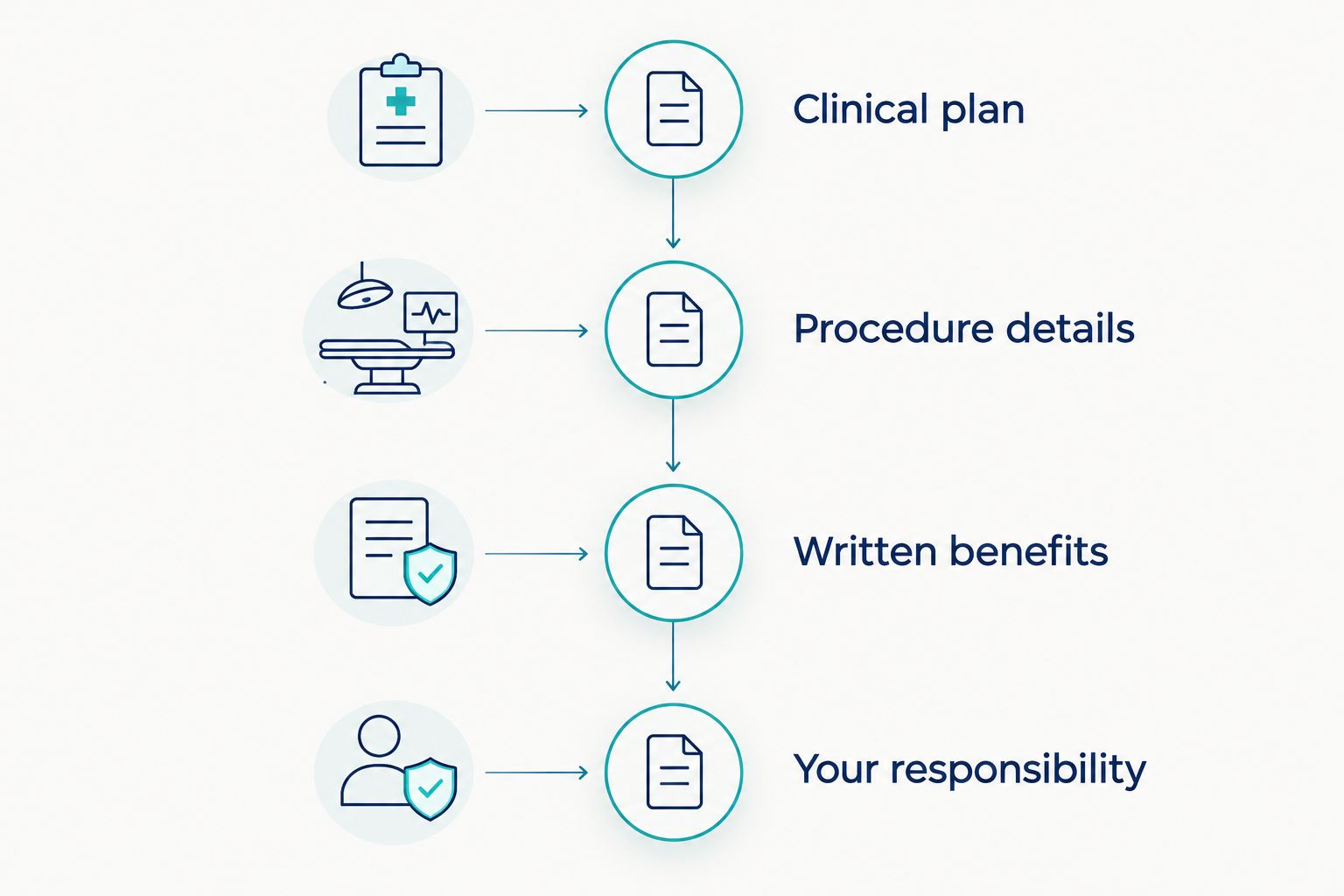
Start with a clinical plan, then ask the insurer to review the procedures in that plan. Trying to obtain a reliable answer using only the phrase All-on-4 leaves too much unspecified.
Start with a clinical plan
Ask your dentist which teeth need treatment, whether one or both arches are involved, and which procedures are necessary. The plan should distinguish preparation, implant placement, temporary teeth when relevant, and the final replacement teeth.
This is also the time to discuss alternatives. Your dental condition, ability to clean around a restoration, and preferences about removable or fixed teeth belong in that conversation—not just the insurance benefit.
Request procedure details
Ask for the proposed procedure codes, supporting records, and anticipated treatment stages. Your insurer needs the services being requested, not simply the name used to describe the overall treatment.
If different clinicians will provide different stages, identify who submits each claim. Separate offices can mean separate estimates and network checks; do not assume a single approval covers every provider involved.
Obtain written benefits
Ask whether your insurer offers a predetermination or pretreatment estimate. Request the response in writing and review the explanation for each procedure rather than relying on the estimated total alone.
A predetermination is generally an estimate, not a payment guarantee. Eligibility, remaining benefits, actual services, and policy terms still affect the final claim decision.
Review your responsibility
Compare the insurer's response with the treatment plan. Ask the dental office to explain which services are excluded, which are partially covered, and which still require clarification.
For a 2026 plan, record the policy effective dates and any renewal date that falls during treatment. Do not delay necessary care or change treatment timing solely to pursue a benefit without discussing the clinical implications.
Keep the written estimate and the insurer's reference number together. If someone gives you a different answer later, those records help you ask a precise follow-up question instead of restarting the conversation.
What should you ask your insurance company?
A useful insurance call ends with answers tied to your policy and proposed procedures. Have your member information and treatment plan available, and ask the representative to identify the relevant policy language.
Use these questions as a starting point:
- Does my policy include implant placement, or is there an implant exclusion?
- Are the connections and replacement teeth covered separately from implant placement?
- Does a missing-tooth provision apply to my situation?
- Have I satisfied any waiting period for these procedures?
- What benefits remain, and which deductible or coinsurance provisions apply?
- Are all proposed treating providers in network under my specific plan?
- Does the plan calculate benefits using an alternative treatment?
- What records are needed for a pretreatment review or an appeal?
Ask for a written explanation if a response is unclear. The phrase medically necessary, by itself, does not establish dental or medical insurance coverage.
If you are still comparing treatment approaches, the guide to All-on-4 alternatives for full-mouth restoration can help you prepare questions for your appointment. Insurance should inform that discussion without becoming the only reason to choose a particular restoration.
Can medical insurance cover All-on-4 implants?
Medical insurance is not a dependable substitute for a dental implant benefit. A medical plan can consider certain oral procedures in specific medical circumstances, but routine replacement of missing teeth does not automatically qualify.
Ask the medical insurer whether the proposed service falls within a covered benefit and what documentation it requires. A dentist's recommendation establishes a clinical recommendation; the insurer still applies its own coverage terms.
| Coverage route | Best for | Useful feature | Main limitation |
|---|---|---|---|
| Dental insurance review | Checking benefits for the proposed dental procedures | Directly addresses the plan's dental benefit categories | Implant exclusions and benefit limits can restrict payment |
| Medical insurance review | Evaluating a documented medical circumstance against a medical policy | Establishes whether a specific medical benefit applies | Missing teeth alone do not establish coverage |
Review medical coverage only when the facts of your case support it. Do not treat a possible medical claim as confirmed payment, and do not assume a dental denial makes the same service eligible under medical insurance.
Will dental insurance cover the whole treatment?
Full coverage cannot be assumed, even when your policy includes implants. The benefit maximum, exclusions, and your share of covered services still matter.
Ask for an explanation that separates approved services from excluded services and unresolved items. A percentage in a benefits brochure does not mean the insurer pays that percentage of the entire treatment plan.
If treatment crosses into another plan year, verify the rules again. A new year does not automatically renew eligibility for every procedure, remove replacement limits, or guarantee additional payment.
What can you do if coverage is denied?
A denial is a decision about a claim or benefit, not proof that the recommended treatment is inappropriate. Request the written explanation and identify whether the issue involves an exclusion, missing documentation, eligibility, or another policy rule.
If the denial appears inconsistent with your policy or records, follow the insurer's appeal instructions and deadline. Supporting records can clarify a claim, but they do not create a benefit that the contract excludes.
For 2026 treatment decisions, keep the appeal process separate from any urgent dental needs. Ask your dentist whether waiting affects your health or treatment choices before postponing care.
FAQ
Does insurance cover all on 4 implants in 2026?
Dental insurance can cover parts of All-on-4 treatment in 2026 if your policy includes the relevant procedures. Confirm implant placement, replacement teeth, exclusions, and remaining benefits separately before starting.
If my plan covers implants, does it cover the replacement teeth too?
Implant coverage does not automatically establish coverage for the replacement teeth. Ask the insurer to review implant placement, connections, temporary teeth when planned, and the final restoration separately.
Does an annual benefit maximum mean insurance pays the whole treatment?
An annual benefit maximum limits plan benefits; it does not promise full payment for treatment. Exclusions, deductibles, coinsurance, and benefits already used still affect the claim.
Can I use medical insurance if dental insurance denies implants?
A dental denial does not automatically make implant treatment eligible under medical insurance. Medical coverage requires a qualifying benefit under the medical policy and documentation supporting the specific circumstances.
Is a dental insurance predetermination guaranteed payment?
A predetermination is generally an estimate rather than guaranteed payment. Final benefits depend on eligibility, policy terms, remaining benefits, and the services actually provided.
Does missing a tooth before enrollment affect implant coverage?
A missing-tooth provision can restrict replacement benefits for teeth missing before coverage began. Ask your insurer whether your policy contains that provision and how it applies to your dental history.
Can I discuss missing teeth with Mysmiletheory before choosing treatment?
Mysmiletheory offers restorative dental care for local patients in Spring, Texas. An appointment gives you a place to discuss missing teeth, your goals, and the questions to resolve before selecting treatment.
One last thing
The most useful insurance question is not just whether implants are covered—it is which exact services your policy covers for your treatment plan. That distinction turns a vague reassurance into information you can use.
You do not need to understand every insurance term before asking for help. Bring your policy information, write down what feels unclear, and take the conversation one decision at a time. A treatment choice should make sense to you before you agree to it.


