
Dental insurance usually excludes treatment done only to change how your teeth look, such as elective whitening or veneers. Treatment that repairs decay, damage, or lost tooth function can qualify for benefits, even when it also improves your smile. For 2026, the deciding factors are your plan’s wording, the reason for treatment, and the documentation supporting it—not simply whether a procedure is called cosmetic.
- Does dental insurance cover cosmetic dentistry? Usually not when appearance is the only reason for treatment.
- Bonding and crowns can qualify for benefits when they repair damaged teeth, subject to your plan.
- Request a written benefits estimate before deciding on veneers or other cosmetic dentistry.
- Mysmiletheory provides general, cosmetic, restorative, and family dental care in Spring, Texas.
Does dental insurance cover cosmetic dentistry?
Dental insurance generally distinguishes elective appearance changes from treatment that restores dental health or function. A natural-looking repair does not become ineligible just because it looks good. Equally, calling an elective change a repair does not make it covered.
Mysmiletheory offers both cosmetic and restorative dental care. Understanding the difference helps you discuss your smile goals without assuming that every part of a treatment plan receives the same insurance benefit.
| Treatment | Best for, when clinically appropriate | Insurance distinction | Benefit and limitation |
|---|---|---|---|
| Teeth whitening | Changing natural tooth color | Elective whitening is generally excluded | Changes color, but does not repair decay or damage |
| Veneers | Changing the appearance of selected tooth surfaces | Elective veneers are generally excluded | Can change shape and color; many preparations involve irreversible enamel removal |
| Dental bonding | Selected small repairs or appearance changes | Coverage depends on whether the purpose is restorative or cosmetic | Can repair selected defects, but the material can chip or stain |
| Dental crowns | Protecting teeth that need substantial repair | A restorative reason can support coverage, subject to plan terms | Can protect a damaged tooth, but requires tooth preparation |
| Orthodontic treatment | Correcting tooth position or bite | Requires a separate check of orthodontic benefits and exclusions | Changes alignment, but involves ongoing treatment and retention |
These are coverage distinctions, not a recommendation to choose a particular procedure. An examination determines which treatments fit your teeth; the insurer determines benefits under your contract.
Why this matters
You do not need to choose between caring about your appearance and caring about dental health. The same tooth can have a visible concern and a genuine repair need, and those issues deserve a clear explanation.
Insurance creates 2 separate decisions: whether a treatment is clinically appropriate and whether your plan contributes toward it. A coverage denial does not establish that treatment is unnecessary, and an available benefit does not establish that treatment is right for you.
Before starting treatment in 2026, separate your health priorities from your optional appearance goals. That makes the discussion clearer and helps you understand which recommendations address a dental problem versus a personal preference.
Teeth whitening: generally excluded when elective
Whitening changes tooth color rather than treating decay or repairing a fracture. Standard dental coverage generally excludes whitening performed for appearance alone, whether you want a brighter everyday smile or a change before an event.
Best for: people seeking a color change in natural teeth after a dental assessment. Its limitation is just as important: whitening does not repair damaged teeth, and existing crowns or veneers do not whiten like natural enamel.
Ask your dentist what is causing the discoloration before choosing treatment. A visible color change and a tooth-health problem are not interchangeable, so the examination comes before the cosmetic decision.
Veneers: generally excluded for appearance changes
Veneers selected to change tooth shape, color, or the appearance of small spaces are generally considered cosmetic. Wanting a more even smile is a valid personal goal, but that goal alone does not establish insurance eligibility.
Best for: selected appearance concerns when a dentist finds veneers appropriate. The trade-off is that many veneer preparations remove enamel, making the decision more involved than simply choosing a shade.
If a tooth has damage or another health concern, ask which treatment addresses that problem and why. Do not assume that a veneer becomes covered because another procedure on the same tooth would qualify.
Existing decay also needs attention before elective cosmetic work. The guide to getting veneers when you have cavities explains why the condition of the underlying tooth matters.
Bonding and crowns: the reason for treatment matters
Bonding used to repair a damaged tooth has a different purpose from bonding used only to change its outline. Similarly, a crown protecting a weakened tooth is different from replacing a sound restoration solely because you prefer another appearance.
Best for: bonding suits selected smaller repairs; crowns suit teeth that need more substantial protection, as determined by an examination. Neither is automatically the right choice simply because an insurance plan lists a benefit for it.
The advantage of a restorative approach is that it addresses a repair need while considering appearance. Its limitation is that coverage still depends on exclusions, supporting records, and other plan rules—not just the treatment name.
For your 2026 plan, ask the insurer to review the proposed procedure and its documented purpose. A general statement that crowns or fillings are covered does not answer whether your particular treatment qualifies.
Why cosmetic dentistry coverage varies
The treatment name is only part of the insurance decision. These plan features explain why apparently similar dental work can receive different benefit determinations:
- Reason for treatment: Repairing decay or damage is different from changing the appearance of a healthy tooth.
- Cosmetic exclusions: Your contract can exclude procedures whose primary purpose is improving appearance.
- Benefit categories: Restorative and orthodontic services can have different eligibility rules and limits.
- Waiting and replacement rules: A plan can restrict when benefits begin or when an existing restoration qualifies for replacement.
- Remaining benefits: Deductibles, annual maximums, and benefits already used affect the plan’s contribution.
- Provider arrangements: Network status and the plan’s allowed amount affect how benefits are calculated.
A covered service is not the same as a fully paid service. Read the benefit explanation alongside the proposed treatment so you understand both eligibility and your responsibility.
How do I check coverage before cosmetic dental treatment?
Start with the proposed treatment, not a broad question about whether your plan covers cosmetic dentistry. The insurer needs enough detail to distinguish an elective change from a repair.
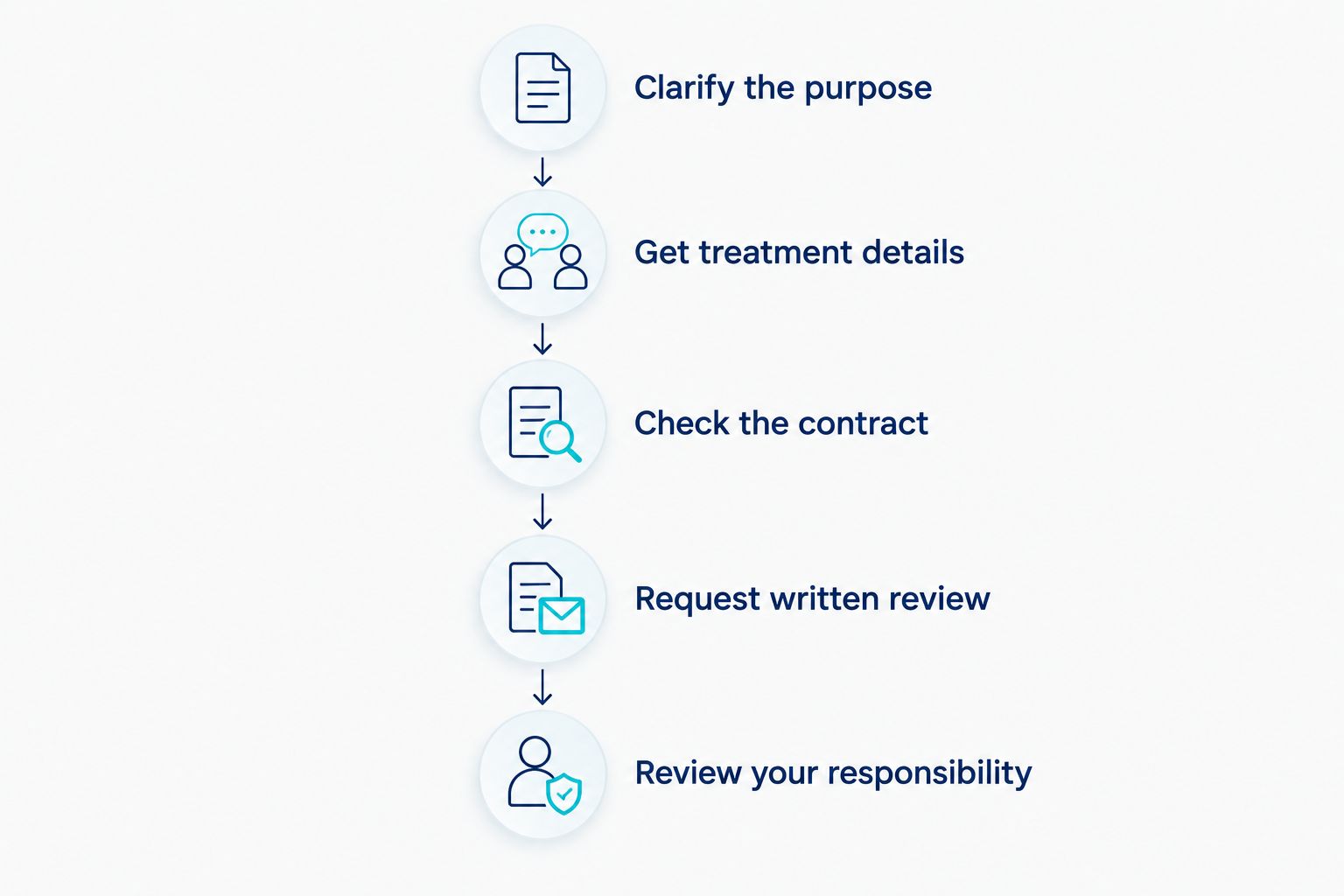
- Clarify the purpose. Ask which concern each proposed procedure addresses: appearance, decay, damage, function, or a combination.
- Get the treatment details. Request the procedure descriptions, relevant billing codes, and teeth involved so your questions refer to the actual plan.
- Check the contract. Look for cosmetic exclusions, benefit categories, waiting periods, replacement rules, and network requirements.
- Request written review. Ask whether the insurer offers a pretreatment estimate or predetermination for the proposed work.
- Review your responsibility. Compare the insurer’s response with the treatment plan and clarify any excluded portions before agreeing to proceed.
A written estimate is useful, but it is not a guarantee of payment. Final benefits remain subject to your contract, eligibility, and claim review.
For a 2026 appointment, use the policy documents that apply to your current benefit period. A past claim or an older benefits summary does not establish what your current plan will pay.
Take these 3 documents into the conversation
Have your current benefits summary, proposed treatment plan, and any written insurer response together. Keeping these 3 documents side by side makes it easier to spot a mismatch between what the dentist recommends and what the insurer has reviewed.
If the response is unclear, ask for the relevant contract language rather than relying on a verbal assurance. Keep the explanation with your treatment paperwork so you can refer back to it.
Ask these 6 questions before agreeing to treatment
- Is this procedure excluded when its purpose is cosmetic?
- What documentation is needed to review its restorative purpose?
- Do waiting periods or replacement restrictions apply?
- Does my provider’s network status affect the benefit calculation?
- What remaining deductible or benefit limit affects this treatment?
- Does the written estimate cover every proposed procedure or only part of the plan?
These 6 questions keep the discussion specific without requiring you to become an insurance expert. Ask the insurer to explain unfamiliar terms in everyday language.
Can dental insurance cover veneers after an injury?
Veneer coverage after an injury depends on the contract and the documented repair need; an injury does not automatically make veneers eligible. The dentist must first assess the damage and recommend an appropriate treatment.
Ask the insurer whether the proposed restoration falls within covered benefits and whether any injury-related provisions apply. Do not choose a restoration based on an assumption about reimbursement.
Will insurance cover bonding for a chipped tooth?
Bonding for a chipped tooth can qualify for restorative benefits when it repairs damage, subject to the plan’s rules. Bonding used only to alter the appearance of an otherwise healthy tooth is generally treated differently.
The useful question is not simply whether bonding is covered. Ask whether the documented repair on your specific tooth qualifies and whether the insurer needs supporting records.
Does a smile makeover receive one insurance decision?
A smile makeover is not automatically covered as a single package; each proposed service needs its own benefit review. A plan combining restorative work and elective changes can contain both eligible and excluded procedures.
Ask for an itemized explanation of the treatment. You should be able to identify what protects dental health, what changes appearance, and which decisions can be considered separately.
What if the insurer denies the proposed treatment?
First, identify the reason for the denial. An explicit cosmetic exclusion, a missing record, and an exhausted benefit limit are different issues and require different responses.
If the response identifies missing information, ask what is needed for review. If you disagree with the decision, follow the appeal instructions in your plan documents and keep copies of the correspondence.
An appeal does not guarantee coverage. Avoid changing the description of treatment to make it sound eligible; records should accurately describe the diagnosis and the care proposed.
A comfortable conversation about your smile
Mysmiletheory is best for local patients seeking a personal dentist in Spring, Texas, for general, cosmetic, restorative, and family dental care. That is a reason to start a conversation—not a promise that a particular procedure is covered or appropriate.
You can describe what bothers you without committing to treatment. Bring your questions about natural-looking results, tooth preparation, alternatives, and insurance, then ask for a clear distinction between necessary repairs and optional changes.
For a 2026 consultation, make your priorities explicit: what you want to improve, what you want to preserve, and what you need explained before deciding. There is no need to arrive knowing which procedure to request.
Talk through your smile goals
Ask about your concerns and the distinction between cosmetic changes and restorative care.
FAQ
Does dental insurance cover cosmetic dentistry in 2026?
Dental insurance generally excludes treatment done only to improve appearance in 2026. Restorative treatment can qualify even when it also improves your smile, subject to the current plan’s terms.
Will dental insurance pay for teeth whitening?
Dental insurance generally excludes elective teeth whitening. Whitening changes tooth color rather than repairing decay or damage.
Can insurance cover veneers if my teeth are damaged?
Veneer coverage depends on your contract and the documented reason for treatment. Damage does not automatically make a veneer eligible, so request a review of the actual proposed procedure.
Is bonding covered if I want to close a gap?
Bonding done only to change the appearance of a gap is generally considered cosmetic. Coverage for a documented repair depends on the plan and the condition being treated.
Does a pretreatment estimate guarantee that insurance will pay?
A pretreatment estimate does not guarantee payment. Final benefits depend on your contract, eligibility, remaining benefits, and claim review.
Can I use dental insurance for only part of a smile makeover?
A plan can provide benefits for eligible restorative procedures while excluding elective cosmetic portions. Ask for an itemized treatment plan and a separate benefit explanation for each service.
Does Mysmiletheory accept my dental insurance?
Confirm your specific plan directly with Mysmiletheory and your insurer before treatment. Ask about both plan participation and the proposed procedure’s eligibility; those are separate questions.
One last thing
A tooth can look better after necessary treatment without making that treatment purely cosmetic. The reverse is also true: a change you deeply value can still fall outside your insurance benefits.
Before deciding, ask your dentist to explain the purpose of each proposed procedure in one plain-language sentence. Then ask your insurer to assess those actual procedures—not the broad label of cosmetic dentistry. That gives you a clearer basis for choosing care that fits your health needs and smile goals.