
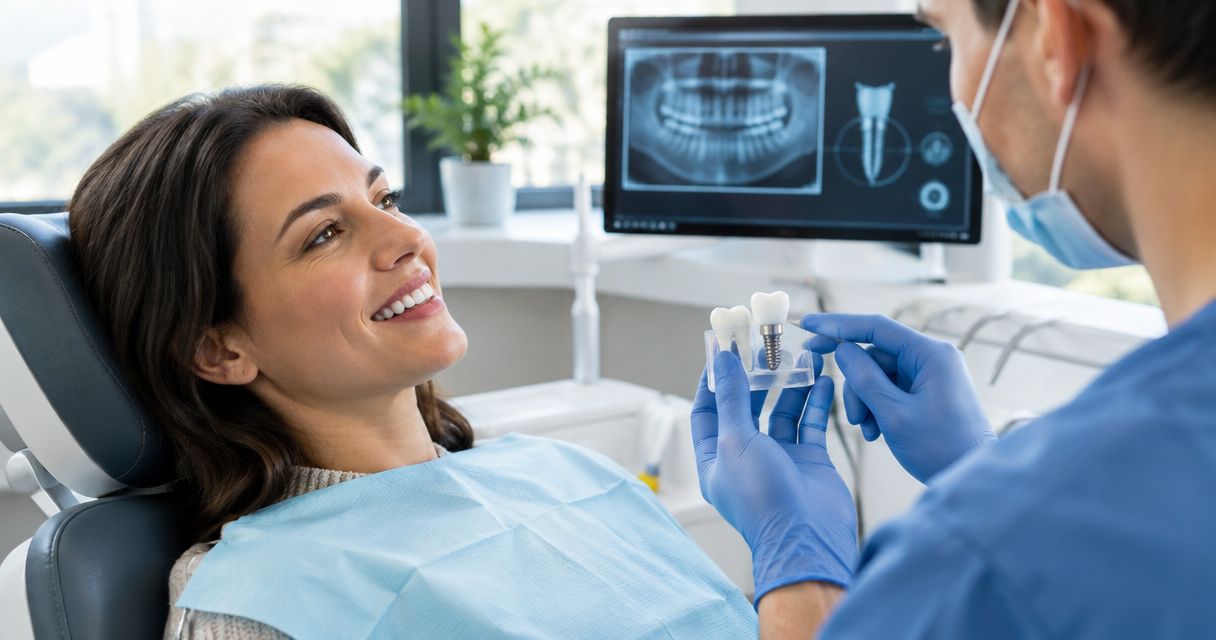
A dental implant generally needs several months to heal as the jawbone bonds with it; a common healing window is 3–6 months, while the gum usually closes much sooner, often within 1–2 weeks. That bone-healing window does not include every step of treatment: tooth removal, bone grafting, or making the final replacement tooth can add time.
- How long does a dental implant take to heal? Bone healing commonly takes 3–6 months; gum healing is faster.
- Feeling comfortable does not mean an implant is ready for full chewing pressure.
- Bone grafting, smoking, gum health, and medical conditions affect the healing plan.
- Mysmiletheory offers restorative dental care for local patients seeking a personal dentist in Spring, Texas.
Why this matters
An implant has more than one healing milestone. Your gum can look settled while the bone underneath is still forming a secure connection around the implant. Less soreness is encouraging, but it is not clearance to chew normally.
For your 2026 treatment plan, separate the date you expect to feel better from the date your dentist expects the implant to support a replacement tooth. If you are seeking a personal dentist in Spring, Texas, Mysmiletheory offers general and restorative dental care.
How long does a dental implant take to heal?
Bone healing commonly takes 3–6 months, while initial gum healing often takes 1–2 weeks. These are general patient-education ranges, not a deadline for your mouth. Your treating dentist decides when the implant is ready based on the examination, the procedure, and the stability of the implant.
The distinction matters because healing has different jobs at different stages:
| Healing stage | General timing | What it means for you | What it does not mean |
|---|---|---|---|
| Early recovery | First several days | Tenderness, swelling, and minor bleeding can occur after surgery | Increasing pain or heavy bleeding should be ignored |
| Initial gum healing | Often 1–2 weeks | The surface wound closes and early discomfort settles | The bone has finished bonding with the implant |
| Bone healing | Commonly 3–6 months | Bone forms a supporting connection around the implant | Every patient is ready for the final tooth on the same schedule |
| Final restoration | After the dentist confirms readiness | The replacement tooth is fitted and the bite is checked | Follow-up care and cleaning are no longer needed |
Think of the table as a planning guide, not a countdown. If your dentist gives you a different timeline, ask which part of your treatment explains the difference. A graft, an extraction, or the condition of the bone can change the sequence.
Gum healing: often 1–2 weeks
Initial gum healing often takes 1–2 weeks after implant placement. During that period, follow the surgical team's instructions for cleaning, eating, and caring for stitches. Some stitches dissolve; others need removal, so confirm which type you have rather than trying to manage them yourself.
A healing area can feel tender even when recovery is progressing. What matters is the overall direction: discomfort and swelling should settle rather than become increasingly difficult to manage. Your instructions should also explain whom to call if something changes outside normal office hours.
Do not test the implant by pushing it with your tongue or fingers. Repeatedly checking whether it feels solid adds pressure without telling you whether the bone has healed. Leave that assessment to your dentist.
Bone healing: commonly 3–6 months
Bone healing commonly takes 3–6 months because the implant needs a stable connection with the surrounding jawbone. Dentists call this process osseointegration. You do not need to remember the term; the practical point is that the support develops below the gum, where you cannot judge it by appearance.
Feeling ready to eat a familiar meal does not tell you whether the implant can tolerate that pressure. Your dentist should give you specific instructions about which side to chew on, which textures to avoid, and when those restrictions change.
For a 2026 implant plan, ask for the next review milestone rather than a guaranteed finish date. A useful answer identifies what your dentist needs to see before moving ahead. That makes an adjustment to the schedule easier to understand and less unsettling.
The final tooth: after healing is confirmed
The final replacement tooth is a separate step from placing the implant. An implant supports the restoration beneath the gum; the crown is the visible tooth used for biting and smiling. Your dentist checks that the implant and surrounding tissues are ready before completing that stage.
Some treatment plans include a temporary tooth during healing. A temporary tooth helps manage the gap, but its presence does not prove that the implant underneath is ready for unrestricted chewing. Ask whether the temporary tooth rests on the implant and what eating limits apply.
If you are still deciding how to replace a tooth, review the best options for replacing a single missing tooth. The right decision includes maintenance and treatment steps, not just how quickly the gap can be filled.
Why dental implant healing time varies
The healing window depends on the condition of your mouth and the work needed before and during placement. These factors help explain why two people with a missing tooth receive different schedules:
- Bone support: The amount and condition of the jawbone influence implant placement and the healing plan. Your dentist evaluates support before deciding the next step.
- Bone grafting: A graft adds bone or bone-supporting material where support is needed. Depending on the procedure, it is done before implant placement or alongside it.
- Gum health: Inflammation or infection needs attention. Healthy surrounding tissues matter for healing and for keeping the implant clean afterward.
- Smoking and tobacco use: Smoking interferes with wound healing and increases implant complications. Tell your dental team what you use so the plan addresses it directly.
- Medical conditions and medicines: Diabetes control, certain medicines, and other health factors affect surgical planning. Share an accurate health history and do not stop prescribed medicine without medical advice.
- Pressure during healing: Chewing forces and poorly fitting temporary restorations can disturb the site. Follow the instructions for your specific restoration rather than someone else's experience.
A longer plan is not, by itself, evidence that something has gone wrong. Ask whether the extra time is planned healing or a response to a finding that needs treatment. Those are different situations.
What should you do during each healing stage?
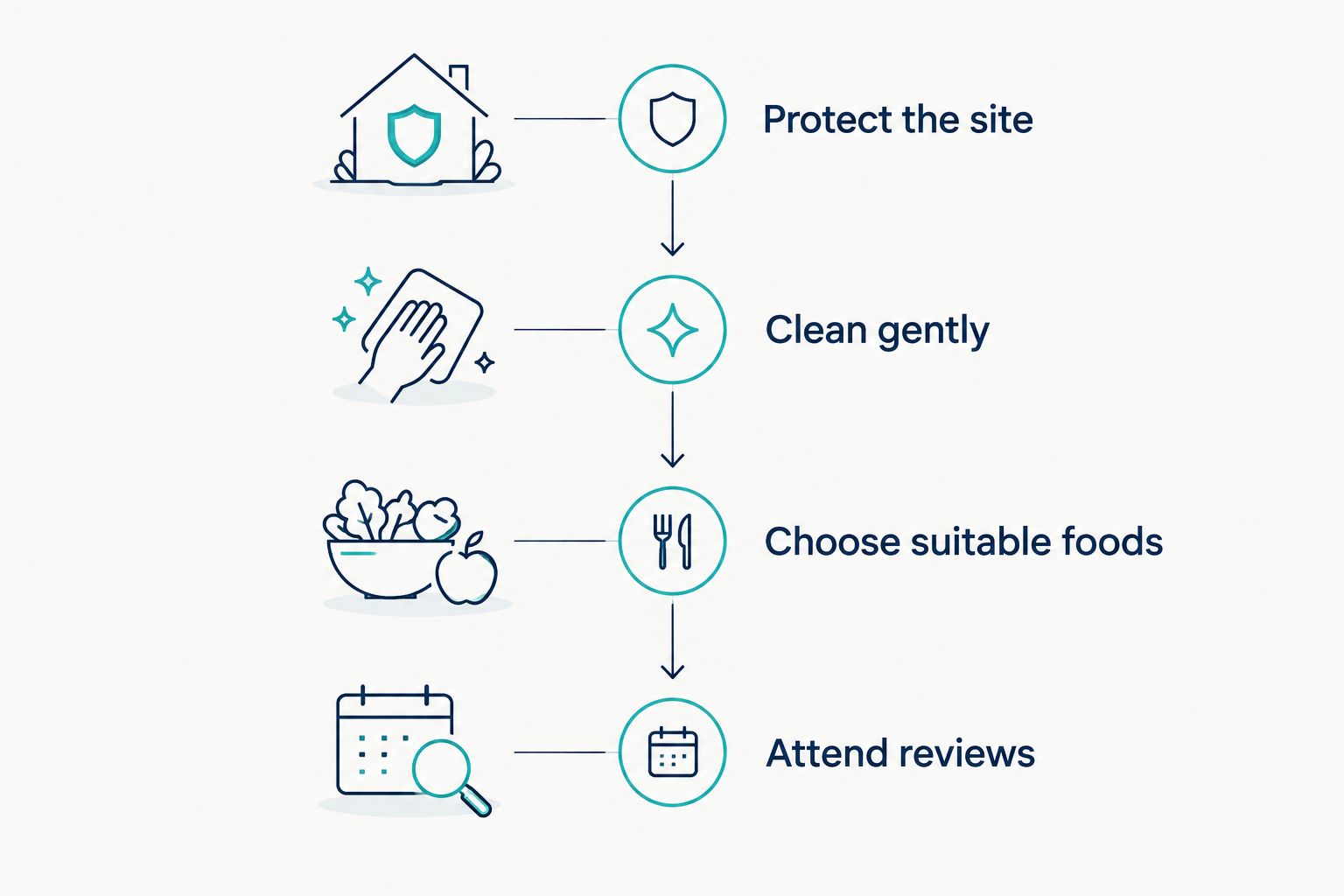
Your written postoperative instructions come first. A straightforward recovery plan connects each stage with a practical action, so you know what to do instead of repeatedly checking the area in the mirror.
- Protect the site. Follow the instructions for managing bleeding, taking prescribed medicines, and resting after the procedure. Do not add home remedies to the surgical area.
- Clean gently. Ask exactly how to clean around the healing gum and when to resume your usual routine. Avoid scrubbing directly over the wound or using a rinse your team has not recommended.
- Choose suitable foods. Start with textures your dentist approves and avoid direct pressure on the healing site. Let hot foods cool, and do not use pain relief as a reason to test harder foods.
- Attend reviews. Keep follow-up visits even when you feel comfortable. Your dentist checks healing that you cannot assess at home and adjusts instructions when appropriate.
Keep the instructions somewhere easy to find, along with the treating office's contact details. If different clinicians handle surgery and the final tooth, confirm who answers questions at each stage. That avoids uncertainty when a symptom appears or an appointment needs adjusting.
When should you call the dentist during implant healing?
Call your treating dentist promptly for worsening pain, swelling that increases after initially improving, pus, fever, a persistent unpleasant taste, or an implant or temporary tooth that feels loose. These symptoms need assessment; do not wait for the next scheduled review simply because it is already booked.
Seek urgent medical care for difficulty breathing or swallowing, rapidly spreading swelling, or bleeding that will not stop despite following your postoperative instructions. Breathing or swallowing difficulty is an emergency, not a routine recovery question.
You do not need to decide whether a symptom is a complication before calling. Explain when it started, whether it is improving or worsening, and what medicines you have taken. Do not try to tighten or remove anything yourself.
Can I plan an implant around a 2026 event?
Plan around the full treatment sequence, not just the surgery date. If you have a wedding, graduation, work trip, or another 2026 commitment, tell your dentist before treatment starts and ask what your smile and eating routine are expected to be like at that point.
Ask specifically about temporary teeth, travel after surgery, and follow-up appointments. A visible replacement and a fully healed implant are different milestones. Avoid making a firm event plan around an assumed completion date before your dentist has examined the area.
Does a same-day tooth mean the implant has healed?
A same-day tooth does not mean that bone healing is complete. In selected cases, a dentist places a temporary restoration soon after implant placement, but the bone still needs time to form its connection with the implant.
The benefit is having a replacement tooth during healing; the limitation is that eating restrictions and careful follow-up still apply. Suitability depends on clinical assessment, so a same-day approach is not a shortcut everyone should choose.
What should I ask at an implant consultation in 2026?
Bring a short list of questions and any relevant dental records. You should leave understanding the sequence, your responsibilities, and who to contact—not just the proposed date for surgery.
- Do I need a tooth removed or a bone graft before implant placement?
- Which part of my treatment is the longest healing stage?
- Will I have a temporary tooth, and what eating limits will it have?
- What signs should prompt a call before my next visit?
- Who checks the implant before the final tooth is fitted?
- How will my medicines, health history, or tobacco use affect the plan?
Mysmiletheory is a fit for Spring, Texas, patients seeking a personal dentist for restorative dental care. Use a conversation about your missing tooth to clarify the available options and which clinician would handle each treatment step.
Start with your questions
Discuss your missing tooth, dental history, and restorative care goals.
FAQ
How long does a dental implant take to heal completely?
Bone healing commonly takes 3–6 months, while initial gum healing often takes 1–2 weeks. The full treatment plan can take longer when tooth removal, grafting, or additional restorative steps are needed.
How long does the gum take to heal after a dental implant?
Initial gum healing often takes 1–2 weeks. A closed-looking gum does not confirm that the bone underneath has finished bonding with the implant.
Can I eat normally once my implant stops hurting?
No, the absence of pain does not mean your implant is ready for normal chewing pressure. Follow your dentist's instructions for food texture and chewing until you receive clearance.
Does a bone graft make dental implant treatment take longer?
A bone graft can add a separate healing stage to implant treatment. Whether grafting happens before or during placement depends on the bone support and the planned procedure.
Is it normal for an implant to feel loose while healing?
A loose-feeling implant or replacement tooth needs a prompt dental assessment. Do not push, twist, or try to tighten it yourself; the dentist needs to identify which part is moving.
Can I get a temporary tooth while my implant heals?
A temporary tooth is part of some implant treatment plans. Ask whether it puts pressure on the implant and which eating restrictions apply while the bone heals.
What symptoms after dental implant surgery need urgent help?
Difficulty breathing or swallowing, rapidly spreading swelling, or bleeding that will not stop requires urgent medical care. Contact your dentist promptly for worsening pain, fever, pus, or looseness.
One last thing
Ask for permission to progress, not just a date to circle. A useful plan says what needs to heal, who will check it, and what changes after that review. That is more reassuring than treating a general healing range as a promise.
For your 2026 dental visits, keep a simple note of symptoms and questions rather than repeatedly touching the implant. You will give your dentist clearer information while leaving the area undisturbed. This guide supports that conversation; your treating team's instructions take priority.


