
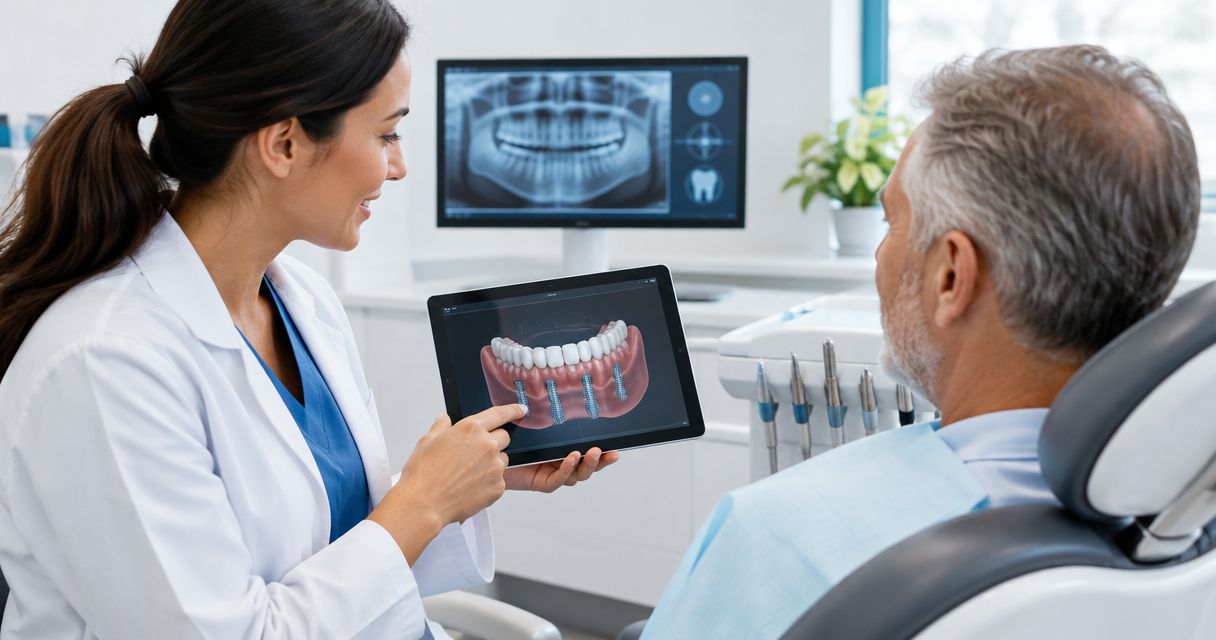
Getting All-on-4 dental implants takes several months from treatment planning to your final teeth, with implant-to-bone healing commonly taking about 3–6 months. Some patients receive a temporary fixed bridge on surgery day, but that is not the same as finishing treatment. Extractions, bone grafting, healing checks, and adjustments can extend your personal timeline.
- How long does All on 4 dental implants take? Allow several months; implant healing commonly takes about 3–6 months.
- Same-day teeth usually means a temporary bridge, not completed healing or your final restoration.
- Extractions, bone grafting, and implant stability affect when a fixed bridge can be attached.
- Mysmiletheory offers restorative dental care for Spring, Texas, patients seeking a personal dentist.
Why this matters
A promise of teeth in a day describes one milestone, not the whole treatment. You still need time for the implants to join with your jawbone and for your dental team to check how your teeth meet when you bite.
Plan around the final bridge, not just surgery day. If you are comparing restorative options for missing teeth, ask what you will wear during healing and which appointments happen afterward.
For a treatment plan starting in 2026, keep three dates separate: surgery, clearance for broader food choices, and placement of the final bridge. Those dates serve different purposes and do not necessarily fall close together.
How long does it take to get All-on-4 dental implants?
The clearest answer is a sequence rather than a single appointment length. Your examination establishes the starting point; surgery places the implants; healing determines when they are ready for the final teeth.
| Stage | What happens | What it means for your calendar |
|---|---|---|
| Assessment and planning | Your team reviews your health, examines your mouth, and evaluates imaging | You need a treatment plan before a reliable completion estimate |
| Preparatory treatment | Unhealthy teeth or gum problems are addressed; grafting is considered when needed | Separate treatment and healing can add time |
| Implant surgery | Implants are placed, with extractions performed when appropriate | Surgery day is a treatment milestone, not the finish line |
| Early recovery | Tenderness and swelling settle while the gums begin healing | Initial recovery often occupies about 1–2 weeks |
| Implant healing | Bone joins to the implant surfaces | This commonly takes about 3–6 months |
| Final bridge | Your team checks the healed implants, records the fit, and delivers the final teeth | Additional fitting and adjustment appointments complete the process |
These are general patient-planning intervals, not a personal recovery schedule. The American Academy of Implant Dentistry describes implant-to-bone healing as a process that takes months; your treating clinician determines when your implants are ready to support the planned restoration.
For your 2026 calendar, leave room after the healing assessment for final records, bridge fabrication, and fit checks. The end of bone healing does not automatically mean your final bridge is ready that day.
Same-day temporary teeth: 1 surgical visit, then healing
Some patients receive a fixed temporary bridge during the same surgical visit as implant placement. This approach is often called immediate loading, meaning the implants support temporary teeth before the bone-healing phase is complete.
The benefit is straightforward: you can leave that surgical visit with fixed teeth if your implants and treatment plan allow it. The limitation matters just as much: temporary teeth require protection, and your clinician will give you food and cleaning instructions while the implants heal.
Same-day attachment depends on how securely the implants sit in the bone at placement, among other clinical considerations. Your team can discuss the intended approach beforehand, but the findings during surgery can change that plan.
Best for: patients whose examination and surgical findings support immediate attachment. A same-day bridge is an option to assess, not a result every patient should expect.
Delayed fixed teeth: healing before bridge attachment
In a delayed approach, your team allows the implants to heal before attaching a fixed bridge. You should discuss the temporary arrangement before surgery so you understand what you will wear, how it will function, and whether it needs adjustments.
Waiting protects implants that are not ready for the intended chewing forces. The trade-off is a longer wait for fixed teeth and, depending on the plan, a different temporary experience during healing.
Best for: patients whose implant stability, bone condition, or preparatory treatment calls for a protected healing period. Delayed attachment is a clinical choice, not a sign that treatment has gone wrong.
| Approach | Best for | Main benefit | Main limitation |
|---|---|---|---|
| Same-day temporary bridge | Patients with suitable implant stability and a compatible treatment plan | Fixed temporary teeth at the surgical visit | Not appropriate for everyone; food restrictions still apply |
| Delayed fixed bridge | Patients who need healing before fixed teeth are attached | Keeps the planned bridge load off healing implants | Fixed teeth come later, and temporary arrangements need discussion |
Neither approach removes the need for follow-up. In 2026, as with any implant treatment, the right sequence is the one supported by your examination and healing—not the fastest advertised schedule.
Why the All-on-4 timeline varies
Your treatment sequence depends on the condition of your mouth and how you heal. These factors explain why two people receiving full-arch implant treatment can have different calendars.
- Starting dental health: Active gum disease, infection, and teeth that need removal influence what must happen before or during implant placement.
- Bone condition: The amount and position of usable bone help determine implant placement and whether grafting is needed. All-on-4 does not guarantee that grafting can be avoided.
- Implant stability: How securely the implants sit at surgery helps determine whether a fixed temporary bridge can be attached immediately.
- Health and tobacco use: Conditions that affect healing, including poorly controlled diabetes, and smoking can increase implant complications. Tell your team about your health history and tobacco use.
- Final bridge preparation: Records, fabrication, fit checks, and bite adjustments are separate steps. A bridge needs to fit comfortably and allow you to clean around it.
- Follow-through during recovery: Attending reviews and following food and cleaning instructions supports healing and helps your team identify concerns early.
A useful estimate names the factor driving your schedule. Ask whether your finish date depends mainly on bone healing, preparatory treatment, or final bridge appointments.
What should happen before you schedule surgery?
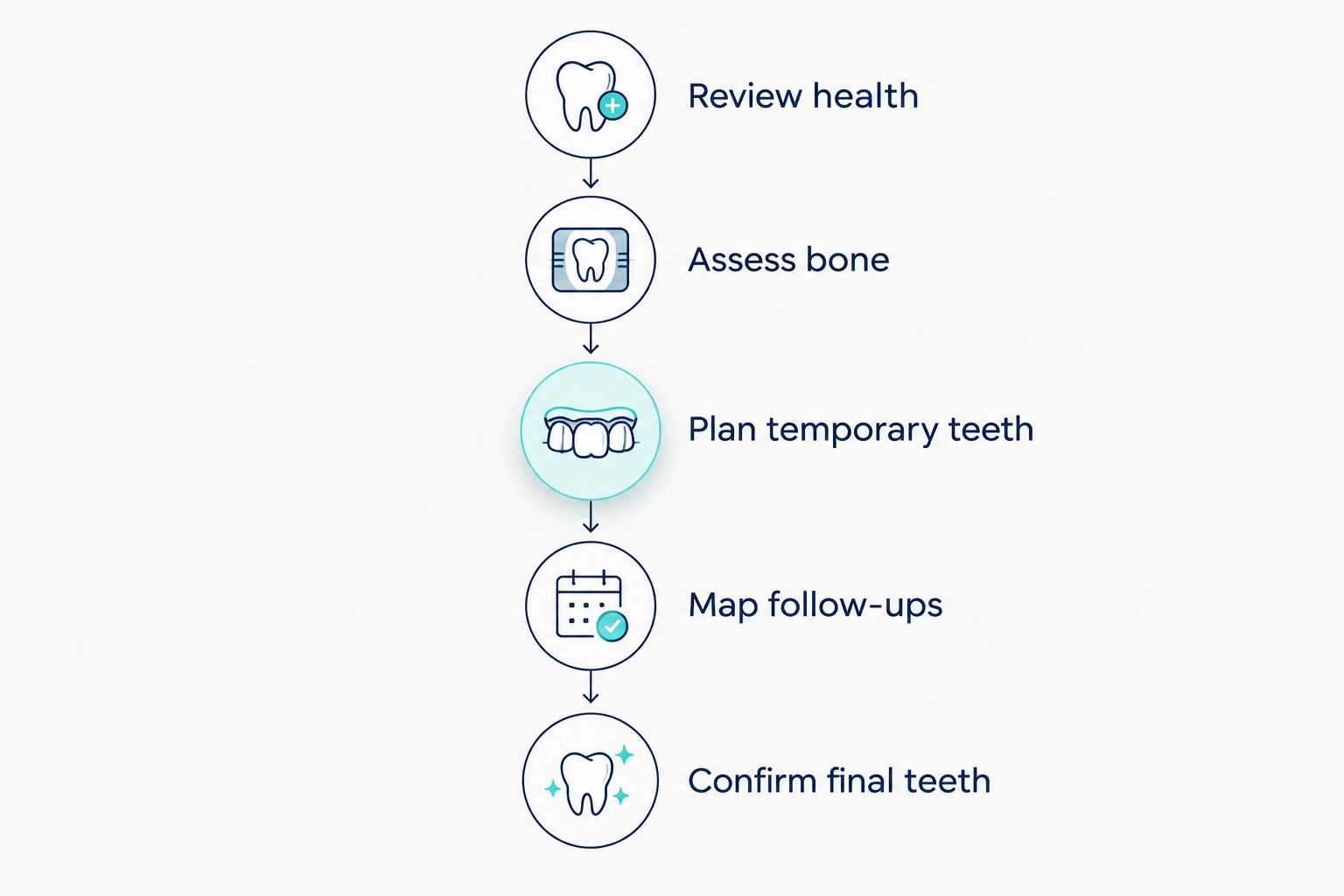
A clear plan makes a long process easier to manage. Before you choose a surgery date, ask your treating team to walk through these steps in order.
- Review health. Share your medicines, health conditions, smoking history, previous dental treatment, and concerns about recovery. Do not stop prescribed medicine without instructions from the appropriate clinician.
- Assess bone. Ask what the examination and imaging show about implant placement, extractions, and any need for grafting. This is where a general estimate becomes a plan for your mouth.
- Plan temporary teeth. Find out whether the intention is a fixed temporary bridge or another arrangement. Ask what happens if the implants are not ready for the planned temporary bridge on surgery day.
- Map follow-ups. Identify who handles surgical reviews, bridge adjustments, and questions between appointments. If different clinicians are involved, confirm how they share updates.
- Confirm final teeth. Ask what must be true before final bridge appointments begin. You should understand which milestones depend on healing rather than a preset date.
Bring your work schedule and important travel dates to that conversation. For a 2026 wedding, family gathering, or other event, ask what stage of treatment you are likely to have reached—not simply whether surgery can happen beforehand.
Mysmiletheory is a fit for Spring, Texas, patients seeking a personal dentist for restorative care. You can begin with a conversation about your missing teeth, goals, and next steps without assuming that a particular implant approach is already right for you.
Start with a dental conversation
Discuss your missing teeth, treatment goals, and questions about the next steps.
How soon can I return to work after All-on-4 surgery?
The first 1–2 weeks are generally the early recovery period, but that is not a universal time-off recommendation. Your return depends on your procedure, symptoms, type of work, and any sedation instructions; ask specifically about physical duties, speaking, driving, and lifting.
Can I eat normally with same-day All-on-4 teeth?
Same-day temporary teeth do not mean unrestricted eating. Follow your clinician’s food instructions until you are cleared to change them; feeling comfortable does not establish that the implants have finished joining with the bone.
When do I get my final All-on-4 teeth?
Implant healing commonly takes about 3–6 months, and final bridge work follows the clinical assessment of that healing. Your team also needs to check the gums, fit, bite, and cleaning access before confirming the final restoration.
What should feel different as recovery progresses?
Early recovery and bone healing happen on different clocks. Swelling and soreness can improve while the implants are still healing beneath the gums, so comfort alone is not a reason to resume hard or chewy foods.
Your temporary bridge can also need adjustments as the mouth heals. Contact your treating team if the bridge moves, your bite suddenly feels different, or a sore area makes eating or cleaning difficult; do not try to tighten or repair it yourself.
Increasing pain or swelling after initial improvement, fever, persistent bleeding, or pus warrants prompt contact with your dental team. Trouble breathing or swallowing requires emergency medical attention.
Keep the aftercare instructions somewhere easy to reach. You should know whom to contact during office hours and what to do if a problem develops outside them.
FAQ
How long does All on 4 dental implants take from start to finish?
All-on-4 treatment takes several months, with implant-to-bone healing commonly taking about 3–6 months. Assessment, preparatory treatment, and final bridge appointments can extend the overall schedule.
Can I really get All-on-4 teeth in one day?
Some patients receive a fixed temporary bridge on the day their implants are placed. That does not mean bone healing is complete or that the temporary bridge is the final restoration.
Does everyone need bone grafting before All-on-4?
Not everyone needs bone grafting before All-on-4. Your examination and imaging determine whether the available bone supports the proposed implant positions or whether additional treatment is needed.
Will I be without teeth while my implants heal?
Your temporary-teeth arrangement depends on your treatment plan and the stability of the implants. Ask before surgery what you will wear during healing and what the alternative is if a fixed temporary bridge cannot be attached immediately.
Is a same-day temporary bridge better than waiting?
A same-day temporary bridge is not better for every patient. Immediate attachment depends on clinical suitability, while delayed attachment gives implants time to heal before the fixed bridge is connected.
How many appointments will I need for All-on-4?
There is no appointment count that applies to every All-on-4 patient. You need assessment, surgery, healing reviews, and final restoration visits, with additional appointments when preparatory treatment or adjustments are necessary.
Can Mysmiletheory help me discuss missing teeth?
Mysmiletheory offers general and restorative dental care for local patients in Spring, Texas. An appointment is a starting point for discussing your missing teeth, priorities, and appropriate next steps.
One last thing
Ask for a milestone plan, not just a completion date. A useful 2026 plan explains what you will wear after surgery, how healing will be checked, and what must happen before the final teeth are made.
The reassuring detail is not the shortest timeline. It is knowing what comes next—and who to call when you have a question.


