
Sedation dentistry can wear off within minutes after nitrous oxide stops, while oral or IV sedation can leave you drowsy for several hours and require precautions for 24 hours. That recovery period is separate from the time spent having your teeth treated, and feeling awake does not mean you are ready to drive. For your 2026 appointment, the safest schedule is the one your dental team gives you for the specific medicine and treatment involved.
- How long does sedation dentistry last? Nitrous oxide wears off quickly; oral and IV sedation require longer recovery.
- Plan for 24 hours of driving restrictions after oral or IV sedation unless your clinician gives longer instructions.
- Sedation recovery, dental numbness, and healing follow different timelines.
- Mysmiletheory serves Spring-area patients seeking personal general, cosmetic, restorative, and family dental care.
Why this matters
Knowing when your appointment ends is not enough to plan your day. You also need to know when you can travel safely, look after children, work, and make decisions without lingering medicine effects.
Arrange your recovery before treatment, not when you are ready to leave. If you are looking for a personal dentist in Spring, Mysmiletheory provides general, cosmetic, restorative, and family dental care. Ask about your treatment needs and whether sedation is appropriate and available for your planned appointment.
How long does sedation dentistry last?
The answer depends on the medicine, how it is given, and the depth of sedation. A short dental procedure does not automatically mean a short recovery, and a longer appointment does not tell you exactly when the medicine will wear off.
This comparison describes general recovery patterns, not a prescription for your visit. Your clinician's discharge instructions take priority.
| Sedation option | How long effects generally last | Best suited to discuss when | Benefit | Limitation |
|---|---|---|---|---|
| Nitrous oxide, often called laughing gas | Effects usually fade within minutes after the gas stops | You want help relaxing with a quicker recovery | The dental team can adjust it during treatment | It is not suitable for every patient or procedure |
| Oral sedation | Drowsiness can continue for several hours; precautions commonly last 24 hours | Anxiety makes treatment difficult and your health history allows it | Medicine can help you feel less anxious | Once swallowed, the dose cannot be adjusted as directly as IV medicine |
| IV sedation | Effects are adjusted during treatment; recovery precautions commonly last 24 hours | You need a level of sedation that can be adjusted through an IV | The clinician can adjust medicine during the appointment | You need an escort and time away from driving and other responsibilities |
These are not interchangeable choices. The safest option depends on your medical history, treatment, and the qualifications and facilities of the treating team.
What does the 24-hour recovery advice mean?
A 24-hour precaution period is a safety boundary, not a promise that you will feel sleepy for that entire time. After oral or IV sedation, coordination, judgment, and memory can remain affected even after you feel more alert.
Patient guidance from the American Society of Anesthesiologists advises against driving for at least 24 hours after sedation. Follow your own discharge instructions if they require a longer restriction or additional supervision.
Nitrous oxide: effects usually fade within minutes
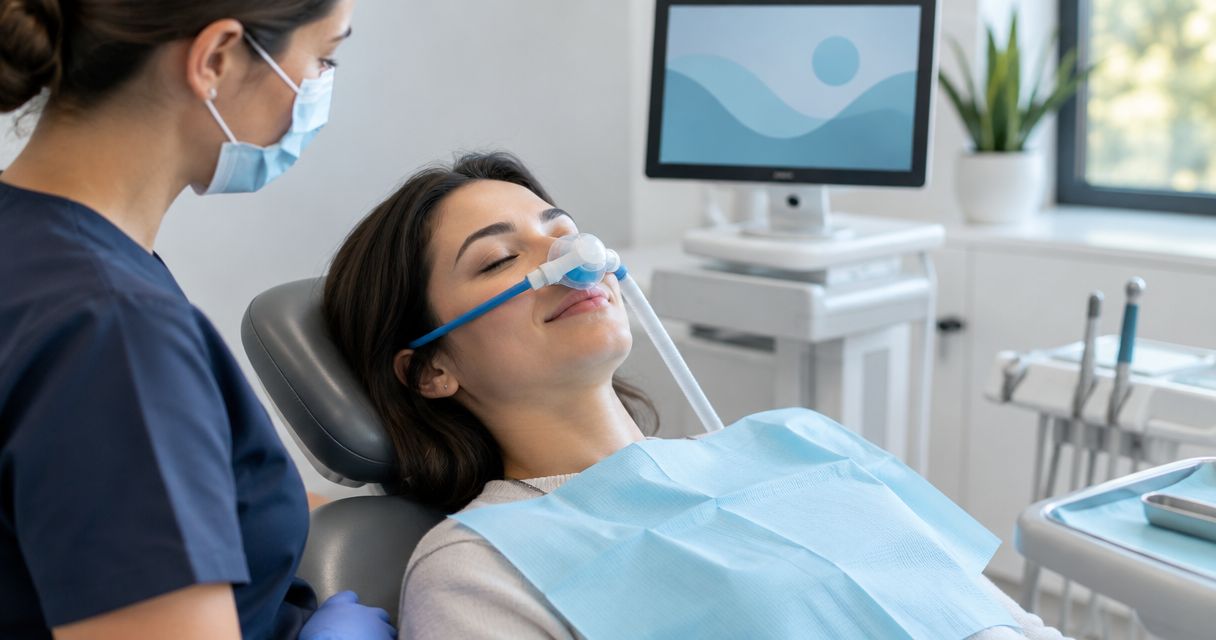
Nitrous oxide is breathed through a small mask over your nose. You usually remain awake and able to respond while feeling more relaxed, and the dental team adjusts the gas during treatment.
Once the nitrous oxide stops, its effects usually fade quickly. Your team checks your recovery before discharge; whether you can drive depends on that assessment, any other medicines you received, and the instructions you are given.
Best for discussion when a quicker recovery matters: nitrous oxide offers a shorter recovery than oral or IV sedation when used alone. Its limitation is that the level of relaxation it provides is not appropriate for every person or treatment.
Tell your dentist if nasal congestion makes it difficult to breathe through your nose. Also mention previous nausea or an uncomfortable experience with nitrous oxide so the team can consider those concerns before treatment.
Oral sedation: allow for lingering effects after treatment
Oral sedation uses a prescribed medicine taken by mouth. The exact medicine, dose, and timing determine when it begins working and how long its effects continue.
You can feel sleepy or have limited memory of the appointment without being completely unconscious. Do not assume that being able to hold a conversation means your judgment and balance have returned to normal.
Best for discussion when dental anxiety makes care difficult: oral sedation can help you feel calmer, but its effects are less directly adjustable once you have swallowed the medicine. Arrange an escort and follow the supervision instructions your team provides.
If you receive medicine to take before arriving, ask when driving restrictions begin. Do not drive yourself after taking a sedative, and never take an extra dose because you do not yet feel the expected effect.
IV sedation: discharge does not mean full recovery
IV sedation delivers medicine through a vein so the clinician can adjust its effects during care. The level of sedation varies; receiving medicine through an IV does not automatically mean you will be completely asleep.
Your team monitors you during treatment and checks that you meet discharge requirements afterward. Being ready to leave with an escort is different from being ready to work, drive, or take responsibility for someone else's safety.
Best for discussion when adjustable sedation is needed: IV delivery allows the clinician to change the medicine during treatment. The trade-off is a longer recovery plan than nitrous oxide alone, including transport and supervision arrangements.
For a 2026 appointment involving IV sedation, keep the recovery period clear of responsibilities that require concentration. Ask the treating team what restrictions apply to your job, especially if it involves driving, machinery, heights, or caring for others.
Why sedation recovery time varies
Two people receiving the same type of sedation do not necessarily recover on the same schedule. These factors help your clinician plan treatment and explain the recovery instructions:
- Medicine and dose: Different medicines have different durations, and the amount given affects recovery.
- Depth of sedation: Light relaxation and deeper sedation do not have the same effects on alertness or breathing.
- Additional doses: Medicine given later in the appointment can extend the recovery period.
- Other medicines and substances: Alcohol, sleep medicines, opioids, and other sedating substances can increase sedation effects and risk.
- Health history: Sleep apnea and conditions affecting breathing, liver function, or kidney function can influence planning and recovery.
- Individual response: Your age, previous experiences, and sensitivity to medicines help the team assess your needs.
Give the team a complete medication list, including supplements and nonprescription products. Do not stop a prescribed medicine on your own; ask for specific instructions about what to take before the appointment.
How should you plan your appointment day in 2026?
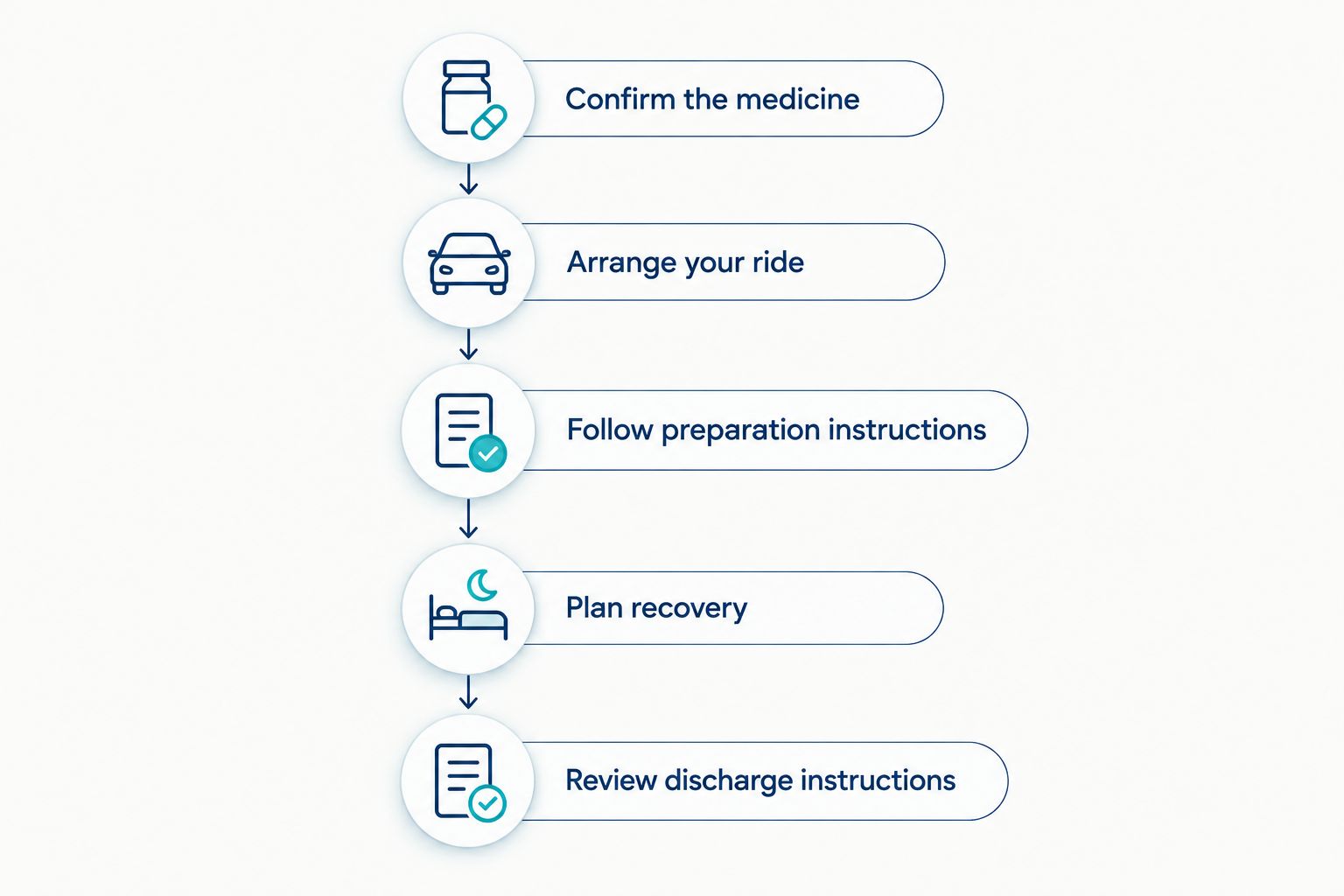
A little preparation makes recovery easier to manage. Use this sequence with the written instructions from your treating team rather than treating it as a substitute for them.
- Confirm the medicine. Ask which sedation method is planned and whether you will receive other medicines that affect alertness.
- Arrange your ride. For oral or IV sedation, organize a responsible adult to take you home and provide the supervision your team requires.
- Follow preparation instructions. Confirm eating, drinking, and medication directions before the appointment. These instructions differ by sedation plan.
- Plan recovery. Clear driving, work, childcare, and other safety-sensitive tasks from the restricted period.
- Review discharge instructions. Make sure both you and your escort understand medicines, food, activity limits, and when to call for help.
If anxiety makes these arrangements feel overwhelming, start with a conversation rather than committing to treatment immediately. This guide to preparing for a sedation dentistry appointment offers another way to organize your questions.
Is dental numbness the same as sedation wearing off?
Dental numbness and sedation are different. Local anesthetic numbs the treatment area, while sedation helps reduce anxiety or awareness; you can receive both during the same appointment.
Your lip, cheek, or tongue can remain numb after you feel fully alert. Avoid chewing while numb, and be cautious with hot drinks so you do not bite or burn an area you cannot feel normally.
The reverse also matters: numbness fading does not prove that sedative medicine has cleared. Use your discharge instructions, not your mouth's sensation, to decide when activities are safe.
Healing adds another timeline. An extraction or other dental procedure can require food and activity restrictions that continue after the sedation precautions end.
Can I drive home after sedation dentistry?
After oral or IV sedation, plan not to drive for at least 24 hours and follow any longer restriction your clinician gives you. Feeling awake, drinking coffee, or taking a nap does not establish that your coordination and judgment have recovered.
Nitrous oxide used alone usually wears off much faster, but driving still depends on the treating team's assessment and instructions. If you receive another sedating medicine as well, do not use the nitrous-only recovery pattern to plan your trip home.
For your 2026 visit, ask whether your escort must stay at the office or return for discharge. A taxi or rideshare alone does not replace a responsible adult when your discharge instructions require one.
Can I work or care for children after sedation?
For the 24 hours after oral or IV sedation, follow restrictions on work, machinery, important decisions, and caring for dependents. Arrange another adult to handle childcare and other responsibilities during the supervision period your team specifies.
Desk work is not automatically harmless if it involves financial decisions, confidential information, or tasks that demand judgment. Recovery is a good reason to leave work messages and major decisions until you are cleared to resume them.
With nitrous oxide alone, restrictions are often shorter. Your procedure, other medicines, and how you recover still determine what is appropriate that day.
When should I ask for help after sedation?
Sleepiness can occur after oral or IV sedation, but difficulty breathing, blue or gray lips, or being unusually difficult to wake requires emergency help. Your escort should know these warning signs before leaving the office.
Contact the treating team for persistent vomiting, worsening dizziness, or difficulty following the recovery plan. Use the emergency and after-hours instructions provided at discharge rather than waiting for a routine appointment.
Before a 2026 appointment, write down who to contact and make sure your escort has the same information. You should not have to remember important instructions while you are still recovering.
FAQ
How long does sedation dentistry last after I get home?
Oral and IV sedation can cause drowsiness for several hours after treatment, with precautions commonly continuing for 24 hours. Nitrous oxide alone usually wears off within minutes after the gas stops, but your treating team must assess your recovery.
Will I be asleep during sedation dentistry?
Sedation dentistry does not always put you to sleep. You can remain awake and responsive with lighter sedation, while deeper levels affect awareness more; ask which level your clinician plans.
Can I drive the next morning after dental sedation?
The next morning is not automatically outside the restriction period: oral and IV sedation commonly require at least 24 hours without driving. Follow the timing and any longer restrictions in your discharge instructions.
Does drinking coffee make dental sedation wear off faster?
Coffee does not reliably reverse sedation or make driving safe. Follow the recovery restrictions even if you feel more awake after caffeine.
Can I eat after sedation dentistry?
Follow your discharge instructions about when and what to eat after sedation dentistry. Nausea, lingering numbness, and the dental procedure itself can affect those instructions.
Is nitrous oxide recovery faster than oral sedation?
Nitrous oxide used alone generally wears off faster than oral sedation. That advantage does not determine suitability; your health history, anxiety, and planned treatment also matter.
Should I book a consultation before choosing dental sedation?
A consultation lets you discuss anxiety, medical history, medicines, and the planned procedure before choosing sedation. Ask which options are appropriate and available rather than assuming every dental office provides every method.
One last thing
The most useful question is not only how long sedation lasts. Ask: When can I safely drive, be alone, and take care of someone else? Those answers turn a general recovery estimate into a practical plan.
Mysmiletheory is best suited to Spring-area patients seeking a personal dentist for general, cosmetic, restorative, and family care. Start by discussing what makes dental visits difficult and what treatment you need, then ask how comfort and recovery would be handled for your appointment.
Start with a dental care conversation
Discuss your dental needs, comfort concerns, and questions about planning an appointment.