A full smile makeover in 2026 needs an individualized treatment estimate; the name alone does not identify the dental work you need. Your total depends on the treatments, the teeth involved, and any care needed before cosmetic changes begin. Ask whether the estimate also includes examinations, imaging, temporary restorations, and follow-up care so you can understand the whole plan.
- How much does a smile makeover cost? Your treatment plan, not the makeover label, determines the total.
- Mysmiletheory offers general, cosmetic, restorative, and family dentistry in Spring, Texas.
- Compare written estimates by treatment scope, included care, and maintenance needs—not the total alone.
- Choose cosmetic dentistry around healthy teeth and natural-looking goals, rather than a preset package.
Why this matters
A smile makeover can mean changing tooth color, repairing a chipped edge, replacing missing teeth, or combining several treatments. Those are different needs, so estimates are only useful when you know exactly what they cover.
Mysmiletheory provides general, cosmetic, restorative, and family dentistry in Spring, Texas. You can explore the clinic’s dental services before discussing which concerns matter most to you. The useful starting point is your smile and oral health—not a package name.
How much does a full smile makeover cost in 2026?
Your dentist needs to identify the proposed treatment before giving you a meaningful total. A plan focused on tooth color is not equivalent to a plan that also addresses damaged teeth, missing teeth, or bite problems.
For a useful 2026 estimate, ask for a written breakdown organized around the following parts. Each part should explain what is included and what would require a separate decision.
| Part of the estimate | What to clarify | Why it matters |
|---|---|---|
| Examination and planning | Which assessments and images are included? | Treatment decisions depend on the condition of your teeth and gums. |
| Preparatory care | Does the plan address decay, gum concerns, or failing dental work? | Health needs can change the treatment sequence. |
| Cosmetic treatment | Which teeth and procedures are included? | A makeover label does not describe the actual scope. |
| Temporary restorations | Are temporary restorations needed and included? | Some treatment involves an interim stage. |
| Follow-up care | Which checks and adjustments belong to the original plan? | You need to understand what happens after treatment. |
| Maintenance | What ongoing care will the result need? | Completing treatment does not end routine dental care. |
Ask the dentist to explain unfamiliar terms in everyday language. You should be able to describe what each planned procedure does before deciding whether to proceed.
Why smile makeover estimates vary
Different plans address different problems. These factors help explain why a single advertised figure cannot tell you what your own care involves:
- Treatment goals: Changing color, reshaping an edge, and replacing a missing tooth require different approaches.
- Teeth involved: A localized concern and a change across several visible teeth have different treatment scopes.
- Starting oral health: Decay, gum disease, and existing dental work affect what needs attention first.
- Treatment method: Bonding, veneers, crowns, whitening, and orthodontic treatment serve different purposes.
- Bite and tooth wear: How your teeth meet matters when planning changes to their shape or position.
- Included care: Planning, temporary restorations, adjustments, and maintenance instructions should be clear in the estimate.
Ask what changes the plan—not just what changes the total. If the dentist identifies a concern during the examination, ask how it affects your choices and whether it must be treated before cosmetic work.
Which treatments belong in a smile makeover?
There is no required set of procedures. The right discussion starts with the concern you want to change and whether your teeth and gums are healthy enough for the proposed treatment.
The table below explains common approaches, not a recommendation that you need any particular procedure. Suitability requires a dental examination.
| Approach | Best for discussing | Main benefit | Limitation or trade-off |
|---|---|---|---|
| Teeth whitening | Color changes in natural teeth | Changes tooth shade without reshaping the teeth | Does not whiten existing crowns or veneers; sensitivity can occur. |
| Dental bonding | Small chips, edges, or selected gaps | Adds tooth-colored material to change a tooth’s appearance | Can stain or chip and needs maintenance. |
| Dental veneers | Selected concerns about visible tooth shape or color | Covers the front surface of a tooth | Often involves irreversible enamel removal. |
| Dental crowns | Teeth needing more extensive protection or rebuilding | Covers and supports the remaining tooth | Requires tooth preparation and is not simply a cosmetic substitute for every tooth. |
| Orthodontic treatment | Tooth position and certain bite concerns | Moves teeth rather than covering their position | Requires treatment over time and retention afterward. |
These approaches are not interchangeable. Whitening does not repair a broken tooth, and covering a tooth does not replace an assessment of its position or bite.
If veneers are part of your discussion, read about getting veneers when you have cavities. Cosmetic goals and dental health belong in the same conversation.
How do you compare smile makeover estimates fairly?
For your 2026 comparison, match the proposed work before comparing totals. An estimate covering different teeth, different procedures, or different follow-up care is not a like-for-like comparison.
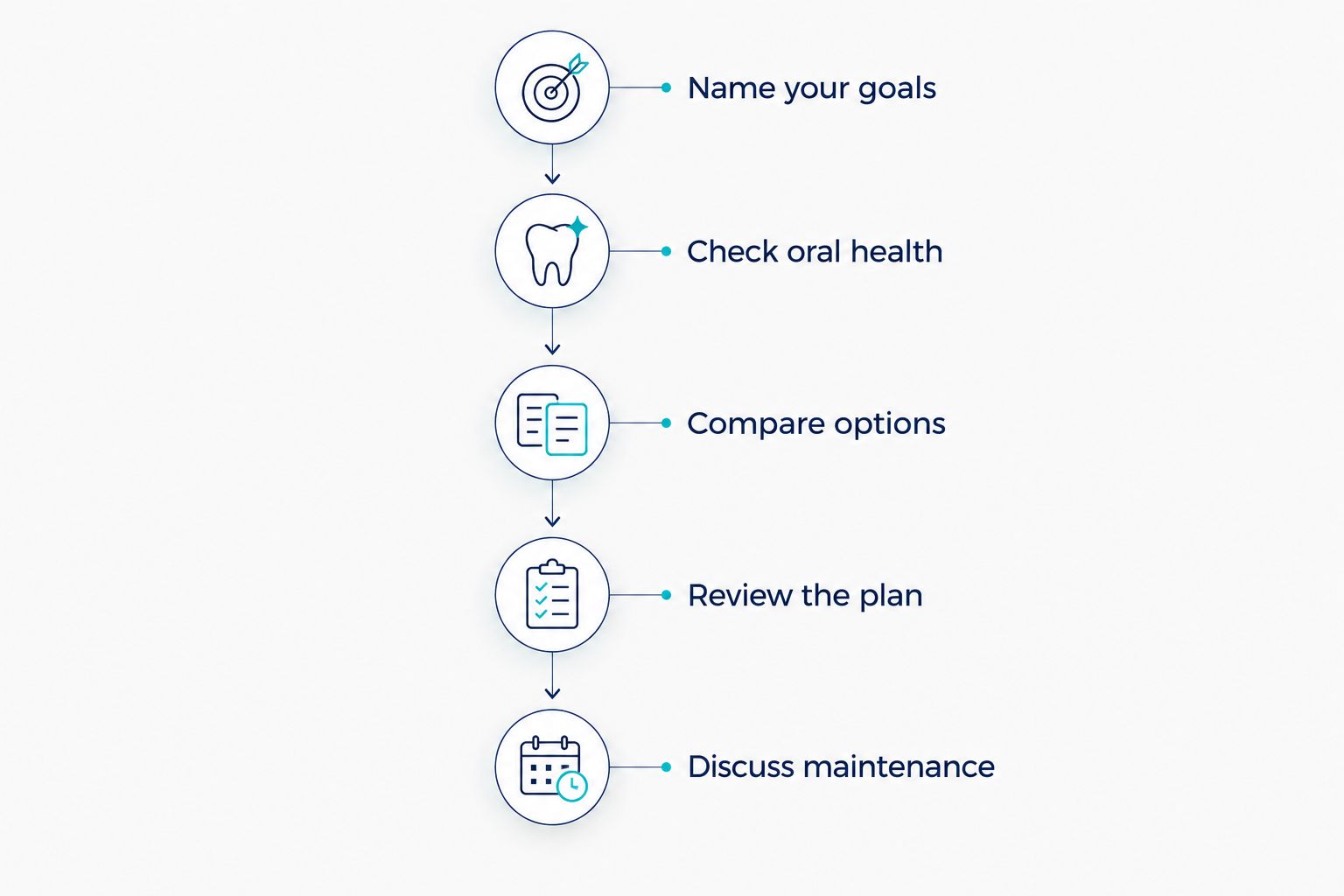
Use this sequence to make the conversation easier:
- Name your goals. Explain what bothers you and what you would like to keep. Natural tooth character can be part of the result you want.
- Check oral health. Ask which findings need treatment and which are cosmetic preferences.
- Compare options. Request the benefits, limitations, and tooth preparation involved in each suitable approach.
- Review the plan. Confirm the teeth involved, treatment sequence, included visits, and circumstances that would change the estimate.
- Discuss maintenance. Ask how to care for the result and what future repairs or replacements would involve.
You do not need to memorize dental terminology to follow these steps. A clear explanation should connect each procedure to a specific concern you have raised or a health finding the dentist has explained.
What should you ask at a smile makeover consultation?
Bring questions that help you understand the recommendation, not just the finished appearance. If you feel nervous about dental care, say so at the beginning; that gives the dentist a chance to discuss your concerns before treatment decisions.
Useful questions include:
- What is healthy now, and what needs treatment?
- Which parts of this plan are optional cosmetic changes?
- Is there a suitable approach that preserves more natural tooth structure?
- What are the limitations of each option for my teeth?
- What happens if I choose not to treat this concern?
- What is included in the written estimate?
- What would cause the plan to change?
Mysmiletheory is a fit for Spring patients seeking general and cosmetic dentistry at a local dental clinic. The clinic’s stated services cover general, cosmetic, restorative, and family care; your examination still determines which treatment is appropriate. A service list alone cannot establish whether veneers, bonding, or another approach suits your teeth.
Discuss your smile goals
Ask about your concerns, treatment options, and what an individualized plan would include.
Can you complete a smile makeover in stages?
A staged smile makeover is an option to discuss, but the order must follow your dental needs. Necessary health treatment comes before elective cosmetic changes, and some procedures depend on earlier decisions.
For example, whitening natural teeth before choosing the shade of visible restorations can matter because whitening does not change the color of existing crowns or veneers. Ask your dentist to explain which decisions are connected before starting one part of the plan.
For a staged plan in 2026, request a clear distinction between necessary treatment, optional changes, and later maintenance. Also ask which steps can wait without compromising your oral health or the planned result. Staging should be a clinical discussion, not simply dividing a treatment list into separate appointments.
Does a full smile makeover mean treating every tooth?
No—a full smile makeover does not automatically mean placing veneers or crowns on every tooth. The phrase describes a goal, not a standard treatment prescription.
Some concerns are localized; others involve tooth position, missing teeth, or broader wear. Ask the dentist to show which teeth need treatment and explain why each is included. Healthy teeth should not be added to a plan merely to make the treatment sound complete.
Does dental insurance cover a smile makeover?
Dental insurance coverage depends on the procedure and your specific policy, not the smile makeover label. Plans commonly distinguish cosmetic treatment from care intended to restore health or function.
For any 2026 treatment plan, ask your insurer about the individual procedure descriptions, exclusions, benefit limits, and any required review before treatment. An estimated benefit is not the same as a guarantee of payment, so keep the insurer’s explanation alongside your written treatment plan.
FAQ
How much does a smile makeover cost in 2026?
A smile makeover needs an individualized estimate based on the proposed procedures, teeth involved, and starting oral health. Ask for a written plan that separates preparatory care, cosmetic treatment, and follow-up responsibilities.
Can I get a smile makeover without veneers?
Yes, a smile makeover does not require veneers. Depending on your concerns and dental health, the discussion can include whitening, bonding, orthodontic treatment, or restorative care instead.
Is bonding better than veneers for a smile makeover?
Neither bonding nor veneers is better for every patient. Bonding and veneers differ in tooth preparation, maintenance, and limitations, so the choice should address your specific teeth and goals.
Do I need healthy gums before cosmetic dental treatment?
Gum health needs assessment before cosmetic treatment. Active gum disease can affect treatment planning and should be addressed with your dentist rather than hidden by an appearance-focused plan.
Will a smile makeover look natural?
A natural-looking result is a treatment goal, not a guarantee. Discuss tooth shape, shade, and the features you want to preserve so your dentist understands what natural means to you.
Can I choose to do only part of a smile makeover?
You can discuss choosing only part of a proposed smile makeover. Ask which procedures are optional, which address dental health, and whether changing the sequence affects other treatment.
Where can I discuss a smile makeover in Spring, Texas?
Mysmiletheory offers cosmetic dentistry alongside general, restorative, and family dental care in Spring, Texas. Request an appointment to discuss your concerns and the examination needed for an individualized plan.
One last thing
Bring an example of a smile you like, but also explain what you like about your own. Perhaps you want a brighter shade while keeping a small gap, or a repaired edge without changing the rest of your teeth.
A useful makeover plan explains what can stay unchanged as clearly as what needs treatment. Before agreeing to the plan, ask your dentist to distinguish health needs from personal preferences. That conversation keeps the decision centered on your comfort, your teeth, and the result you actually want.