
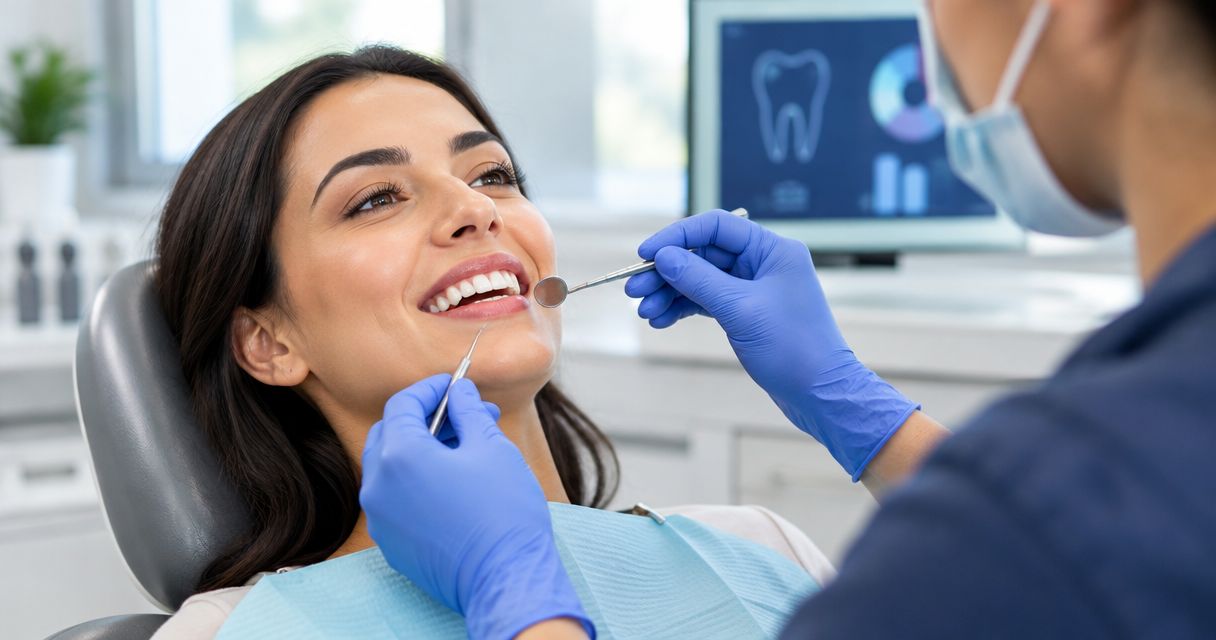
Dental bonding does not have a single standard cost: your estimate depends on the teeth involved, the size of the repair, and whether treatment is cosmetic or needed to restore tooth health. For a 2026 treatment plan, ask whether the estimate includes the examination, any necessary imaging, and follow-up care—not just the bonding procedure itself.
- How much does dental bonding cost? Get a tooth-specific estimate that separates the repair from any additional care.
- Dental bonding suits small cosmetic changes, but larger damage needs a different treatment discussion.
- Mysmiletheory offers general and cosmetic dental care for patients seeking a personal dentist in Spring, Texas.
- Compare bonding, veneers, and other options by suitability and maintenance, not just the initial estimate.
Why this matters
A small chip and a larger rebuild are different treatments, even when both involve tooth-colored bonding material. Comparing estimates without understanding that difference leaves you comparing unlike procedures.
The useful question is not simply what bonding costs, but what your tooth needs and what the estimate covers. If you are looking for a personal dentist in Spring, Mysmiletheory offers general, cosmetic, restorative, and family dental care. An examination is the starting point for discussing an appropriate treatment—not a commitment to changing your smile.
How much does dental bonding cost?
Your dental bonding estimate should reflect the specific work proposed for your teeth. A repair to a small edge is not equivalent to reshaping a larger surface, and a cosmetic change is not the same as repairing decay.
For a useful 2026 comparison, ask each dental office to describe the planned work in writing. The breakdown below helps you check whether estimates cover the same needs.
| Estimate component | What to clarify | Why it matters |
|---|---|---|
| Examination | Whether the initial assessment is included | Treatment recommendations depend on the condition of the tooth |
| Imaging | Whether any necessary X-rays are separate | The dentist needs to assess concerns that are not visible on the surface |
| Bonding treatment | Which teeth and surfaces will be treated | The amount and location of the work affect the treatment involved |
| Additional treatment | Whether decay or gum problems need attention first | Cosmetic work does not replace treatment for underlying disease |
| Follow-up | What happens if the bite needs adjusting | Your repaired tooth needs to feel comfortable when you bite |
| Future maintenance | How polishing, repairs, or replacement are handled | Bonding needs care after the initial appointment |
Do not assume every item applies to you. Ask the dentist to identify what is necessary, what is optional, and what can wait without putting your oral health at risk.
A small chip or uneven edge
Bonding can replace a small missing portion of a tooth or soften an uneven edge. The dentist shapes tooth-colored resin to fit the surrounding tooth, then hardens and polishes it.
The advantage is a focused change that often preserves much of the natural tooth. The limitation is that the added material can chip or wear, especially where your bite puts pressure on it. Ask whether the proposed repair sits in a high-stress area.
A gap or a change in tooth shape
Bonding can make a tooth appear wider or alter its outline to reduce a small visible gap. Planning matters because adding material changes proportions, not the position of the tooth root.
A gap caused by tooth movement, gum disease, or a bite problem needs more than a cosmetic discussion. Ask why the space exists before deciding how to cover it.
A tooth that also needs a filling
Tooth-colored resin is also used in fillings, but a cosmetic bonding estimate and a filling estimate do not necessarily describe the same treatment. A filling addresses damaged or decayed tooth structure; cosmetic bonding primarily changes appearance.
Ask the dentist to explain the purpose of each proposed repair. That distinction helps you understand both the treatment plan and the questions to take to your insurer.
Why dental bonding estimates vary
The details of your tooth matter more than a general online figure. These are the main factors to discuss when reviewing a 2026 estimate:
- Teeth involved: Treating an isolated chip differs from changing the appearance of several teeth across your smile.
- Repair size: Rebuilding a corner involves different shaping and support considerations than smoothing a small edge.
- Tooth location: A visible front surface and a biting edge face different cosmetic and functional demands.
- Underlying health: Decay, gum inflammation, or a deeper crack needs assessment before cosmetic work begins.
- Bite and habits: Grinding, clenching, or biting hard objects can affect whether bonding is a suitable choice.
- Included care: Examination, imaging, adjustments, and later maintenance need clear explanations rather than assumptions.
A more detailed plan is not automatically a better plan. You should be able to connect every recommended step to a finding, a comfort concern, or a change you actually want.
Is bonding the right option for your smile?
Dental bonding is best for small, localized changes when the tooth is healthy and the bite supports the repair. It is not a substitute for moving teeth, treating gum disease, or protecting a tooth with extensive structural damage.
Other approaches solve different problems. This comparison helps you understand the purpose and limitations of each option without treating them as interchangeable.
| Option | Best for | Main advantage | Main limitation |
|---|---|---|---|
| Dental bonding | Small chips, minor shape changes, and selected small gaps | Adds and shapes tooth-colored material conservatively | Can stain, chip, or need repair |
| Porcelain veneers | Selected changes to visible tooth color and shape | Can address several appearance concerns together | Usually involves permanent changes to the tooth and eventual replacement |
| Orthodontic treatment | Tooth position, spacing, and bite alignment | Moves teeth rather than adding material to disguise their position | Requires an ongoing treatment and retention plan |
| Teeth whitening | Lightening natural tooth color | Changes color without reshaping the tooth | Does not repair chips or lighten existing bonding |
If you are unsure which approach matches your concern, the guide to dental bonding alternatives for minor smile flaws gives you another starting point for the conversation. Bring your priorities, not a predetermined treatment request.
How to compare treatment plans without feeling overwhelmed
You do not need dental terminology to make a thoughtful decision. Ask for a clear explanation of what the dentist sees, what treatment would change, and what happens if you leave the tooth as it is.
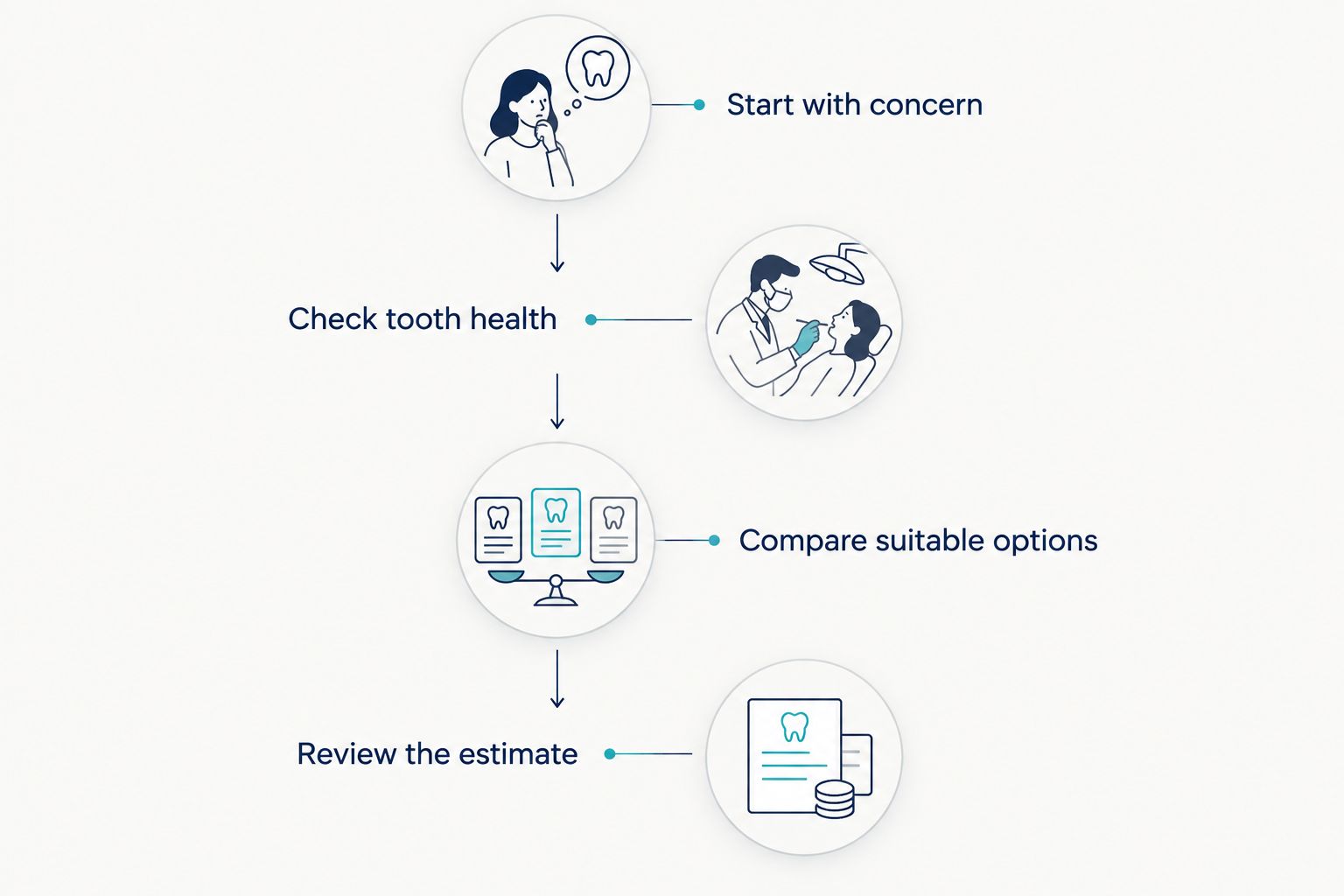
Start with the concern
Describe what bothers you in everyday language: a rough edge, a visible gap, a dark area, or a tooth that looks shorter than its neighbor. Mention pain, sensitivity, or a recent injury separately, even if appearance brought you in.
Check tooth health
Ask whether the concern is only cosmetic or whether the tooth needs treatment for health or function. A new chip can sometimes reveal a larger problem, so appearance alone should not determine the plan.
Compare suitable options
Ask which approaches fit your tooth and why. You should also understand what each option cannot accomplish, including whether bonding would make a tooth look too wide or leave a bite concern unresolved.
Review the estimate
Read the written treatment description before agreeing to proceed. Check which teeth are included, whether additional care is required, and how questions about adjustments or maintenance will be handled.
For your 2026 consultation, write down the concern you most want addressed and any treatment you would prefer to avoid. You can ask for time to consider a cosmetic recommendation. A clear explanation should help you decide, not make you feel rushed.
Does dental insurance cover bonding?
Dental insurance coverage depends on your plan and the reason for treatment. A repair for decay or damage is assessed differently from a change made only for appearance; coverage is not guaranteed simply because the material is tooth-colored.
Ask your insurer about the proposed procedure, exclusions, deductibles, and benefit limits. A pre-treatment estimate helps clarify expected benefits, but it is not a guarantee of payment. Confirm your 2026 benefits before scheduling treatment that depends on coverage.
Is dental bonding better than veneers?
Dental bonding is better suited to some small repairs, while veneers address a different range of appearance changes. Neither is automatically better: the condition of your teeth, the desired change, and the amount of permanent tooth alteration all matter.
Ask what can be achieved with the least appropriate intervention—not simply the most extensive option available. For a minor concern, a larger cosmetic treatment plan needs a clear explanation of the added benefit and trade-offs.
How do you care for bonded teeth?
Bonded teeth need the same daily cleaning as natural teeth, plus attention to habits that put stress on the repair. Brush for 2 minutes, 2 times a day, with fluoride toothpaste, and clean between your teeth 1 time a day using an appropriate method.
Avoid chewing ice, biting pens, or using your teeth to open packaging. Tell your dentist if you grind or clench so you can discuss whether protection is appropriate. Do not try to smooth a rough bonded edge at home.
Bonding material does not whiten like natural enamel. If you want a lighter overall shade, discuss whitening before the dentist selects the bonding color; otherwise, the natural teeth and the repair can end up looking different.
A comfortable way to start the conversation
You do not need to know whether you want bonding before you book a dental appointment. You can simply explain what you notice and ask for help understanding your choices.
Mysmiletheory is best for Spring-area patients seeking a personal dentist for general and cosmetic dental care. Bring questions about natural-looking results, comfort, and maintenance so the conversation stays focused on what matters to you.
Talk through your smile goals
Explore general and cosmetic dental care in Spring, Texas, and ask about an appointment.
FAQ
How do I get an accurate dental bonding estimate?
Get an examination and a written, tooth-specific treatment plan. Ask which teeth and surfaces are included and whether examination, imaging, adjustments, or other care are separate.
Can bonding fix a chipped front tooth?
Bonding can repair a small chip when enough healthy tooth remains and the bite supports the repair. A larger break, deeper crack, or painful tooth needs assessment before choosing a cosmetic treatment.
Can I get bonding if I grind my teeth?
Grinding needs assessment before you choose bonding because repeated force can damage the repair. Tell your dentist about clenching, morning jaw soreness, or previous chipped restorations.
Will dental bonding look like my natural teeth?
Dental bonding uses tooth-colored resin selected and shaped to blend with the surrounding tooth. The result depends on the tooth's condition, the size of the change, and careful attention to shade and shape; an exact match is not guaranteed.
Does dental bonding hurt?
Cosmetic bonding that adds material to the surface often involves little discomfort. Anesthetic needs depend on whether the dentist must treat decay, work near sensitive areas, or perform additional procedures.
Can I whiten my teeth after bonding?
Whitening does not lighten existing bonding the way it lightens natural tooth enamel. Discuss your preferred shade before treatment so the dentist can plan the order of whitening and bonding.
Does a rough bonded edge mean the whole repair needs replacing?
A rough edge does not automatically mean the entire repair needs replacing. Your dentist needs to check whether polishing, an adjustment, a repair, or replacement is appropriate; avoid filing it yourself.
One last thing
A small cosmetic concern does not always need treatment. If the tooth is healthy and the issue does not bother you, ask whether monitoring it is a reasonable choice.
Before agreeing to bonding, describe what a natural result means to you. Keeping some individuality in tooth shape can matter more than making every edge identical, and that preference belongs in the treatment conversation.


