Instead of carrying messages between dental offices, use a cosmetic dentist after braces referral to connect your orthodontist’s records, your smile goals, and your retainer plan before choosing treatment. This 2026 guide shows you how to arrange that handoff without assuming you need veneers or another cosmetic procedure.
- A cosmetic dentist after braces referral should connect orthodontic records, smile goals, and retainer instructions before treatment.
- Mysmiletheory offers cosmetic dentistry for Spring patients seeking a personal dentist.
- Discuss whitening, bonding, or veneers only after your dentist checks tooth health and your bite.
- Keep wearing your retainer as instructed; cosmetic changes can affect its fit.
Why this matters
Finishing braces answers the question of tooth position. It does not automatically answer questions about tooth color, uneven edges, or the appearance of existing dental work. A cosmetic consultation helps you separate those concerns instead of treating everything as one problem.
The best handoff preserves your orthodontic result before changing your smile’s appearance. Your orthodontist manages alignment and retention; your dentist evaluates tooth health and discusses suitable cosmetic care. Those responsibilities need to connect, especially when a proposed treatment changes a tooth’s shape.
Mysmiletheory is best for Spring patients seeking cosmetic dentistry from a personal dentist. You can start with Mysmiletheory and explain that you are finishing orthodontic treatment and want a consultation, not a predetermined procedure.
For your 2026 appointment notes, keep two questions separate: what needs attention for dental health, and what you would personally like to change. You are allowed to be happy with your straight teeth and still ask about a small detail.
Before you start
- Have both offices’ details ready. Gather your orthodontist’s name, the dental office you want to visit, and any referral instructions you received. Ask how each office accepts records and whether you need to authorize their release.
- Prepare a 1-page summary. Include your braces-removal date, current retainer instructions, relevant dental concerns, and up to 3 smile goals. Bring your retainer if the office asks you to, along with any referral paperwork already supplied.
- Flag retainer fit before scheduling treatment. Bonding or veneers can change tooth contours, so an existing retainer might no longer fit correctly. Ask who will coordinate retention before you agree to a shape-changing procedure.
A consultation is a discussion and examination, not a commitment to treatment. Ask the receiving office whether a referral is required and what information it wants beforehand; requirements differ between practices.
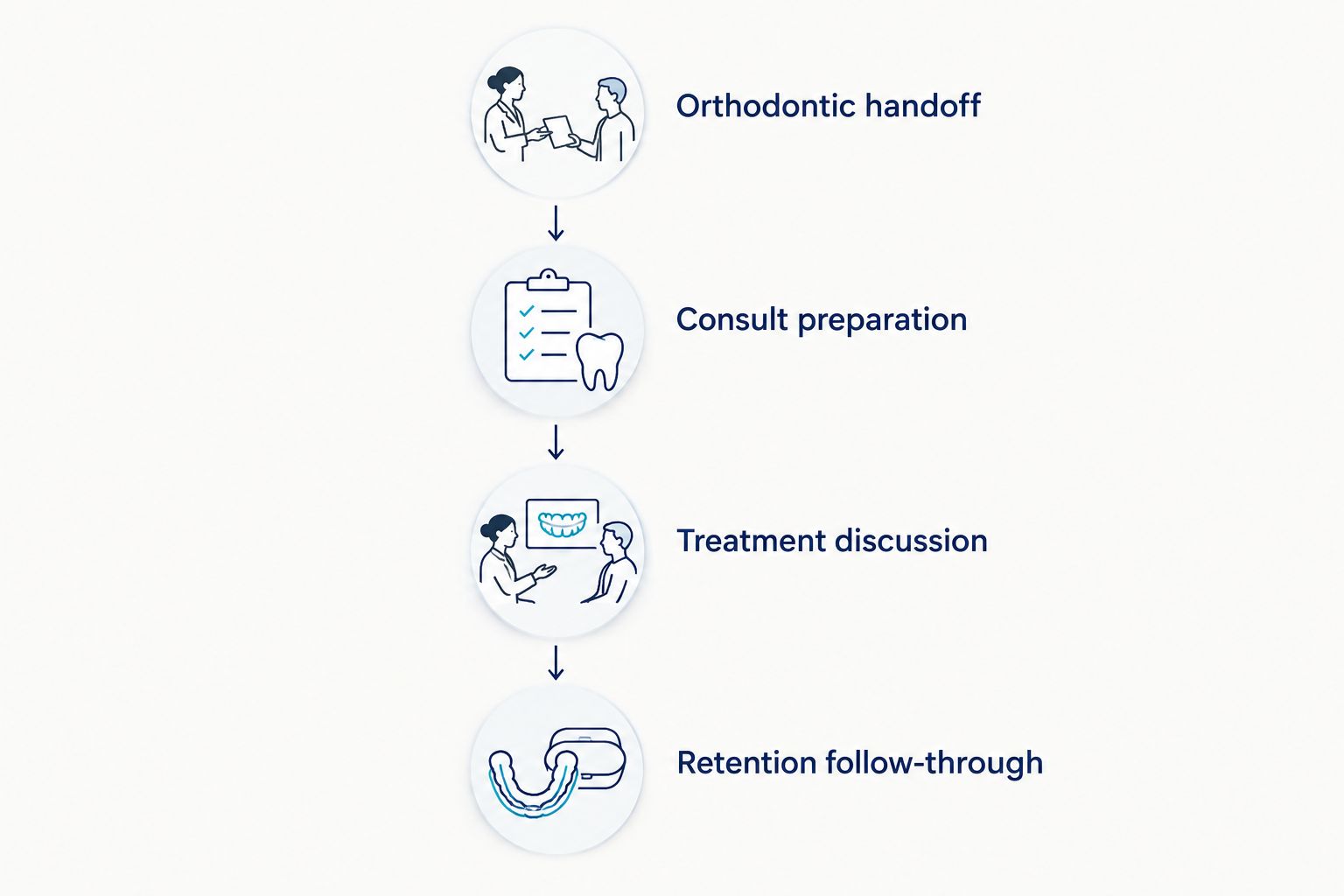
Orthodontic handoff
Start with your orthodontist’s instructions rather than a procedure request. The purpose of the handoff is to give the dentist a clear picture of where orthodontic care ended and what still needs follow-up.
- Confirm completion status. Ask whether active orthodontic treatment is complete or whether finishing adjustments remain. Record any follow-up instructions. If a gap, bite concern, or tooth position still bothers you, mention it here rather than assuming cosmetic treatment is the next step.
- Request a clinical handoff. Ask your orthodontist to share relevant completion notes, available images or scans, and retention instructions with the receiving dentist. Let the clinicians decide which records are useful; do not request repeat imaging just to make the packet feel complete.
- Confirm the transfer route. Follow the offices’ approved records-release process and check that the receiving office has what it needs. Keep a copy of your referral message for your own reference, but do not send sensitive health information through an unapproved channel.
Expected result: Your dentist knows whether orthodontic treatment is complete, what concerns prompted the consultation, and how your teeth are currently being retained.
If your orthodontist recommends waiting before a particular cosmetic procedure, ask what needs to happen first. A milestone tied to your mouth is more useful than choosing an arbitrary date from an online guide.
Consult preparation
Book the visit around your concern, not around a treatment name. Saying that an edge looks uneven gives your dentist room to assess it; asking only for veneers narrows the conversation before anyone has examined your teeth.
- State your reason for visiting. Tell the office that you recently finished braces and want to discuss remaining appearance concerns. Mention discomfort, sensitivity, or a retainer problem when booking so the office can direct you appropriately.
- Organize your smile goals. In your 2026 consultation notes, use separate headings for color, shape, and comfort. Describe what you notice in ordinary language. For example, distinguish a dark mark on one tooth from wanting your whole smile to look lighter.
- Prepare your comfort preferences. Tell the dental team if you feel anxious, want explanations before an examination, or need a pause during the visit. Ask how the appointment will work instead of assuming the consultation includes treatment that day.
Expected result: The appointment request explains why you are coming, and your notes distinguish appearance preferences from symptoms that need assessment.
Bring reference photos only to explain preferences, not to prescribe an outcome. A photo can show that you prefer softly rounded edges or a subtle shade change, but another person’s teeth cannot establish what is suitable for yours.
Treatment discussion
The cosmetic consultation should begin with an assessment of your teeth, gums, and bite. A change that looks small in a photograph still needs to work when you speak, chew, and wear your retainer.
- Ask what is causing each concern. A visible mark, uneven edge, or remaining space needs its own explanation. Ask whether the concern involves staining, tooth shape, dental health, or alignment. Similar-looking concerns do not always call for the same treatment.
- Compare suitable options. Ask what each option changes, what it leaves unchanged, and whether healthy tooth structure would be altered. Include leaving the teeth as they are in the discussion when there is no health reason to intervene.
- Confirm the sequence. If you are considering both whitening and tooth-colored restorations, discuss whitening first. Whitening changes natural tooth color but does not lighten existing bonding or veneers, which matters when choosing a matching shade.
Expected result: You understand the reason for each proposed treatment, its limitations, and the order in which suitable care would happen.
Ask for the plan in writing before deciding. It should make clear which concerns are being addressed and which are not. A natural-looking result starts with shared expectations, not simply choosing the lightest shade.
Retention follow-through
Cosmetic planning is not finished until the retainer question has an answer. Your teeth still need the retention prescribed by your orthodontist, even when the cosmetic concern feels more pressing.
- Identify shape changes. Ask whether the proposed care changes the surfaces covered by your retainer. Bonding and veneers deserve this discussion because they add or alter tooth contours; the effect depends on the specific teeth and retainer design.
- Assign coordination. Ask which office will assess the existing retainer and arrange any needed adjustment or replacement. Confirm how retention will be maintained around treatment rather than assuming one office will contact the other automatically.
- Record follow-up instructions. Before treatment, write down who to contact for a fit problem, which retainer to use, and what follow-up is required. Date the instructions in your 2026 care notes so an older plan is not mistaken for the current one.
Expected result: You know how to protect your alignment during and after cosmetic care, and both offices understand their responsibilities.
Do not force a retainer that no longer seats correctly. Contact the treating office or orthodontist for instructions instead of reshaping it yourself or quietly stopping wear.
Compare the options without choosing too early
A referral should open a conversation, not funnel you toward the most involved treatment. These options address different concerns; your dentist must assess suitability before recommending one.
| Option | Best for | Main advantage | Main limitation |
|---|---|---|---|
| Observation | Patients satisfied with alignment who do not want an appearance change | Avoids elective changes to healthy teeth | Leaves the cosmetic concern unchanged |
| Whitening | Suitable natural teeth with a color concern | Changes color without adding a covering | Does not change shape or lighten existing restorations; sensitivity can occur |
| Dental bonding | Selected small chips or shape differences | Can address a localized concern with tooth-colored material | Can stain or chip and can affect retainer fit |
| Veneers | Selected appearance concerns involving the front surfaces of teeth | Can address color and shape together | Often require enamel removal and need ongoing care and eventual replacement |
For a fuller discussion, read about cosmetic treatments to fix a smile after braces. Use the options as questions for your dentist, not as a diagnosis.
Mysmiletheory offers general, cosmetic, restorative, and family dentistry. That makes a conversation about both dental health and appearance relevant, but it does not establish which procedure is right for your teeth. The examination comes first.
Arrange a consult while orthodontic care is finishing
You can also connect the offices before braces come off. This adjacent workflow is useful when you already know you want to discuss tooth color or shape, but it does not mean cosmetic treatment should begin immediately.
- Explain the current stage. Tell the receiving dentist that orthodontic treatment is still underway. Share the anticipated completion information supplied by your orthodontist rather than presenting an estimate as a confirmed date.
- Separate planning from treatment. Ask whether an initial discussion is useful now and what must wait until active treatment ends. Let both clinicians determine the appropriate sequence.
- Update the handoff. When braces are removed or the orthodontic plan changes, provide the updated instructions and records requested by the dentist. Do not rely solely on an earlier referral.
Keep the current version of your 2026 treatment notes together. An early consultation can clarify goals, but final decisions still depend on your dental condition and completed orthodontic result.
Troubleshooting the handoff
The dentist has not received the records
Contact the orthodontic office and confirm the destination, release authorization, and approved delivery method. Then ask the receiving office to confirm receipt. Avoid assuming that sending a request means the records arrived.
A remaining gap or bite concern is unclear
Return the question to your orthodontist before selecting a cosmetic fix. Tooth position and tooth shape can both affect appearance, and the clinicians need to clarify which issue remains. Ask them to coordinate if their recommendations address different parts of the concern.
Your retainer feels different after treatment
Contact the dentist and orthodontist for guidance. Do not force the appliance or attempt a home adjustment. Explain when the fit changed and which teeth received treatment so the offices can assess the problem.
Whitening and restoration shades do not match
Discuss shade planning before proceeding with additional cosmetic work. Natural teeth and existing restorations do not respond to whitening in the same way. Your dentist can explain the options after assessing the difference.
Sensitivity or soreness is becoming the main concern
Tell the dental office about the symptoms rather than treating the visit as appearance-only. Avoid starting elective whitening while symptoms remain unexplained. Facial swelling, fever, or difficulty swallowing or breathing calls for prompt medical or dental attention, not a routine cosmetic consultation.
Customize your workflow
Use the same handoff process whether you want one edge assessed or several cosmetic concerns discussed. Keep the scope specific: identify the concern, ask what causes it, and agree on the least involved suitable approach.
For a 2026 appointment request, prepare 2 short messages: one authorizing the requested records transfer, and one explaining your consultation goals. Send each through the relevant office’s approved channel. You do not need to write a clinical summary yourself.
If you are considering Mysmiletheory for cosmetic dentistry, ask what records to bring and explain your retainer situation when arranging the visit. Booking a conversation is enough; you do not need to select a procedure first.
Discuss your post-braces smile
Explore cosmetic concerns alongside tooth health and your retainer plan.
FAQ
Do I need a cosmetic dentist after braces referral?
Ask the receiving dental office whether it requires a referral. Even when a referral is not required, sharing orthodontic completion notes and retention instructions helps connect the two stages of care.
Can I book a cosmetic consultation before my braces come off?
You can ask about an initial consultation before braces removal. Tell the dentist that orthodontic care is ongoing, and let both clinicians determine what can be planned now and what needs to wait.
How long should I wait after braces before whitening?
Your dentist should determine whitening timing after assessing your teeth, gums, and any sensitivity. Do not substitute a fixed online waiting period for instructions tailored to your mouth.
Will I need veneers after braces?
Finishing braces does not mean you need veneers. Your dentist can compare observation, whitening, bonding, or veneers according to the concern and the condition of your teeth.
Can bonding or veneers change how my retainer fits?
Yes, bonding or veneers can change tooth contours and affect retainer fit. Ask who will assess retention before treatment, and do not force a retainer that no longer seats correctly.
What should I bring to a cosmetic consultation after braces?
Bring your referral paperwork, current retainer instructions, and a short list of smile goals. Ask the office beforehand whether it wants your retainer or records sent directly by your orthodontist.
Should I whiten my teeth before getting bonding or veneers?
Discuss whitening before choosing the shade of new bonding or veneers. Whitening does not lighten existing restorations, so your dentist needs to plan the sequence and shade together.
One last thing
Your retainer belongs in the cosmetic conversation, not just the orthodontic one. A change to a single tooth’s contour can matter to an appliance made to fit the earlier shape. Put the retention question near the top of your appointment notes, even if your main goal is a more natural-looking edge or shade.
Before you leave the consultation, explain the proposed plan back in your own words. You should know what changes, what stays the same, and who handles retainer follow-up. If those answers are unclear, ask for clarification before scheduling treatment.