Instead of repeating your dental history to two offices, connect your referral to cosmetic dentist care by confirming the reason for the referral, arranging a records transfer, and checking what the receiving office needs before your consultation. This guide walks you through that handoff so you can focus on your questions and the changes you want for your smile.
- A referral to cosmetic dentist care starts with a clear question, relevant dental records, and confirmation from the receiving office.
- Mysmiletheory offers cosmetic dentistry alongside general and family care for patients in Spring, Texas.
- Confirm records arrived; a referral letter does not replace a dental examination.
- Discuss natural-looking results and tooth health before choosing veneers or another cosmetic treatment.
Why this matters
A referral explains why your dentist wants another clinician involved. It does not automatically transfer your records, schedule your consultation, or establish which treatment is right for you. Those are separate steps.
Mysmiletheory is a fit for Spring patients seeking cosmetic dentistry alongside general and family dental care. You can start with Mysmiletheory and ask what information the office needs for your particular concern.
For a consultation in 2026, organize the information around your current needs rather than simply forwarding everything you have. An older dental record can provide useful background, but it does not establish what your teeth and gums need today.
Before you start
- Have both offices' contact details. Identify the referring dentist and the receiving office, and confirm that the receiving dentist evaluates the concern described in your referral.
- Gather your essentials. Have the referral, your current medication list, relevant health history, and a short description of your smile goals ready. Ask your dentist which examination notes and images should accompany the referral.
- Check the records-release process first. The referring office can require your authorization before sharing records. Confirm the recipient and approved transfer method; sending a referral letter alone does not establish that the images arrived.
You do not need to understand dental terminology to get this right. Your job is to describe what bothers you, explain any symptoms, and help the offices connect the information.
Choose the right consultation route
A dentist-led referral and a direct inquiry are different ways to start the same conversation. Neither route determines your treatment before an examination.
| Route | Best for | Advantage | Limitation |
|---|---|---|---|
| Dentist-led referral | Patients whose dentist has identified a concern needing further evaluation | Gives the receiving dentist a defined clinical question and relevant background | You still need to confirm scheduling and records transfer |
| Direct inquiry | Patients seeking an initial discussion about a cosmetic concern | Lets you explain your goals directly to the receiving office | Existing findings and records still need to be gathered when relevant |
Use the dentist-led route when your dentist has already identified a health or treatment-planning concern. If you contact an office directly, describe any existing referral rather than treating it as a separate issue.
Referral details
- Ask what the referral is meant to answer. Is your dentist requesting an opinion about appearance, tooth health, or how to sequence care? Have the dentist explain the question in everyday language.
- Confirm the intended recipient. Check the dentist or office name before sending anything. If the referral names a particular clinician, ask whether that choice relates to a specific concern.
- Separate your goals from the clinical question. You might want a more even-looking smile while your dentist wants an assessment of a damaged tooth. Both belong in the handoff.
- Mention symptoms immediately. Tell your dentist about pain, swelling, bleeding, or a change in how your teeth meet. Do not save those details for the cosmetic appointment.
Write a brief summary in your own words. Include what you notice, what you hope to change, and what your dentist wants evaluated. Bring that summary to the consultation even if the office already has the referral.
Avoid translating the referral into a treatment decision. A mention of veneers, for example, is a reason to discuss suitability—not proof that veneers are the next step.
Expected result: You can explain the referral's purpose clearly, and you know which office is supposed to receive it.
Records transfer
- Ask the receiving office what it needs. Request its preferred method for receiving referral notes, relevant dental images, and treatment history. Follow the office's instructions rather than choosing a transfer method yourself.
- Complete any required authorization. Confirm that your name and the recipient's details are correct. Ask the referring office whether anything else is needed before release.
- Request relevant records. Ask your dentist to identify the information that supports the referral. Include the dates of examinations and images so the receiving dentist can judge their usefulness.
- Confirm receipt with the receiving office. Ask whether the files arrived, open correctly, and include the referral question. A sent message is not the same as readable records.
For your 2026 records transfer, keep a simple note of what was requested and which office confirmed receipt. You do not need a complicated tracking system. A short written record makes it easier to follow up without repeating the whole story.
Do not send sensitive dental information through an unapproved channel. Ask each office how it handles records securely, and avoid posting records in public messages or reviews.
Older images can still provide context. The receiving dentist decides whether they answer the current question or whether an updated examination or imaging is needed.
Expected result: The receiving office confirms that it has usable records, or tells you exactly what remains outstanding.
Consultation booking
- Describe the appointment you need. Explain that you have a dentist's referral and want an evaluation of the concern it describes. Mention your cosmetic goals without requesting a procedure before assessment.
- Confirm the appointment's purpose. Ask whether the visit is for evaluation and treatment discussion, and whether any separate examination is required. Do not assume treatment happens during the consultation.
- Share comfort needs before the visit. Tell the office about dental anxiety, difficulty sitting through appointments, or concerns about sensitivity. Ask how those needs will be discussed.
- Check practical instructions. Confirm what to bring, where to arrive, and whether you need to complete any information beforehand. Follow the office's actual instructions.
If an event is influencing your plans, give the office the event date. Let the dentist assess what is appropriate rather than choosing care around a deadline alone.
At Mysmiletheory, ask how your cosmetic dentistry concern fits with your general dental needs. Its stated services include general, cosmetic, restorative, and family care; that does not establish which treatment your particular smile needs.
Expected result: You have a confirmed consultation purpose, know what to bring, and understand that evaluation comes before a treatment decision.
Consultation preparation
- Write down 3 questions. Ask what is causing the concern, which approaches are suitable, and what each approach changes about your natural teeth.
- Describe your preferred appearance. Explain whether you want a subtle change or a more noticeable one. If you bring reference photos, use them to communicate preferences—not as a promise of an identical result.
- Bring your current health information. Include medications, allergies, relevant conditions, and changes since your last dental visit. Do not stop prescribed medication unless the appropriate clinician instructs you to do so.
- Ask about the order of care. Find out whether a tooth or gum concern needs attention before cosmetic treatment and who will manage each part.
- Request a clear next-step summary. Before leaving, confirm what was recommended, what remains undecided, and whether your referring dentist will receive an update.
Your 2026 consultation notes should capture the reason behind a recommendation, not just the procedure name. Ask about benefits, limitations, ongoing care, and changes that cannot be reversed.
Expected result: You leave knowing the next decision—not feeling that you must commit immediately.
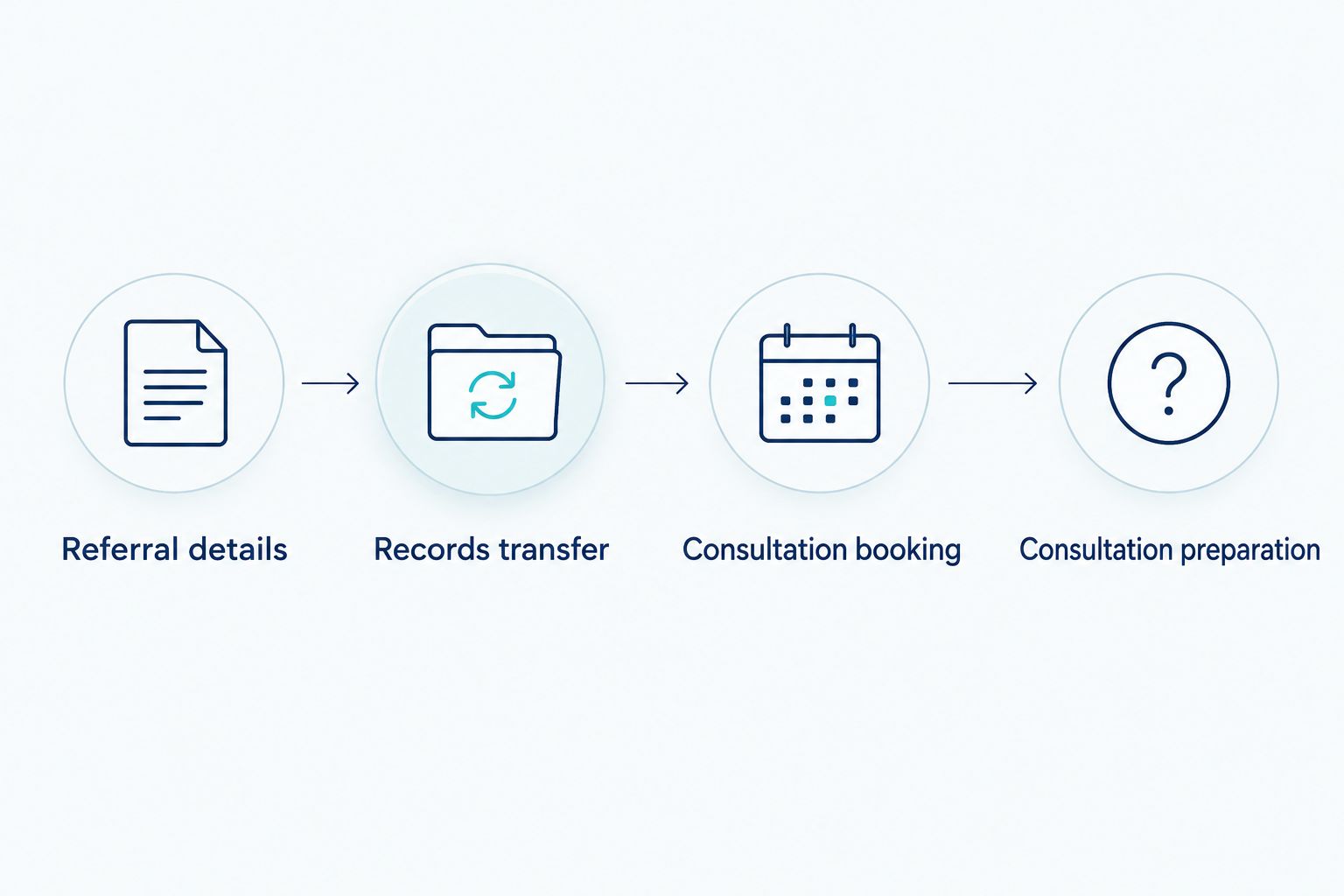
The handoff follows the same sequence even when the two offices use different systems: clarify the referral, transfer the information, arrange the visit, and prepare your questions.
When your referral changes before the visit
An updated referral is a second workflow, not a reason to start everything over. Use it when your dentist adds a finding, changes the referral question, or completes relevant treatment before the consultation.
- Identify what changed. Ask your dentist to distinguish the new information from the original referral.
- Send the update through the approved process. Include the relevant dates and follow the same authorization requirements.
- Tell the receiving office an update is coming. Ask it to connect the new information to your scheduled consultation.
- Confirm whether the visit plan changes. The receiving clinician decides whether the new information affects the evaluation or sequence of care.
Keep both offices informed if your symptoms change. New pain or swelling needs dental assessment, not simply an addition to your cosmetic wish list.
Troubleshooting the handoff
The referral arrived, but the images did not
Ask the referring office whether the images were sent separately. Confirm the receiving office's approved transfer method and request a receipt check. Do not assume an attachment contains every part of your record.
The receiving office cannot open the files
Ask that office to explain the file problem directly to the sender. Let the offices agree on a readable format through an approved channel. Repeatedly forwarding the same unusable attachment does not fix the handoff.
The appointment does not match the referral
Contact the receiving office and restate the referral question. Ask whether the scheduled visit addresses it or whether a different appointment is needed. Resolve the mismatch before you arrive.
The recommendations sound different
Ask each dentist what finding supports the recommendation and whether they are answering the same question. A difference can involve treatment sequence or goals rather than a direct disagreement. Request clarification before choosing an approach.
Symptoms develop while you wait
Contact a dentist promptly about new pain, swelling, or signs of infection. Seek emergency care for difficulty breathing or swallowing. A cosmetic consultation is not a substitute for urgent assessment.
Customize your consultation plan
Make your 2026 consultation plan about your whole smile, not appearance alone. If gum changes are part of your concern, the guide to treatments for receding gums affecting your smile can help you prepare questions for your dentist.
For a veneers discussion, ask how much natural tooth structure would change, what maintenance involves, and how the plan accounts for your bite. Veneers can change tooth appearance, but treatment can involve irreversible changes and requires ongoing care. Suitability depends on an examination.
Mysmiletheory offers cosmetic dentistry, but a service listing cannot establish your suitability or predict your result. Use the consultation to discuss natural-looking goals, comfort needs, and the limits of any proposed treatment.
Before agreeing to care, write down 1 next step and who is responsible for it. That might be your dentist sending an update, you arranging another assessment, or the receiving office explaining the proposed plan.
Start your consultation conversation
Ask what to bring and how to connect your dentist's referral with your smile goals.
FAQ
Do I need a referral to see a cosmetic dentist?
Ask the receiving office whether a referral is required for your appointment. A referral can communicate your dentist's findings, but appointment requirements depend on the office and the reason for the visit.
How do I send my dentist's referral to a cosmetic dentist?
Ask the receiving office for its approved records-transfer method, then arrange the handoff with your referring dentist. Complete any required authorization and confirm that the referral and relevant records arrived.
What should I bring to a cosmetic dental consultation?
Bring your referral, current medication and health information, and a short list of smile goals and questions. Confirm with the office whether records must arrive beforehand or whether you should bring any copies.
Does a referral mean I need veneers?
No, a referral does not establish that veneers are appropriate. The receiving dentist needs to evaluate your teeth, gums, bite, and goals before discussing suitable treatment.
Can my regular dentist stay involved after the consultation?
Ask both offices how they will share findings and coordinate care. Before leaving the consultation, clarify which dentist will manage each recommended next step.
What if my teeth hurt before my cosmetic appointment?
Contact a dentist promptly rather than waiting for a cosmetic consultation. Seek emergency care if swelling affects your breathing or swallowing.
How do I ask for a natural-looking result?
Describe which features you want to change and which you want to keep. Ask the dentist to explain how the proposed approach fits your existing smile and what its limitations are.
One last thing
A successful referral does not have to end with cosmetic treatment. It can end with a clearer understanding of your smile, a health-first plan, or a decision to leave something unchanged.
For your 2026 visit, finish with one question: what needs to happen next, and who will arrange it? That answer turns a consultation into a manageable plan without pressure.