Wait until after pregnancy to whiten your teeth with bleaching products. Research has not established that peroxide-based whitening is safe during pregnancy, so postponing this optional cosmetic treatment is the cautious choice. That does not mean whitening is proven to harm a baby, and it does not mean you should delay dental cleanings or treatment for pain, decay, or infection.
- Is it safe to whiten teeth while pregnant? Pregnancy-specific safety evidence is limited; postpone peroxide bleaching.
- Whitening strips, gels, trays, and in-office bleaching are cosmetic treatments, not essential pregnancy dental care.
- Mysmiletheory offers general and family dental care for local patients in Spring, Texas.
- Keep dental appointments, brush with fluoride toothpaste, and ask your dentist about sensitivity or bleeding gums.
Why this matters
You do not have to choose between caring for your smile and being cautious during pregnancy. The useful distinction is between optional whitening and care that keeps your teeth and gums healthy. Bleaching can wait; a painful tooth or swollen gum needs attention.
This 2026 guide separates those decisions so you can discuss them without feeling pressured to change your smile. For broader appointment planning, see the guide to dental care for expecting mothers.
Is it safe to whiten teeth while pregnant?
Pregnancy-specific safety has not been established for peroxide-based teeth whitening. Professional supervision helps manage dental concerns such as sensitivity and gum irritation, but it does not resolve the lack of pregnancy safety research. The practical recommendation is to postpone elective bleaching rather than search for a supposedly pregnancy-safe strength or method.
The American Dental Association's MouthHealthy resources distinguish oral health care during pregnancy from cosmetic whitening decisions. The American College of Obstetricians and Gynecologists also supports preventive and necessary dental care during pregnancy. Neither principle makes elective bleaching necessary.
Here is how the main choices differ for a pregnant patient considering a brighter smile in 2026:
| Option | Best for | What it does | Limitation during pregnancy |
|---|---|---|---|
| In-office peroxide whitening | Discussing cosmetic whitening after pregnancy | Bleaches natural tooth color under dental supervision | Supervision does not establish pregnancy safety; postpone elective treatment |
| Whitening strips or bleaching trays | Considering an at-home approach after a dental assessment | Holds bleaching gel against the teeth | Home use does not make bleaching pregnancy-safe; postpone it |
| Whitening toothpaste | Discussing surface-stain control with your dentist | Usually helps remove surface stains rather than substantially changing tooth color | Ingredients vary; some formulas contain peroxide or feel irritating |
| Professional cleaning | Maintaining dental health during pregnancy | Removes plaque, hardened deposits, and some surface stains | Does not bleach the underlying tooth color |
A cleaning and bleaching are not interchangeable. You can receive appropriate preventive care without committing to a cosmetic procedure.
In-office whitening: postpone elective bleaching
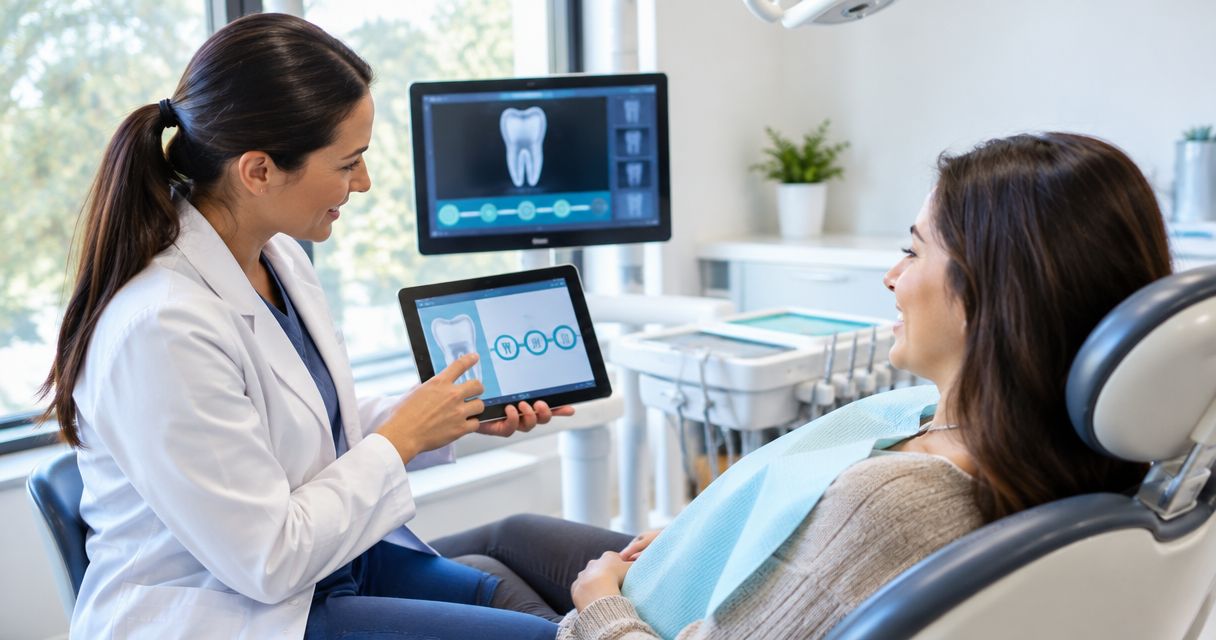
Having a dentist apply whitening gel does not make the pregnancy question disappear. A dental professional can assess your teeth, protect your gums, and discuss sensitivity, but those safeguards address the treatment process—not whether bleaching has been established as safe for a developing baby.
If you already have a whitening appointment, tell the dental office that you are pregnant before treatment starts. Ask whether the visit should become an examination, cleaning, or conversation about your future cosmetic goals instead.
Best for now: postponing the bleaching portion of the appointment while keeping appropriate dental care. You do not need to abandon your smile goals; you can separate planning from treatment.
Whitening strips and trays: home use changes nothing
Over-the-counter strips and dentist-provided trays can both use peroxide bleaching agents. A product being sold for home use does not establish that it is suitable during pregnancy. Neither does a shorter application time or a smaller amount of gel.
Avoid choosing a product based on claims such as gentle, natural, or enamel-safe. Those descriptions do not answer the pregnancy safety question. Do not invent a reduced schedule to make bleaching feel safer.
Best for now: setting bleaching products aside and asking your dentist about any current symptoms. If you already used them, keep the packaging so you can explain exactly what you used.
Whitening toothpaste: check the ingredients and purpose
Whitening toothpaste is not one uniform treatment. Many formulas remove surface stains through cleaning ingredients; some also contain peroxide. That difference matters when you are trying to avoid elective bleaching.
For everyday care, prioritize a fluoride toothpaste you can comfortably use. The American Dental Association recommends brushing for 2 minutes per session, 2 times daily, and cleaning between your teeth 1 time daily. Those habits support oral health; they do not promise a whiter shade.
Ask your dentist to review a toothpaste if its label is confusing or it causes discomfort. A whitening claim on the package is not a reason to tolerate burning, soreness, or increased sensitivity.
Professional cleaning: care without bleaching
A professional cleaning can remove deposits and some external stains, which can make your smile look cleaner. It does not change the natural internal shade of your teeth the way bleaching does. That limitation is useful to understand before expecting a dramatic color change.
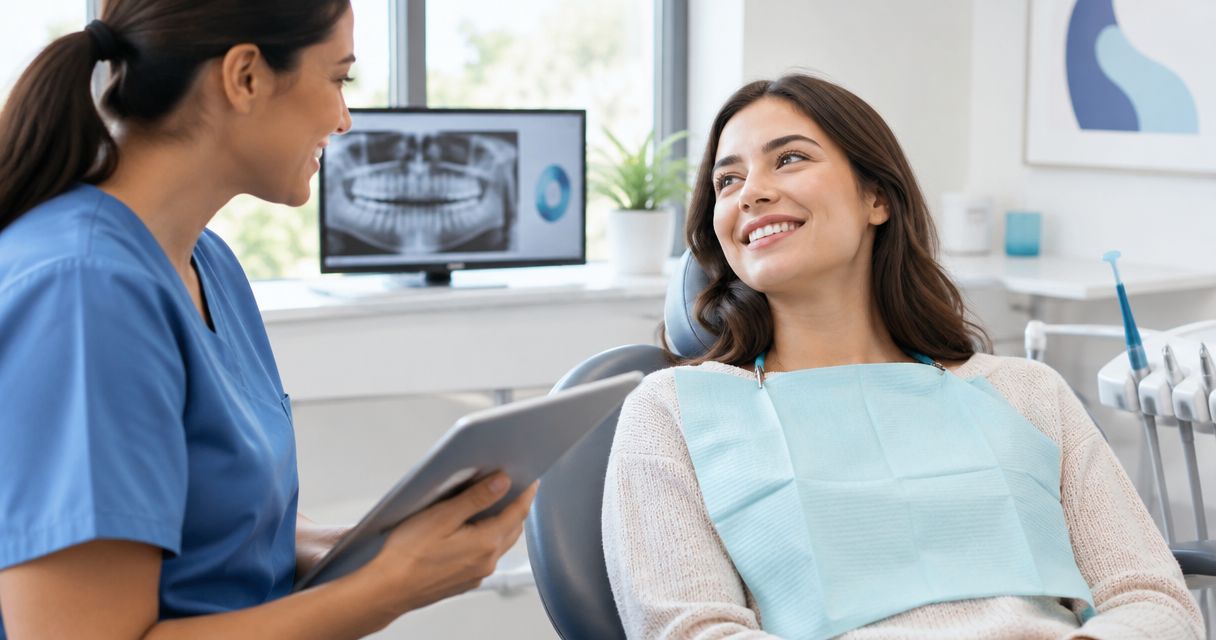
Preventive dental care is appropriate during pregnancy. Tell your dentist about your pregnancy, medications, symptoms, and any advice from your prenatal clinician so your care can be planned around your needs.
Mysmiletheory is best for Spring, Texas patients seeking a personal dentist for general and family dental care. A conversation about a healthy, comfortable smile is a sensible starting point, even when cosmetic treatment will wait.
Why whitening advice varies during pregnancy
Different answers often come from discussing different products or confusing general dental safety with pregnancy-specific evidence. For your 2026 decision, keep these factors separate:
- Treatment purpose: Preventing or treating dental disease has a health benefit; bleaching is an optional appearance change.
- Product ingredients: Peroxide bleaching and surface-stain removal are different processes, even when both carry a whitening label.
- Pregnancy evidence: A product's general dental use does not establish its safety during pregnancy.
- Gum comfort: Pregnancy-related hormonal changes can increase the gums' response to plaque, while whitening agents can cause irritation.
- Existing symptoms: Sensitivity, decay, exposed roots, or sore gums deserve an assessment rather than another cosmetic product.
The decision is not about finding the strongest reassurance on a package. It is about whether you need the treatment now and whether the evidence supports proceeding.
What should you do instead of whitening during pregnancy?
Build your plan around comfort, cleanliness, and addressing symptoms. You do not need a replacement cosmetic treatment simply because bleaching is on hold.
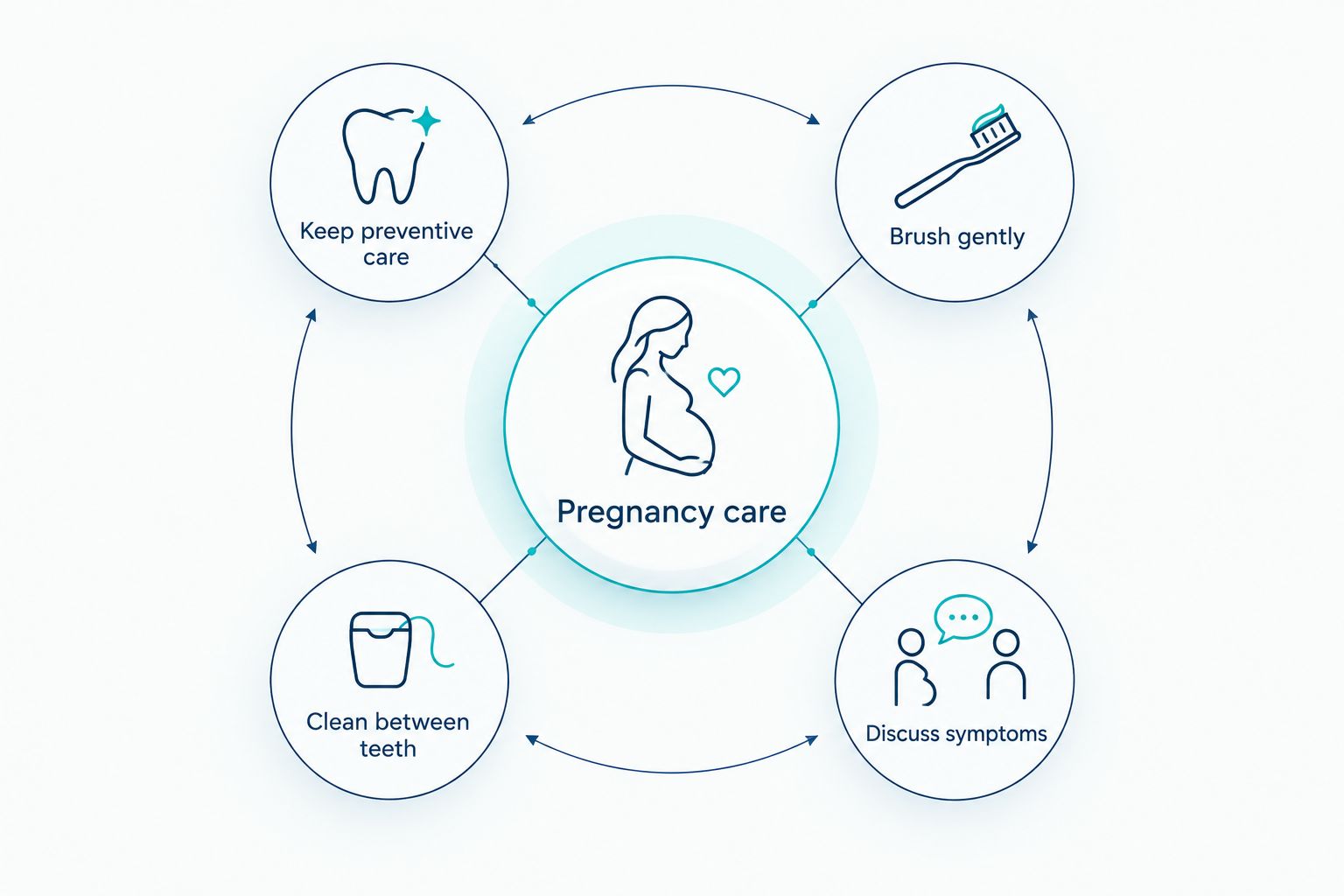
Keep preventive care
Continue dental examinations and cleanings as your dentist recommends. Tell the office about your pregnancy when arranging the visit, and mention nausea, reflux, bleeding gums, or difficulty brushing. These details help the team understand what is making daily care uncomfortable.
Brush gently
Use a soft-bristled toothbrush and fluoride toothpaste. Brush gently along the gumline rather than scrubbing harder to remove discoloration. More pressure is not a substitute for professional stain removal and can irritate sensitive areas.
Clean between teeth
Use floss or another interdental cleaner that suits your mouth and your dentist's advice. Bleeding is a reason to discuss gum health, not a reason to replace cleaning with whitening. Persistent or worsening bleeding deserves an examination.
Discuss symptoms
Ask about a tooth that suddenly looks darker, hurts, or feels different. Not every color change is an ordinary surface stain. A dentist needs to identify the cause before recommending a cosmetic response.
At Mysmiletheory, general and family dental care is part of the clinic's services for local patients. You can ask about your current dental needs without deciding on cosmetic treatment at the same visit.
Talk about your pregnancy dental care
Discuss dental concerns and which care to prioritize during pregnancy.
What if you whitened before knowing you were pregnant?
An earlier whitening session does not, by itself, establish that harm occurred. Stop further elective bleaching and tell your dentist and prenatal clinician what you used. Explain whether it was a strip, tray, gel, or in-office treatment, and share the packaging or ingredient list if you have it.
Limited safety evidence is a reason not to continue an optional treatment; it is not proof that a past exposure caused a problem. Your clinicians can assess the circumstances rather than leave you guessing from a general article.
If you swallowed whitening product, have ongoing irritation, or feel unwell, seek prompt medical or poison-control advice. Do not try to counteract the product with another home remedy.
Is teeth whitening safer in the second trimester?
The second trimester does not establish that elective bleaching is safe. Advice about making dental appointments more comfortable during pregnancy should not be interpreted as approval for every cosmetic treatment.
There is no trimester-specific bleaching schedule to recommend in this 2026 guide. Keep necessary dental care separate from elective whitening, and let your dentist and prenatal clinician advise on your individual health needs.
Are natural whitening remedies safer while pregnant?
Natural whitening remedies are not automatically safer. Lemon juice and other acidic mixtures can damage enamel, and abrasive scrubbing can irritate your mouth. Homemade peroxide mixtures also leave the pregnancy safety question unresolved.
Avoid replacing a commercial bleaching product with an unmeasured home recipe. If you want to reduce visible surface stains, ask about cleaning and suitable daily-care products instead.
When can you restart whitening after pregnancy?
Restarting whitening should begin with a dental assessment, not an automatic calendar date. Your dentist can check your gums, sensitivity, restorations, and the cause of discoloration before you choose a method.
If you are breastfeeding, discuss that separately. Pregnancy and breastfeeding are different situations, but you should not assume a bleaching product has established safety for either simply because delivery has occurred.
When you revisit cosmetic dentistry after pregnancy in 2026, explain the result you want in everyday terms: less surface staining, a more even shade, or a natural-looking change. That helps keep the conversation focused on your goals rather than a product label.
When should you call a dentist promptly?
Do not wait until after delivery to ask about tooth pain, facial swelling, a broken tooth, or signs of infection. Necessary dental treatment is different from optional whitening. Pregnancy is not a reason to leave a worsening problem untreated.
Seek urgent care for facial swelling with fever, and emergency medical help for trouble breathing or swallowing. For less urgent concerns, describe when the symptoms started and what makes them worse.
The same principle applies throughout this 2026 guide: postpone cosmetic bleaching, not attention to dental symptoms.
FAQ
Is it safe to whiten teeth while pregnant?
Pregnancy-specific safety has not been established for peroxide-based whitening, so postpone elective bleaching. Continue appropriate dental examinations, cleanings, and treatment for dental problems.
Can I use whitening strips while pregnant?
Postpone whitening strips during pregnancy. Home use does not establish pregnancy safety, even if the product is described as gentle.
Is professional teeth whitening safer during pregnancy?
Professional supervision does not establish that bleaching is safe during pregnancy. A dentist can manage dental risks such as gum irritation, but elective whitening can wait.
Can I use fluoride toothpaste while pregnant?
Fluoride toothpaste is recommended for routine oral care during pregnancy. Brush gently with a soft-bristled toothbrush, and ask your dentist about products that cause discomfort.
What if I used whitening strips before I knew I was pregnant?
Using whitening strips before learning you were pregnant does not, by itself, establish that harm occurred. Stop further bleaching and share the product details with your dentist and prenatal clinician.
Can I have a dental cleaning while pregnant?
Yes, preventive dental care, including cleanings, is appropriate during pregnancy. Tell the dental office about your pregnancy and any symptoms or advice from your prenatal clinician.
Can I whiten my teeth while breastfeeding?
Discuss elective bleaching with your dentist and healthcare clinician while breastfeeding. Do not assume that a product has established breastfeeding safety or use a homemade substitute.
One last thing
A brighter-looking smile does not always require bleaching. Removing deposits and external stains can improve how clean your teeth look without changing their natural shade. Keep that expectation modest: a cleaning supports health, not a promised cosmetic transformation.
If you are planning care with Mysmiletheory in 2026, start with what feels different or uncomfortable, then discuss appearance goals separately. You deserve clear answers and room to wait.