Yes—teeth whitening is generally safe for healthy enamel when you use a suitable peroxide-based product exactly as directed. Temporary tooth sensitivity and gum irritation are recognized side effects; neither automatically means your enamel has been damaged. For your 2026 whitening plans, start with a dental check if you have pain, cavities, receding gums, or existing dental work.
- Is teeth whitening safe for enamel? Generally yes, with healthy teeth, suitable peroxide products, and correct use.
- Tooth sensitivity after whitening does not automatically mean enamel damage; stop if symptoms develop.
- Whitening changes natural tooth color, not the color of crowns, veneers, or tooth-colored fillings.
- Mysmiletheory provides general and cosmetic dental care for local patients seeking a personal dentist.
Is teeth whitening safe for your enamel?
Peroxide-based whitening lightens stains through a chemical reaction rather than by scraping away enamel. The American Dental Association identifies temporary tooth sensitivity and gum irritation as common adverse effects of whitening. That distinction matters: a brief cold sensation is different from permanent loss of the tooth’s protective surface.
The method still matters. Whitening products differ in their ingredients, strength, contact time, and instructions, so you should not treat them as interchangeable.
| Approach | Best for | Main benefit | Main limitation or concern |
|---|---|---|---|
| Dentist-supervised peroxide whitening | People who need individual guidance | Allows an assessment of tooth health and a tailored treatment plan | Sensitivity and gum irritation remain possible |
| Peroxide whitening strips | People whose teeth and gums are suitable for home treatment | Lighten natural teeth when used as directed | Poor placement can expose gums to gel; not suitable for every mouth |
| Whitening toothpaste | People managing surface stains | Helps remove external staining during brushing | Does not provide the same bleaching effect as peroxide treatment |
| Acidic or abrasive DIY mixtures | Not recommended for whitening | No dependable safety advantage | Acid can erode enamel, and excessive abrasion can wear teeth |
If you are unsure whether staining, exposed roots, or dental work affects your options, Mysmiletheory offers general and cosmetic dental care in Spring, Texas. A dental conversation can help you separate a cosmetic concern from something that needs treatment first.
Why this matters
A brighter smile should not come at the expense of a comfortable mouth. The useful question is not simply whether whitening works—it is whether your teeth, gums, and chosen method are a suitable match.
For a 2026 whitening decision, prioritize a healthy starting point over the strongest product. A tooth with an untreated cavity needs care before cosmetic treatment, while an exposed root needs different consideration from intact enamel.
Whiten healthy teeth; investigate painful teeth. That simple boundary helps you avoid repeatedly treating a symptom as a cosmetic problem.
What whitening does—and does not do—to enamel
Enamel is the hard outer covering of your teeth. Peroxide whitening works on colored compounds in and beneath that surface; it is not intended to remove a layer of enamel.
That does not make every whitening routine harmless. Research on bleaching includes different formulations and laboratory conditions, so claims that every product either “destroys enamel” or “cannot affect enamel” are too broad. Product formulation, exposure, and the condition of the tooth all matter.
You also need to distinguish bleaching from stain removal. Toothpaste generally cleans external staining through its cleaning ingredients, while peroxide-based treatment changes the color of stain molecules. Scrubbing harder does not turn ordinary brushing into a safer or more effective bleaching treatment.
Enamel that has already worn away does not grow back. Avoid acidic home remedies and aggressive scrubbing, even when they are described as natural.
Why whitening safety varies
Your whitening experience depends on more than the product name. These factors help explain why the same approach is comfortable for one person and irritating for another:
- Starting tooth health: Cavities, cracks, worn areas, and exposed roots need assessment before whitening.
- Existing sensitivity: A history of discomfort with cold drinks or brushing changes the conversation about treatment.
- Product formulation: Peroxide concentration and other ingredients affect how the product works and how tissues respond.
- Contact time: Leaving a product on longer than directed increases exposure without establishing that it is appropriate for your teeth.
- Gum contact: Gel that spreads onto gums can cause irritation, particularly when trays or strips do not sit properly.
- Repeated treatment: Combining whitening products or repeating treatment outside the instructions adds exposure rather than individualized care.
For your 2026 routine, keep the instructions that came with the actual product. Advice for a different strip, gel, or tray is not a substitute, even if the packaging looks similar.
Is sensitivity after whitening the same as enamel damage?
No—temporary sensitivity after whitening does not, by itself, show that enamel has been damaged. Peroxide can pass through enamel and dentin, the layer beneath it, and irritate the tissues inside a tooth. This helps explain why otherwise healthy teeth can feel sensitive during treatment.
The important distinction is what happens next. Stop whitening if discomfort develops, and ask your dentist how to proceed rather than pushing through it or adding another product.
Persistent pain, pain focused on a single tooth, or pain when biting deserves a dental assessment. These symptoms should not be dismissed as an expected part of getting a whiter smile, especially when they were present before treatment.
Gum irritation is a separate issue. Whitening gel that touches soft tissue can cause soreness or temporary changes in appearance; stop using the product and seek advice if irritation persists or is significant.
Can you whiten teeth if you have receding gums or dental work?
Receding gums expose root surfaces that do not have the same enamel covering as the crowns of your teeth. Those areas can be sensitive and need individual consideration before bleaching. Whitening is not a treatment for gum recession.
Crowns, veneers, and tooth-colored fillings also behave differently from natural teeth. Whitening does not lighten these restorations, so treating the surrounding teeth can make a color difference more noticeable.
Tell your dentist which teeth have dental work and what result you want before starting. If you are planning a new visible restoration, discuss the order of treatment so its shade can be considered alongside your natural teeth.
A single tooth that has become darker also deserves its own assessment. Previous injury or a problem inside the tooth can require a different approach from general whitening.
How can you whiten more safely at home?
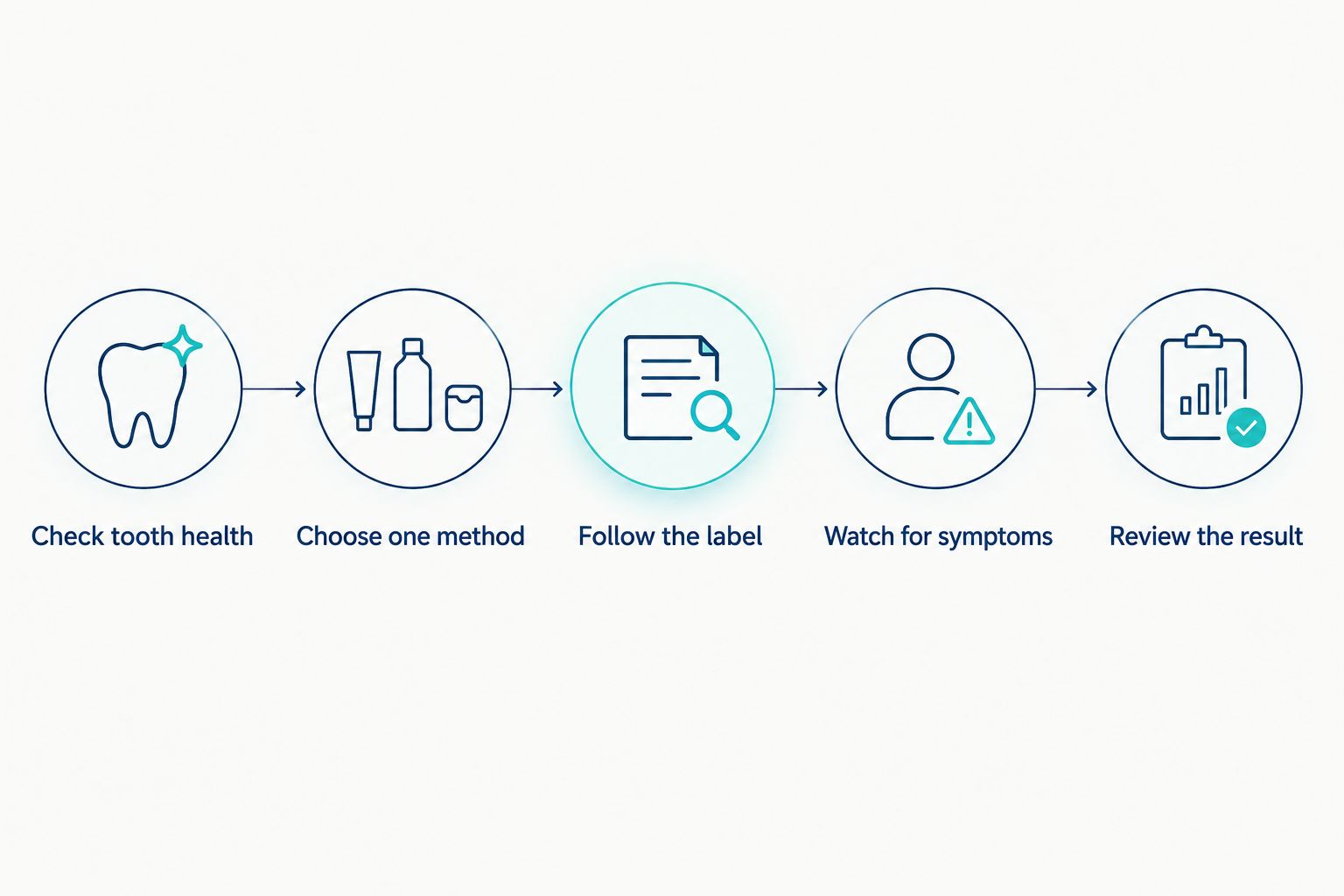
A careful home routine starts before you open the package. Use this sequence when considering whitening in 2026, particularly if you have not had a recent dental assessment or your mouth has changed since your last treatment.
- Check tooth health. Arrange an examination if you have pain, untreated decay, bleeding gums, a broken tooth, or uncertainty about your dental work. Describe existing sensitivity before choosing a product.
- Choose one method. Select an approach appropriate for your mouth, with dental guidance when needed. Do not combine strips, whitening gel, and additional bleaching treatments to chase a faster change.
- Follow the label. Keep to the stated application time and frequency. Do not sleep in a product unless its specific instructions tell you to do so.
- Watch for symptoms. Stop if you develop sensitivity, gum soreness, or other discomfort. Ask a dentist before restarting when symptoms persist or concern you.
- Review the result. Assess the overall appearance rather than repeatedly treating one area that looks different. A filling, exposed root, or type of discoloration that does not respond needs explanation, not extra gel.
This sequence puts suitability before shade. It also gives you a clear stopping point: discomfort is a reason to reassess, not proof that treatment is working.
You do not need to know every ingredient to have a useful conversation with your dentist. Bring the package or a clear photograph of the label, explain how you plan to use it, and mention any previous reaction to whitening.
What should you avoid when trying to whiten your teeth?
Lemon juice, vinegar, and other acidic home mixtures are not enamel-friendly shortcuts. Acid can soften and erode tooth surfaces; combining it with vigorous brushing adds another source of wear.
Charcoal is not a dependable substitute for an established whitening approach. Evidence does not establish charcoal dental products as a consistently safe, effective way to whiten teeth, and abrasiveness varies between formulations.
Also avoid treating product strength as a quality ranking. A stronger gel is not automatically the right gel for your mouth, and extra exposure does not correct a poor fit or an untreated dental problem.
Never use household bleach on your teeth. Household cleaning products are not dental whitening products and can injure oral tissues.
How do you protect your teeth between whitening treatments?
Daily care remains the foundation. Brush for 2 minutes per session, brush 2 times per day with fluoride toothpaste, and clean between your teeth 1 time per day. These established oral-hygiene recommendations support dental health; they are not instructions to bleach more often.
Use a soft-bristled toothbrush and gentle pressure. More force does not remove deep discoloration safely, and brushing should not leave your gums sore.
Keep your dental visits appropriate to your individual needs, and tell your dentist if sensitivity changes. If you are considering another whitening treatment, review the product instructions and your previous response rather than automatically repeating the same schedule.
For your 2026 maintenance plan, focus on comfortable daily habits instead of continuous bleaching. A smile that feels healthy matters more than repeatedly pursuing a lighter shade.
What should you ask before choosing whitening?
A useful appointment is a conversation about your mouth and your preferences, not a commitment to treatment. You can bring these questions:
- Is my discoloration likely to respond to whitening?
- Do I have any cavities, exposed roots, or cracks that need attention first?
- Which visible teeth have restorations that will not change color?
- What should I do if I notice sensitivity or gum irritation?
- How will we decide whether the result looks natural for me?
Mysmiletheory is best suited to Spring patients seeking personal general and cosmetic dental care. You can explain the change you want, ask about comfort, and decide what feels right without rushing into a whitening routine.
Talk about your smile goals
Discuss your questions about tooth color, sensitivity, and cosmetic dental care.
FAQ
Is teeth whitening safe for enamel if I already have sensitive teeth?
Teeth whitening needs individual assessment if you already have sensitive teeth. A dentist can check for decay, exposed roots, cracks, or other causes before recommending an approach.
Does whitening remove a layer of enamel?
Peroxide-based whitening is not intended to remove a layer of enamel; it lightens colored compounds through a chemical reaction. Acidic DIY mixtures and excessive abrasive cleaning are different and can damage tooth surfaces.
Are whitening strips safer than treatment at the dentist?
Whitening strips are not automatically safer than dentist-supervised treatment. Safety depends on your oral health, the formulation, correct use, and contact with your gums; dental supervision adds assessment and individual guidance.
Should I stop whitening if my teeth hurt?
Yes—stop whitening if your teeth hurt and seek dental advice if symptoms persist, are severe, or affect a single tooth. Do not extend treatment or add another product to push through discomfort.
Will whitening change the color of my veneers or crowns?
No—whitening does not lighten veneers, crowns, or tooth-colored fillings. It can change the surrounding natural teeth and leave a visible shade difference, so discuss existing dental work before treatment.
Can I use lemon juice or charcoal instead of whitening gel?
Avoid lemon juice for whitening because its acidity can erode enamel. Charcoal products are not a dependable alternative: evidence does not establish consistent whitening benefits and safety, and abrasiveness varies.
Can I whiten my teeth every day?
Use whitening only at the frequency stated for your specific product or prescribed by your dentist. Daily use is not a universal rule, and repeated treatment should not continue through sensitivity or gum irritation.
One last thing
A tooth that looks more yellow does not always need more whitening. Thinner enamel or exposed roots can make the underlying tooth color more visible, and extra bleaching does not replace missing enamel or cover a root.
Before repeating treatment, ask what is causing the color you see. Understanding the cause is the safer route to a natural-looking result.