
No, it is not too late to fix crooked teeth as an adult: healthy teeth can move at any age when the gums and supporting bone are suitable for treatment. The important caveat is that gum disease, cavities, and bite problems need attention before you choose how to straighten or reshape your smile.
- Is it too late to fix crooked teeth as an adult? No—oral health matters more than age alone.
- Braces and clear aligners move teeth; veneers and bonding change their appearance without correcting tooth position.
- Mysmiletheory dental care gives Spring patients a local starting point for discussing smile concerns.
- Choose a plan around healthy gums, your bite, and a result that feels natural to you.
Is it too late to fix crooked teeth as an adult?
Adulthood is not a deadline for straighter teeth. The American Association of Orthodontists' guidance on adult treatment identifies healthy teeth and supporting tissues—not a specific upper age—as the important starting point. That principle applies to your treatment decisions in 2026.
Your first step is an examination, not choosing an appliance from a photograph. Mysmiletheory provides general, cosmetic, restorative, and family dental services in Spring, Texas; discuss your concerns and whether an orthodontic assessment belongs in your plan.
Different approaches solve different problems. This comparison separates tooth movement from cosmetic changes so you can ask for the treatment that matches your concern.
| Approach | Best for | Main benefit | Important limitation |
|---|---|---|---|
| Braces | People who need controlled tooth movement and bite correction | Fixed appliances move teeth without removable-tray wear decisions | Cleaning around brackets takes extra attention |
| Clear aligners | Suitable cases where a removable appliance fits daily life | Trays come out for eating and cleaning | Results depend on following the prescribed wear schedule; not every case is suitable |
| Dental bonding | Selected small gaps or uneven edges | Tooth-colored material changes tooth shape | Does not move roots or correct a misaligned bite; material can chip or stain |
| Veneers | Selected concerns involving tooth shape, color, or minor visible unevenness | Cover the front surface to change appearance | Do not straighten roots; preparation often removes enamel and is irreversible |
There is no single winner for every adult. The right choice depends on whether you need healthier tooth positioning, a cosmetic adjustment, or both in a carefully planned order.
Why this matters
Crooked teeth can affect how you feel about smiling, but appearance is only part of the conversation. Overlapping teeth can make some areas harder to clean, and certain bite problems contribute to uneven wear or chewing difficulties. An examination determines whether those concerns apply to you.
You do not have to justify wanting a change. You also do not have to treat every small irregularity: if your teeth are healthy and your bite is comfortable, keeping your current smile is a valid choice.
For a 2026 smile plan, separate what bothers you visually from what needs dental treatment. That distinction helps you avoid choosing a more involved procedure for a concern that needs a smaller change—or overlooking a bite problem beneath a cosmetic concern.
Braces: best for controlled tooth movement
Braces apply controlled forces that gradually reposition teeth. An orthodontist can assess whether fixed appliances suit crowding, rotations, spacing, or the way your upper and lower teeth meet.
Their practical advantage is that they stay attached. You do not have to remember to put them back after meals, although you still need to follow instructions about cleaning, food, and any additional appliances.
The trade-off is daily upkeep. Brackets and wires create extra places for food and plaque to collect, and adjustment visits can bring temporary tenderness. Adults with gum problems need a plan that addresses those problems before movement begins.
Choose braces for the movement your teeth need, not because you think you missed the chance as a teenager. For more on age and eligibility, read can adults get braces at any age?.
Clear aligners: best for suitable cases and consistent routines
Clear aligners use a planned sequence of removable trays to move teeth. They are an option for many adults, but suitability depends on the movements required, the bite, and the condition of the teeth and gums.
Removability helps you eat and clean your teeth without brackets in the way. It also creates responsibility: leaving trays out longer than prescribed interferes with the planned treatment.
Ask how an aligner plan would address your particular concern, including any tooth-colored attachments or other measures the clinician recommends. A less noticeable appliance is not automatically a simpler treatment.
Choose clear aligners only when both the clinical plan and the daily routine fit you. If remembering trays would be difficult during work, meals, or travel, say so before treatment starts.
Bonding and veneers: best for selected appearance concerns
Bonding and veneers can change how teeth look, but neither moves a tooth into a new position. This matters when a tooth appears crooked because of its actual position rather than an uneven edge or shape.
Bonding adds tooth-colored material to selected areas. It can help disguise a small gap or improve an edge, but adding material to an already crowded tooth can create unwanted bulk. Your dentist needs to check both appearance and the way the teeth contact each other.
Veneers cover the visible front surfaces of teeth. They can address selected shape and color concerns, but they are not a substitute for orthodontic treatment when tooth position or bite correction is needed.
Ask what would be removed from a healthy tooth before choosing a cosmetic shortcut. Veneer preparation often changes enamel permanently, and restorations need ongoing care and eventual repair or replacement.
If your main goal is a natural-looking result, discuss tooth proportions and how the smile fits your face—not just whether the front edges look perfectly straight.
Why adult treatment plans vary
Two adults with similar-looking front teeth can need different care. These factors explain why a photograph alone cannot settle your treatment choice:
- Gum health: Active gum disease needs assessment and treatment before planned tooth movement. Healthy-looking teeth can still have problems beneath the gumline.
- Bone support: The supporting bone affects whether and how teeth can move safely. Your clinician evaluates this with the examination and appropriate imaging.
- Bite relationship: Crowding at the front does not show the whole picture. The way the back teeth meet can change the recommended approach.
- Existing dental work: Crowns, bridges, implants, and other restorations affect planning. A dental implant does not move through bone like a natural tooth.
- Daily routines: Cleaning habits, removable-appliance wear, and follow-up attendance affect how manageable a plan is for you.
- Your actual goal: Improving one visible edge is different from correcting crowding throughout the mouth. Explain what you want to change and what you want to preserve.
Age belongs in your medical history, but it does not replace these checks. Ask what makes treatment suitable for your mouth, rather than asking whether your birthday rules it out.
What happens before you choose a treatment?
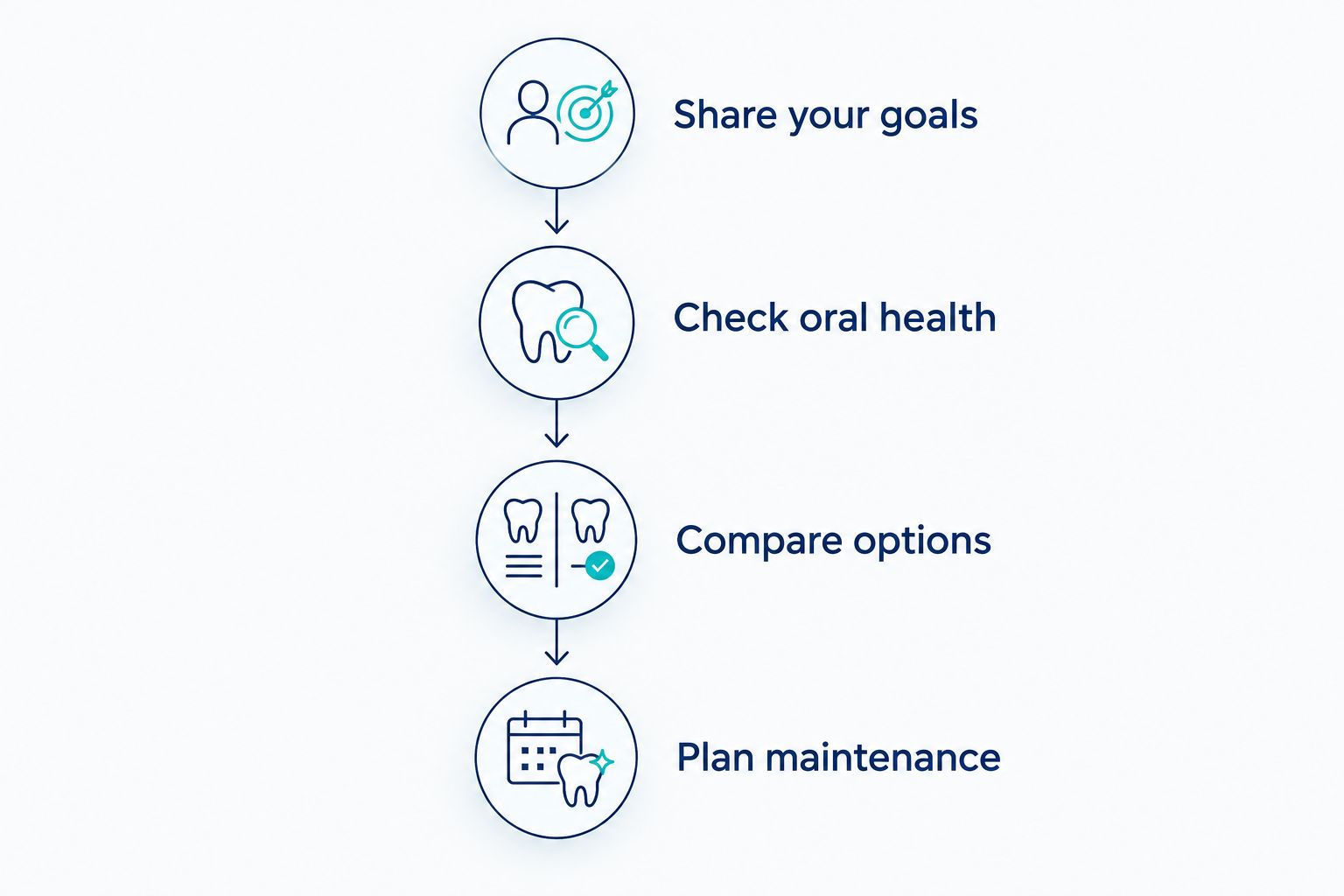
A useful consultation turns a general wish for straighter teeth into a clear decision. For your 2026 appointment, bring previous dental records if you have them and explain any sensitivity, bleeding, loose teeth, or changes in your bite.
- Share your goals. Point out the teeth or angles that bother you. Mention whether your concern is appearance, cleaning, chewing, or a combination.
- Check oral health. The clinician examines your teeth, gums, and bite, with imaging when appropriate. Cavities and gum problems need a place in the plan.
- Compare options. Ask which approaches move teeth, which change appearance, and what each would leave unchanged.
- Plan maintenance. Discuss cleaning, follow-up appointments, and retainers before starting. Keeping the result is part of treatment, not an afterthought.
You can also ask to hear the limitations before hearing the benefits. A clear explanation of what treatment cannot accomplish is useful, especially when you are comparing cosmetic changes with orthodontic care.
Mysmiletheory is a dental-care starting point for Spring adults seeking a personal dentist. An examination can help clarify your concerns; an orthodontic assessment is needed when specialist tooth-movement planning is appropriate.
Talk about your smile goals
Request an appointment to discuss your teeth, your concerns, and the next step that fits your needs.
Can I straighten my teeth if I have gum disease?
Gum disease does not automatically close every treatment option, but active disease needs care before orthodontic movement. Moving teeth without addressing the health of the supporting tissues can cause harm.
Tell your dentist about bleeding, recession, persistent bad breath, or teeth that feel loose. These symptoms need evaluation rather than an assumption that crooked teeth are the only issue.
For a 2026 treatment decision, ask how gum stability will be checked and monitored. If several clinicians are involved, you should understand who is managing gum care and who is planning tooth movement.
Can I fix just one crooked tooth?
One crooked tooth still needs a whole-bite assessment. Creating room for that tooth or changing its position can affect neighboring teeth and how the upper and lower teeth meet.
A limited concern sometimes has a limited solution, but the smallest-looking appliance is not always the most conservative choice. Ask whether reshaping, bonding, orthodontic movement, or leaving the tooth alone would best protect healthy tooth structure.
Bring a specific goal, such as making an overlapping edge easier to clean. That gives your clinician something more useful to evaluate than a request for a perfect smile.
Will my teeth stay straight after adult treatment?
Teeth can shift after orthodontic treatment, which is why retainers are part of maintaining the result. Follow the schedule your treating clinician prescribes rather than stopping when your teeth first look straight.
If you had braces earlier in life, explain what happened with your old retainer. Do not force a tight or poorly fitting retainer onto teeth that have moved; have the fit assessed.
Everyday care still matters. The American Dental Association recommends brushing for 2 minutes, 2 times a day, with fluoride toothpaste and cleaning between teeth 1 time a day. These habits support oral health; they do not replace a retainer or straighten teeth.
FAQ
Is it too late to fix crooked teeth as an adult in 2026?
No, it is not too late to fix crooked teeth as an adult in 2026. Healthy teeth can move at any age, but your gums, supporting bone, and bite need assessment before treatment.
Am I too old for braces if I already have crowns?
Crowns do not automatically rule out braces, but they affect treatment planning. Your clinician needs to assess the crowned teeth, their roots, and the surrounding support.
Are clear aligners better than braces for adults?
Clear aligners are not automatically better than braces for adults. The better fit depends on the movements needed, your bite, and whether you can follow a removable-tray routine.
Can veneers straighten my crooked teeth?
Veneers change the visible surfaces of teeth; they do not straighten roots or correct a misaligned bite. Selected minor appearance concerns can suit veneers, but tooth position needs a separate assessment.
Will straightening my teeth hurt?
Orthodontic tooth movement can cause temporary tenderness, particularly after an adjustment or a new tray. Severe, persistent, or unexpected pain needs advice from your treating clinician.
Can I straighten my teeth if I have a dental implant?
A dental implant does not move like a natural tooth, so it changes the orthodontic plan. A clinician must assess whether nearby teeth can move safely around its fixed position.
Do I need retainers after fixing crooked teeth?
You need a retention plan after orthodontic tooth movement because teeth can shift again. Follow your clinician's instructions for retainer wear, cleaning, and fit checks.
One last thing
The tooth that looks most crooked is not always the tooth that needs the most attention. A small-looking overlap can involve the bite, while a noticeable uneven edge might be a shape concern rather than a tooth-position problem.
Before your appointment, write down what you would like to change and what you like about your smile. Ask for the least invasive appropriate option—and a clear explanation of what it will not change.
At Mysmiletheory, you can start that conversation about general or cosmetic dental care without choosing a procedure first. Your next step is understanding your mouth, not committing to someone else's idea of a perfect smile.


