
Medication-stained teeth can usually be improved, and the right treatment depends on where the stain sits: on the surface of the enamel or deep inside the tooth. This guide ranks the main options for treating stained teeth from medication and for the gradual darkening that comes with age, so you can walk into a consultation knowing what to ask for in 2026.
- Best overall for treating stained teeth from medication: porcelain veneers, which cover deep stain instead of bleaching it.
- Best for mild, surface-level yellowing: professional whitening after a cleaning.
- Best for one or two stained teeth: dental bonding, a gentle, conservative fix.
- Medication stain often sits inside the tooth, so store-bought strips rarely finish the job.
- A short exam tells you which option fits your teeth and your comfort level.
Best overall: porcelain veneers. Best for mild yellowing: professional whitening. Best for a single tooth or small area: dental bonding. Best for older, worn, heavily restored smiles: crowns. Smile Theory, a dental clinic in Spring, Texas, offers all of these under one roof, so you can compare them in a single conversation.
Why this matters
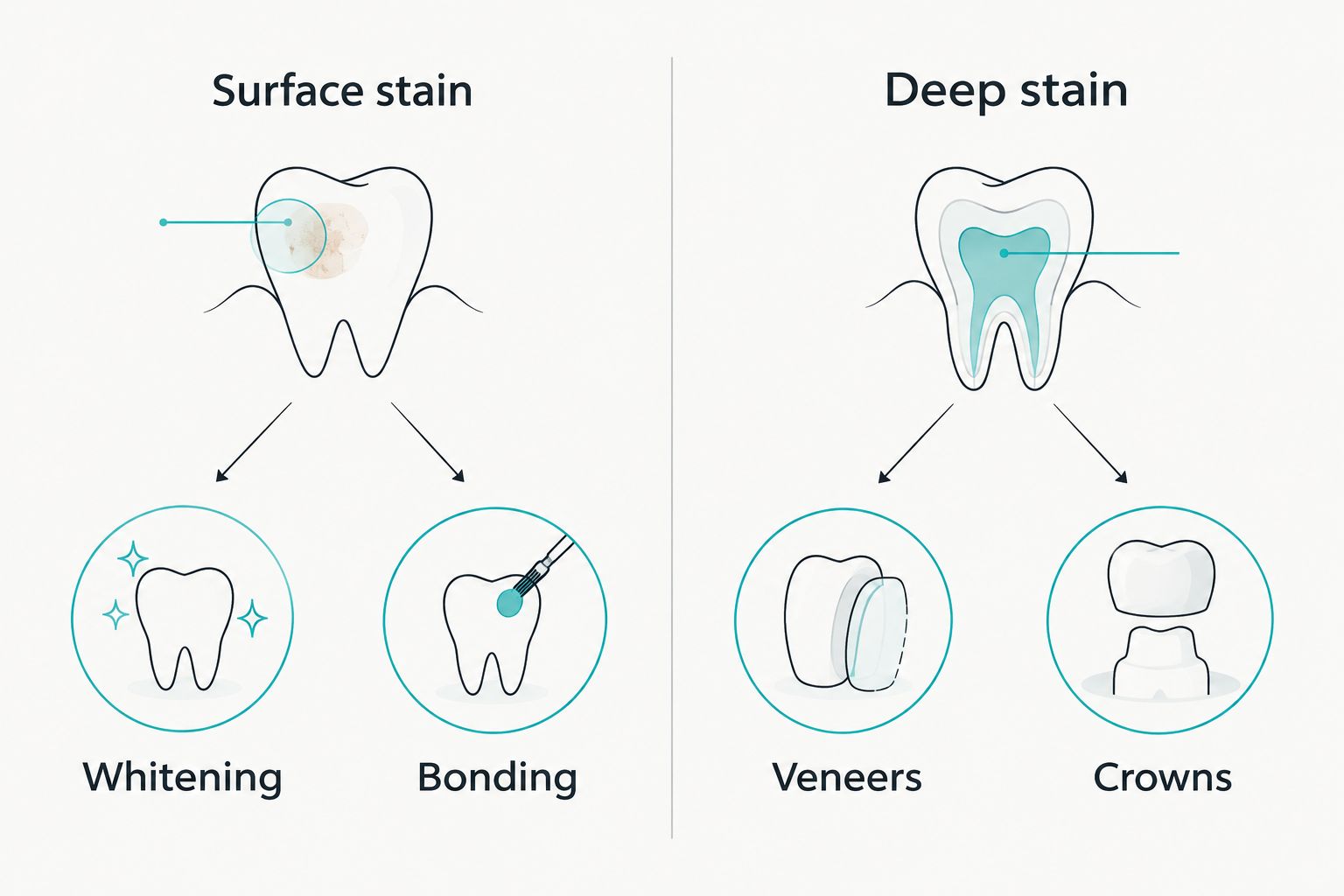
A stained smile is rarely about brushing harder. Some medications, including certain antibiotics taken during tooth development, can leave stain inside the tooth structure itself. Age adds its own layer: enamel thins over the years and the darker layer underneath (dentin) shows through more.
That is why the same whitening product that works beautifully for your friend's coffee stains may do very little for you. Matching the treatment to the cause is the whole game, and it is the part a friendly, unhurried exam sorts out.
What makes the best treatment for medication or age-related stains
Use these criteria to judge any option, including the ones below:
- Reaches the stain. Surface stain and deep stain need different tools.
- Natural-looking result. Color, shine and shape should blend with your other teeth.
- Comfort. Minimal sensitivity and a gentle process from start to finish.
- Longevity. How long the result holds up with normal daily habits.
- Conservative approach. Keeps as much of your natural tooth as possible.
At a glance
| Option | Best for | Standout feature | Key limitation |
|---|---|---|---|
| Porcelain veneers | Deep medication stain, multiple teeth | Covers stain completely and reshapes the smile | Involves more of the tooth than other options |
| Professional whitening | Mild to moderate surface and age-related yellowing | Non-invasive and quick to start | May not lift stain that sits inside the tooth |
| Dental bonding | One or a few stained teeth | Often finished in a single visit | Can pick up stain over time |
| Crowns | Heavily stained or weakened teeth | Strength plus color correction | Most involved option |
| Whitening plus a cleaning | Everyday build-up and early dulling | Gentle first step | Limited effect on medication stain |
1. Porcelain veneers: best for deep medication stain
Veneers are thin porcelain shells placed over the front of your teeth. Because they cover the tooth instead of changing its internal color, they are the most dependable answer when stain comes from inside, which is common with medication-related discoloration. If you want a closer look at how this works day to day, see our guide on how long dental veneers last.
Veneers pros:
- Covers deep stain that whitening cannot reach
- Natural-looking shade, shine and shape
- Can also soften small chips, gaps or uneven edges
- Resists everyday staining well
Veneers cons:
- Involves reshaping a small amount of enamel
- Not the right fit if active cavities are untreated first
- Takes more than one visit
Best for: medication stain across several visible teeth. Verdict: Buy if stain is deep and you want a smile that looks like yours, only brighter.
2. Professional whitening: best for mild yellowing
If your discoloration is a general yellow or gray cast from years of living, professional whitening is a comfortable place to start. It is supervised, tailored to your teeth, and gentler than many people expect. Results vary with the cause of the stain, so a quick exam first saves you time. For more on how long results last, read how long teeth whitening lasts.
Whitening pros:
- Non-invasive; no drilling or reshaping
- Works well on age-related yellowing
- Can be paired with a cleaning
- Easy to touch up later
Whitening cons:
- May have limited effect on stain inside the tooth
- Some people feel temporary sensitivity
- Does not change existing crowns, veneers or fillings
Best for: mild to moderate surface and age-related stain. Verdict: Buy as a first step when the stain is light; Hold if your discoloration is gray, banded or tied to medication.
3. Dental bonding: best for one or two stained teeth
Bonding uses a tooth-colored resin shaped right onto the tooth. It is a good fit when only a tooth or two stands out, and it is typically a conservative, one-visit approach. Because resin can pick up stain over time, daily habits matter. To see what to expect over the years, review how long dental bonding lasts.
Bonding pros:
- Preserves most of your natural tooth
- Often completed in a single appointment
- Can fix small chips at the same time
Bonding cons:
- Less stain-resistant than porcelain
- May need touch-ups
- Not ideal for covering a full set of dark teeth
Best for: a few teeth that do not match the rest. Verdict: Buy for small, targeted fixes.
4. Crowns: best for weakened or heavily stained teeth
When a tooth is both discolored and worn, cracked or heavily filled, a crown restores strength and color in one step. It is the most involved option here, so it fits best when the tooth needs support as well as a fresh look.
Crown pros:
- Rebuilds strength while correcting color
- Long-wearing when cared for
- Good for teeth with large old fillings
Crown cons:
- Requires more tooth preparation
- More than one visit
- Usually more than a stained-but-healthy tooth needs
Best for: teeth that are stained and structurally compromised. Verdict: Hold unless the tooth needs the extra support.
Find the right fit for your smile
A relaxed visit to talk through your options, no pressure.
5. Whitening with a cleaning: best gentle first step
Sometimes dullness is built-up surface stain from coffee, tea or time. A professional cleaning removes it, and it also shows your dentist what is surface and what is deeper. If your stain comes from drinks, our guide to coffee and wine stained teeth goes deeper.
Pros:
- Comfortable and low commitment
- Reveals your true tooth color
- Helps decide whether you need more
Cons:
- Will not change medication stain inside the tooth
- Brightening is modest on its own
Best for: early dulling and everyday build-up. Verdict: Buy as a starting point; Skip as a final answer for deep stain.
How we ranked
Options are ordered by how reliably they address medication-related stain, then by comfort, natural look and how much of your own tooth they preserve. Where several options tie, the more conservative one ranks higher for milder stain.
Which treatment should you choose?
If your stain is deep or medication-related, start by asking about veneers. If it is light and even, begin with professional whitening. If only one or two teeth bother you, bonding is a gentle fix. And if you are unsure, an exam is the quickest way to know what you are actually dealing with. Smile Theory's services page outlines the cosmetic and restorative choices available in 2026.
FAQ
Can medication-stained teeth be whitened?
Sometimes. Mild stain may respond to professional whitening, but stain inside the tooth often does not. A dental exam shows which type you have.
What is the best treatment for treating stained teeth from medication?
Porcelain veneers are usually the most dependable option for deep medication stain. They cover the tooth instead of trying to bleach it.
Why do my teeth look darker as I get older?
Enamel thins with age, letting the naturally yellow layer underneath show through. Years of everyday staining add to it.
Is bonding or a veneer better for stained teeth?
Bonding suits one or two teeth and is more conservative. Veneers suit several teeth or deeper stain and resist staining better.
Will whitening work on crowns or veneers?
No. Whitening only changes natural tooth color, so existing restorations stay the same shade.
Does professional whitening hurt?
Some people feel temporary sensitivity. Your dentist can tailor the approach to keep it comfortable.
Can I get veneers if I have cavities?
Cavities are usually treated first so the veneers sit on healthy teeth. Your dentist will guide the order of care.
One last thing
Bring a list of the medications you have taken, and roughly when. It helps your dentist understand why your teeth look the way they do, and it often points straight to the treatment most likely to work in 2026.
Smile, it looks good on you. When you are ready, reach out to Smile Theory for a comfortable, personal conversation about your smile.